
A dental student guide to field cancerization, epithelial dysplasia, local invasion, nodal spread and distant metastasis in oral cancer.
Dental Students

Build your understanding of dentistry, one concept at a time. Explore student-focused explanations that connect the foundations of dental science with practical and clinical learning.
Find labelled illustrations, comparison tables, worked examples and revision questions on dental anatomy, tooth development, oral histology, radiographic interpretation and other subjects as new guides are added. Whether you are revising for a viva, preparing for a practical or clarifying a difficult topic, use this collection alongside your textbooks and supervised teaching.
HPV and Oral Cancer vs Oropharyngeal Cancer Comparison

How primary site and specimen type guide HPV and p16 testing, staging and prognosis in oral cavity and oropharyngeal cancer.
Tobacco, Areca Nut, Alcohol and Oral Cancer Risk

How smoked tobacco, smokeless tobacco, areca nut and alcohol affect oral cancer risk, with a dental history checklist and chairside cases.
Oral Squamous Cell Carcinoma: Clinical and Pathological Overview
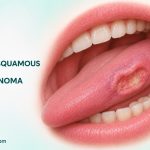
Understand how oral squamous cell carcinoma presents, what the biopsy and pathology reports establish, and how staging guides care.
Dental Explorers: Types and Distinguishing Features

Dental explorers are fine-tipped assessment instruments. Their curved or angled working ends provide access and tactile information, but different patterns serve different purposes. The name alone does not tell you how to use an instrument safely.
Oral Potentially Malignant Disorders: Classification and Referral

Identify the major oral potentially malignant disorders and learn what to document, when to refer for biopsy and how to plan follow-up.
Oral Cavity vs Oropharynx: Anatomy for Cancer Assessment

Learn how to localise oral cavity and oropharyngeal lesions and why the primary site changes HPV testing, referral and cancer staging.
Oral Cancer: Types, Warning Signs and Diagnosis

A dental student guide to oral cancer types, India-specific burden, warning signs, clinical examination, biopsy, referral and staging.
Periosteal Elevators: Molt and Other Common Designs
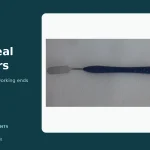
A periosteal elevator is used to reflect and retract mucoperiosteal tissue in appropriate surgical procedures. For students, the essential distinction is the tissue plane it works in: it is a flap instrument, not an extraction elevator.
Mouth Mirrors: Parts, Types and Functions

A mouth mirror provides indirect vision, reflects light and gently retracts soft tissues. Understanding its design helps students explain why one mirror gives a clear view while another produces glare or a confusing double image.
How to Take and Present a Dental Case History

A practical guide for dental students, covering the chief complaint, history of the complaint, medical and dental background, examination, investigations, and a fictional worked presentation. A useful dental case history turns a patient’s story into reliable clinical context. It helps the clinician understand why the patient has attended, what might explain the problem, which factors […]
Periodontal Probes – Types, Markings and Identification
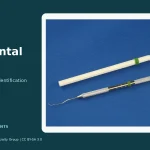
Identify common periodontal probes, understand probe markings and distinguish a Nabers furcation probe in this student revision guide.
Impression Materials Compared: Alginate, Agar, Elastomers, and Impression Compound

A dental materials guide for students, connecting classification and setting mechanisms with properties, applications, limitations, and common manipulation errors. An impression material must first flow into the area being recorded, then become stable enough to preserve that record during removal, disinfection, transport, and cast production. Different materials achieve this in different ways. Some form water-based […]
Dental Elevators: Straight, Coupland and Cryer Instruments Explained
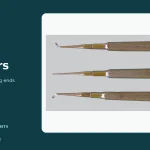
Learn to identify straight, Coupland and Cryer dental elevators by their handles, shanks and working ends, with viva questions.
How to Identify Permanent Teeth: Key Features and Common Confusions
A practical dental anatomy guide for BDS students: recognise incisors, canines, premolars, and molars; distinguish maxillary from mandibular teeth; and assess right and left using several anatomical clues. You are handed an unlabelled tooth in a dental anatomy practical. You recognise that it is a posterior tooth, but is it a first premolar or a […]