
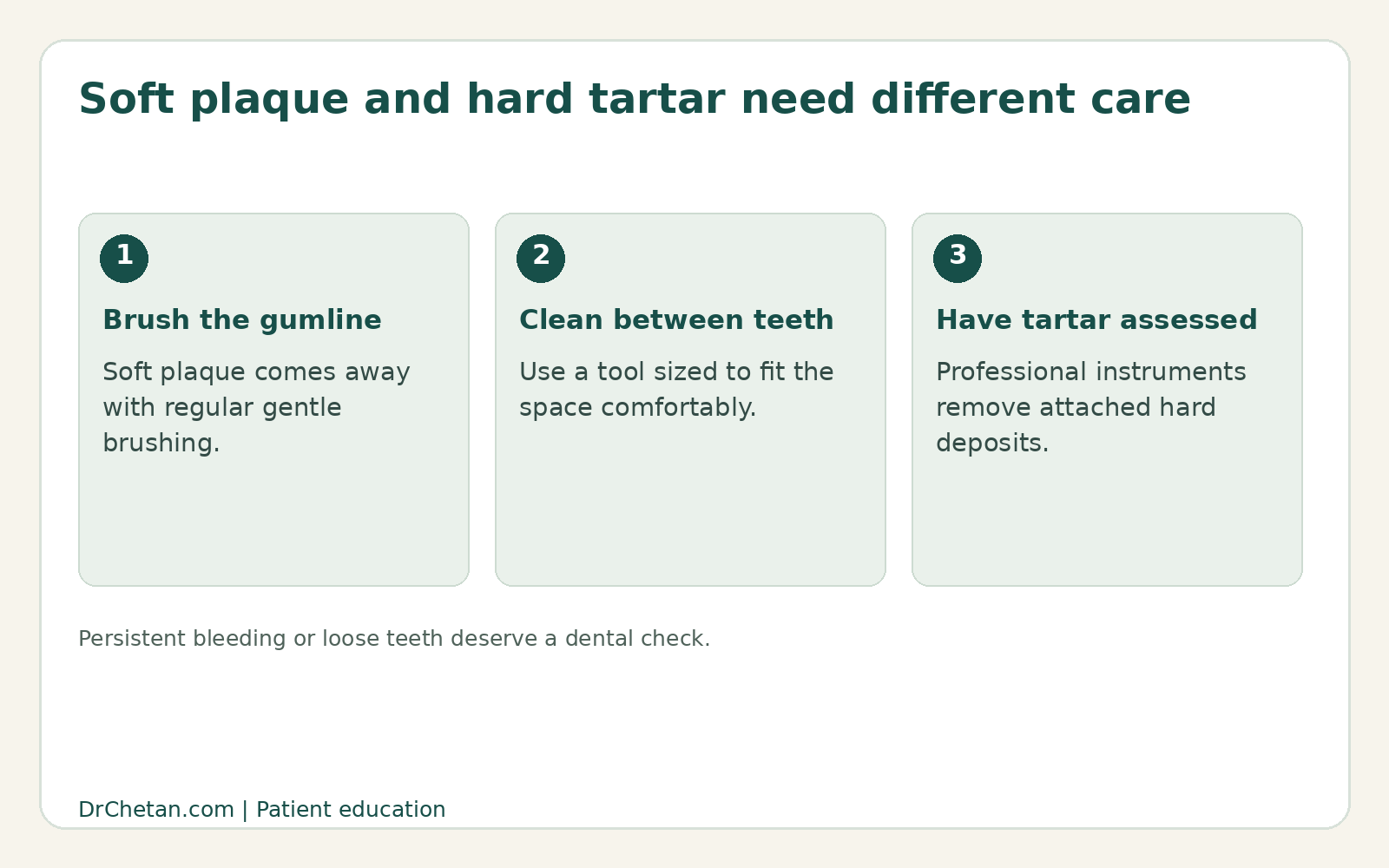
You can remove soft plaque by brushing and cleaning between your teeth. Tartar, also called calculus, forms when plaque hardens. Once it is attached to a tooth, it needs professional removal. A rough patch or a yellow edge is a reason to ask what it is before trying to scrape it off.
What plaque and tartar feel like
Plaque is a sticky layer of bacteria that collects along the gums, between teeth and around dental work. It can be hard to see, especially when it is the same colour as the tooth. Tartar is a mineralised deposit that may feel hard or rough. It can form above or below the gumline. Tooth-coloured fillings, stains and chips can also feel rough, so appearance and touch can only give clues.
What you can remove each day
Brush twice daily with fluoride toothpaste. Angle a soft brush towards the gumline and use light pressure. Clean between the teeth daily using floss, an appropriately sized interdental brush or another tool your dentist recommends. If a space is tight, avoid forcing a brush through it. Ask for a demonstration around bridges, braces and implants where the usual technique can be awkward.
Disclosing tablets can reveal areas you miss. They do not tell you whether you have gum disease. Mouthwash may have a role for specific needs but does not replace mechanical cleaning. Avoid home scalers and sharp objects, which can hurt the gums or damage exposed roots and dental work.
What happens when a professional removes tartar
A dentist or hygienist examines the gums and checks where deposits are present. Routine cleaning can remove deposits above and around the gumline. If you have periodontitis, treatment may also need to reach below the gum into deeper pockets, with a plan for review and maintenance. Ask which kind of cleaning is recommended and why. If a rough area remains afterwards, ask the practice to check it instead of picking at it.
When bleeding needs a check
Bleeding can occur with gum inflammation. Brush gently and keep cleaning between teeth rather than avoiding the area for weeks. Arrange an assessment if bleeding persists, the gums are swollen or tender, or a tooth feels loose. Gum disease can progress with little discomfort. Ask for urgent advice for swelling with fever, severe pain or pus.
Frequently asked questions
Can a whitening toothpaste remove tartar?
It may help with some surface stains. Hardened deposits need professional cleaning.
Can I feel tartar below the gums?
You may not notice it. A dental examination and measurements around the teeth can help assess the area.
How often should I get a cleaning?
Ask for a recall interval based on your gum health, deposit build-up and ability to clean at home.
Related guide: More about dental plaque.
References and further reading
Sources checked 3 November 2026. General patient education. Discuss your individual care with your clinical team. Featured image is an AI-created illustration.

Leave a Reply