
Many people taking anticoagulant or antiplatelet medicines can have a tooth removed with an appropriate bleeding-control plan. Do not stop or skip a prescribed blood thinner yourself. The dentist must balance bleeding risk against the risk of a clot, stroke or other serious event if treatment is interrupted.
Which medicines count as blood thinners?
Patients often use the term for several different medicines. Anticoagulants include warfarin, apixaban, rivaroxaban, dabigatran and edoxaban. Antiplatelet medicines include aspirin and clopidogrel. Some people take more than one drug.
These medicines do not all have the same timing, monitoring or dental precautions. Bring the actual names and doses, or a current medicine list, rather than relying on the colour of a tablet.
Why is stopping them yourself risky?
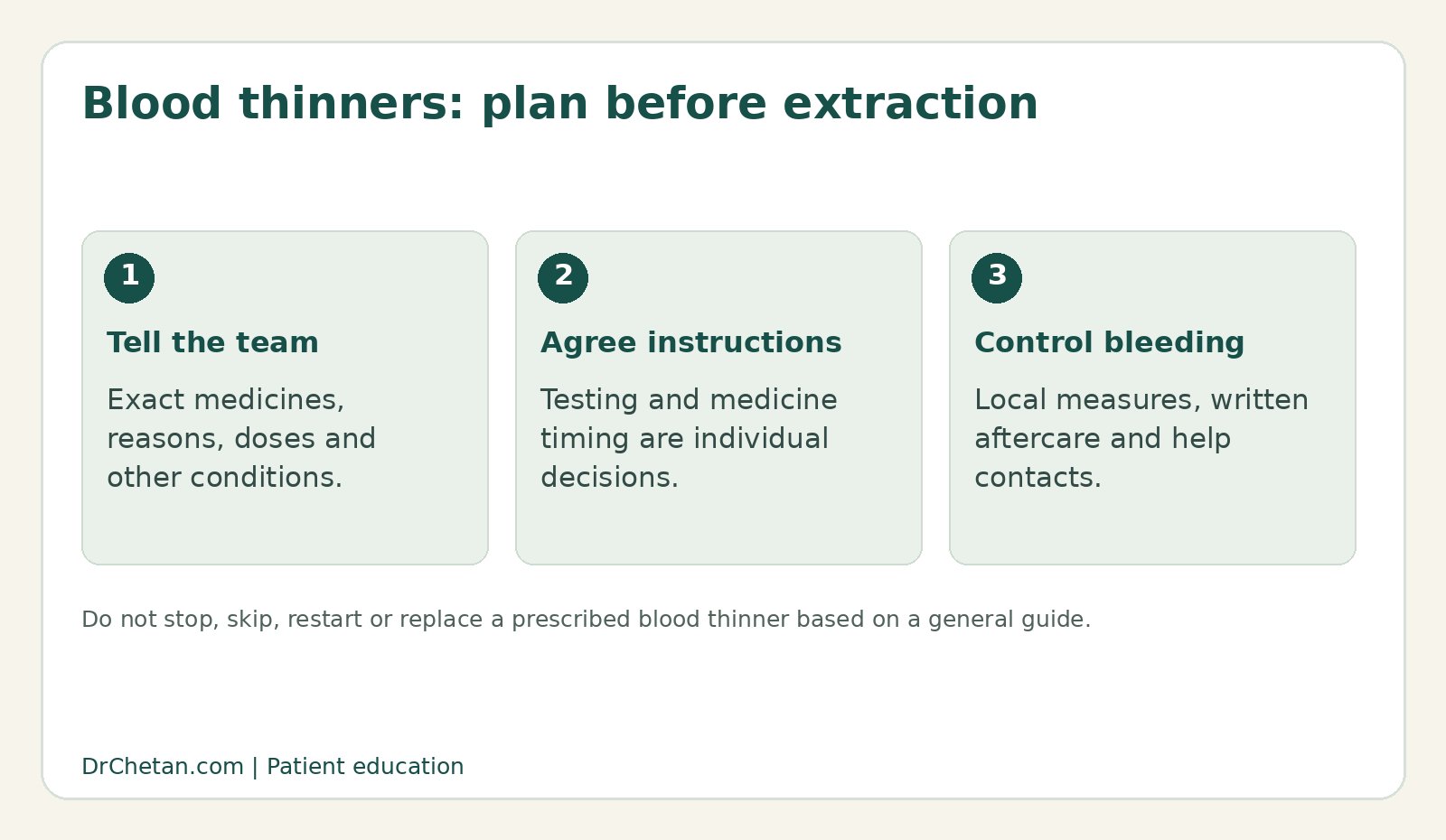
The medicine may be protecting you after a clot, stroke, heart procedure or for a heart-rhythm condition. A few days without it can matter. A dental procedure that causes manageable local bleeding does not automatically justify interrupting that protection.
Some higher-risk situations need especially careful coordination, including a recent clot, a coronary stent, a mechanical heart valve or planned cardioversion. Tell the dentist about these details before the appointment, and contact the prescriber if instructions from different teams conflict.
How does the dentist assess the bleeding risk?
- The medicine or combination, its dose and why it is prescribed.
- The number of teeth and complexity of the proposed procedure.
- Previous unusual bleeding or problems after an extraction.
- Kidney or liver disease, bleeding disorders and other illnesses.
- Other prescriptions, over-the-counter pain medicines and supplements.
- Your access to help if bleeding occurs after leaving.
The team may stage treatment, arrange it earlier in the day, or seek advice from the prescribing clinician. Referral is sometimes appropriate, but taking a blood thinner does not automatically mean every extraction must happen in hospital.
Will I need a blood test?
If you take warfarin, a recent INR result may be needed to support the dental plan. Follow the practice’s instructions about timing. A result outside the appropriate range may change what can safely be done.
INR is not the usual test for assessing the effect of direct oral anticoagulants such as apixaban. For those medicines, dose timing, kidney function, the procedure and other risks may be more relevant. Do not apply warfarin rules to every blood thinner.
Will I take my usual dose on treatment day?
Many patients continue treatment unchanged. In some situations a clinician may give an individual timing or dose instruction. The dentist should provide a clear plan, with prescriber input where needed. This article deliberately does not give a stop-and-restart schedule: copying another patient’s instructions can be unsafe.
If you have not received a plan, call before the appointment. Ask who is responsible for any medicine decision and when you should resume a dose if a change has been specifically prescribed.
How is bleeding controlled?
The dentist can use local measures such as pressure, a haemostatic packing material and stitches. They should check that bleeding is controlled before you leave. A plan for written aftercare and an emergency contact is as important as the extraction itself.
Follow the instructions given for pressure and wound care. Avoid repeatedly checking the socket or disturbing the clot. Ask which pain medicine is suitable: some medicines can increase bleeding risk or interact with your treatment. Do not add aspirin or an anti-inflammatory on your own.
What if bleeding starts at home?
Use the pressure method your dentist demonstrated and contact the treating service if bleeding persists. If the mouth is filling with blood, you feel faint, or bleeding is heavy and cannot be controlled, seek urgent or emergency medical help. Do not try to solve bleeding by independently stopping prescribed anticoagulants.
Frequently asked questions
Is low-dose aspirin a reason to cancel?
Not automatically. Tell the dentist why you take it and follow an individual plan.
Can I replace my anticoagulant with injections myself?
No. Any change or bridging plan belongs to the treating clinicians. It is not a routine self-care step.
Should I bring my anticoagulant card?
Yes, if you have one, together with a current medicine list and requested test results.
References and further reading
- SDCEP: Anticoagulants and antiplatelets guidance
- SDCEP: General advice for dental treatment
- ADA: Oral anticoagulant and antiplatelet medicines and dental procedures
- NHS: Anticoagulants—considerations
Sources checked 2 November 2026. This is general patient education; an examination and an individual treatment plan may be needed.

Leave a Reply