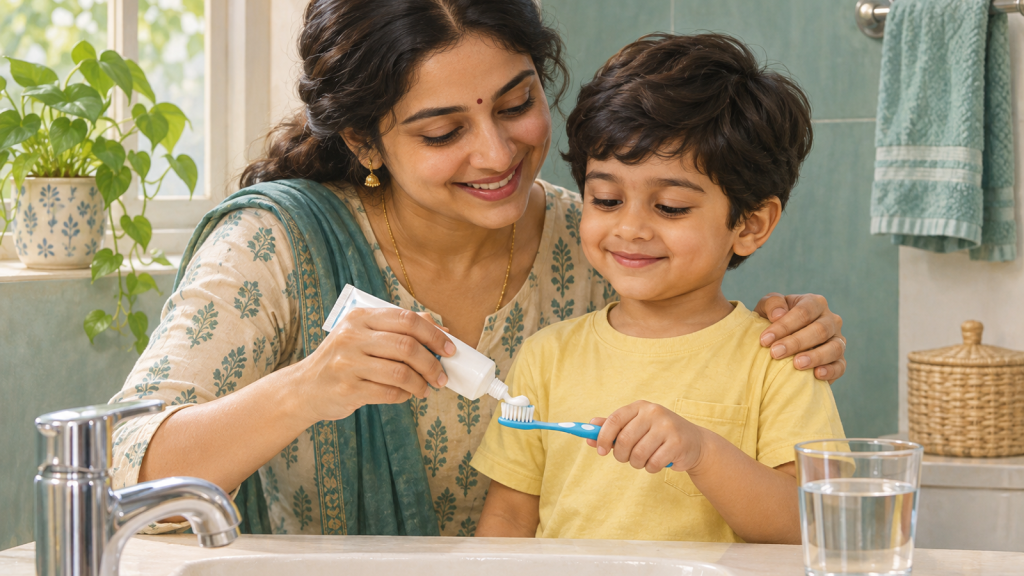
Fluoride in toothpaste helps prevent decay from the first tooth. Children also take in fluoride from water and other sources, and levels in drinking water can vary in India. Use a small amount of toothpaste, supervise brushing and ask about testing if you rely on a water supply with unknown fluoride levels.
Use the right amount for the child's age
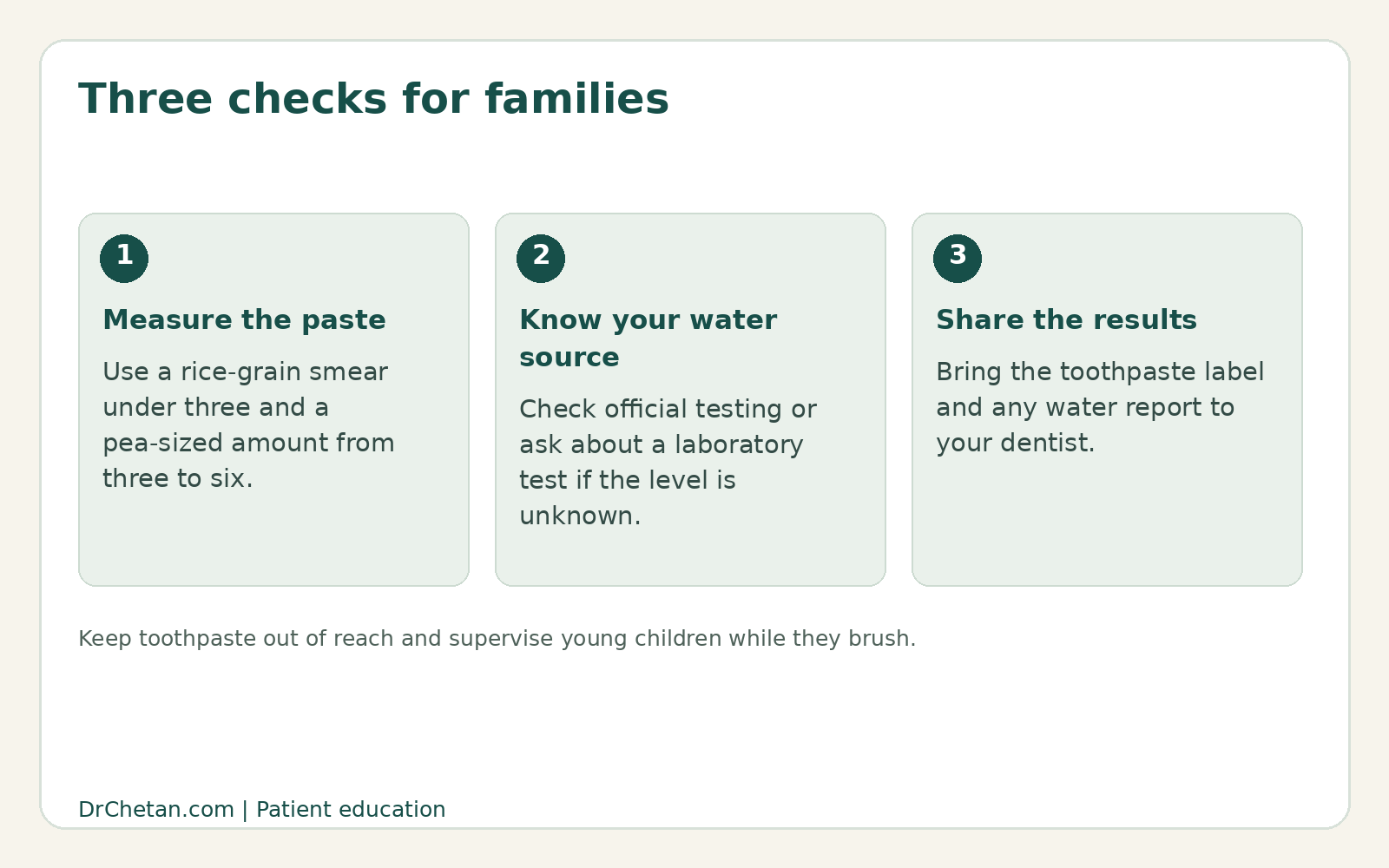
Have an adult brush or help brush twice a day with fluoride toothpaste. Use a smear about the size of a grain of rice for a child younger than three and a pea-sized amount for ages three to six. Supervise and teach children to spit out excess toothpaste as soon as they can. Keep the tube out of reach to prevent a child from eating toothpaste.
Check the label for the fluoride concentration in parts per million. Ask your dentist to confirm the strength and amount for your child if they have frequent cavities, tend to swallow toothpaste or live where drinking-water fluoride is high. Concentration and the amount on the brush are separate parts of that decision.
Check the source of your drinking water
The fluoride level in borewell or other groundwater can vary by location and source. Ask the local water authority, public health office or an accredited laboratory about testing the water your child regularly drinks. If a supply changes seasonally or you use different water for cooking, mention that when asking for advice.
If a test shows elevated fluoride, discuss safe alternative water or appropriate treatment with the local water or public health authority. A filter's ability to remove fluoride depends on its design and maintenance. Ask about a test result from the treated supply. Check water exposure before giving fluoride supplements, which should be recommended by a clinician.
What dental fluorosis looks like
Dental fluorosis can occur when developing teeth are exposed to excess fluoride over time. Mild fluorosis may appear as faint white lines or patches. More marked changes can include staining or pitting. White spots can also reflect early decay or a different developmental enamel change, so the dentist checks the pattern and history before deciding.
Bring practical details to your child's visit
Bring the toothpaste label or a clear photo and any water test report. Tell the dentist whether the child swallows paste, where drinking and cooking water come from and whether the child has had cavities. This helps tailor prevention to the child's actual exposure.
Frequently asked questions
Should I stop fluoride toothpaste if we use borewell water?
Ask for a water test and discuss the result with a paediatric dentist. The plan should account for fluoride swallowed from all sources and the child's risk of decay.
Can fluorosis start after a tooth has erupted?
Fluorosis develops while the enamel is forming. A new patch noticed later still needs an examination because it may have another cause.
Can I estimate fluoride from the taste of water?
Use a water test. Taste does not reliably tell you the fluoride concentration.
Related guide: Dental fluorosis: clinical features and treatment.
References and further reading
- AAPD: fluoride therapy best practice
- Jal Jeevan Mission: drinking water quality monitoring framework
Sources checked 3 November 2026. General patient education. Discuss your individual care with your clinical team. Featured image is an AI-created illustration.

Leave a Reply