
Molar-incisor hypomineralisation, often called MIH, is a developmental enamel condition that affects at least one first permanent molar. It can also affect permanent front teeth. Affected molars may hurt when brushed or exposed to cold, and the enamel can sometimes break down after the tooth comes through.
What parents may notice
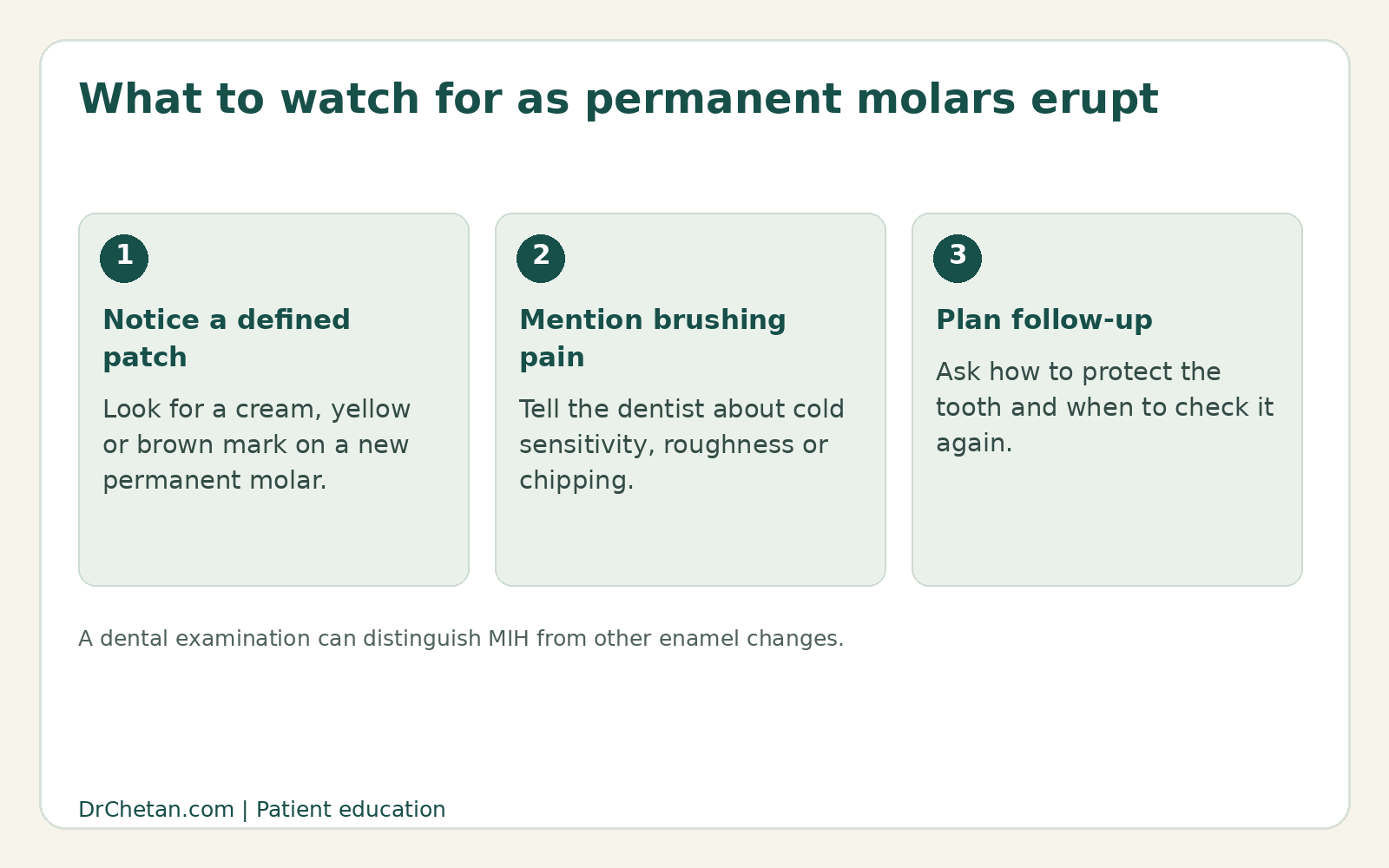
Look for a clearly outlined white, cream, yellow or brown patch on a new permanent back tooth. Some teeth feel rough, chip or become sensitive. The first permanent molars usually come through behind the baby teeth around age six, so a child does not need to lose a baby tooth first.
A patch can have other causes, including early decay or a different enamel condition. A dentist looks at which teeth are affected, where the patches appear and whether enamel has broken away. The findings guide the next step.
Keep the tooth clean while you get help
Brush gently with an age-appropriate amount of fluoride toothpaste and ask the dentist to demonstrate how to reach a tender spot. If brushing hurts, tell the dental team. Pain can make cleaning harder, which increases the risk of decay. Avoid frequent sugary snacks and drinks where possible.
Treatment depends on how much enamel is affected
A mild case may need monitoring, fluoride varnish, sensitivity management or a sealant when suitable. A tooth with breakdown may need a filling or a crown. The dentist considers the child’s symptoms, how far the tooth has erupted and whether the damaged area can be restored reliably.
In a severely affected permanent molar, an extraction may be discussed as part of an orthodontic plan. Timing and tooth development matter. A paediatric dentist and orthodontist can assess the options together.
Arrange a review for sensitivity or breakdown
Book a visit if a child avoids brushing one area, reports repeated cold sensitivity or a tooth has chipped. Seek prompt dental advice for worsening pain, swelling or fever with dental symptoms. Ask how often the affected teeth should be checked while new molars are coming through.
Frequently asked questions
Does MIH mean my child did not brush well?
MIH develops while enamel is forming. Daily care helps protect the affected tooth after eruption.
Does every patch need a filling?
No. Treatment depends on sensitivity, breakdown and decay risk. Some teeth can be protected and monitored.
Are the front teeth treated the same way as molars?
The goals can differ. Front-tooth care may focus on appearance or sensitivity, while a molar may need protection from chewing forces.
References and further reading
Sources checked 3 November 2026. General patient education. Discuss your individual care with your clinical team. Featured image is an AI-created illustration.

Leave a Reply