
Tell your dentist if you have liver disease, especially cirrhosis or a history of bleeding problems. The dentist will consider the type and severity of the condition, medicines and planned procedure. They may contact your liver team before an extraction or another procedure that can cause bleeding.
What to bring to the appointment
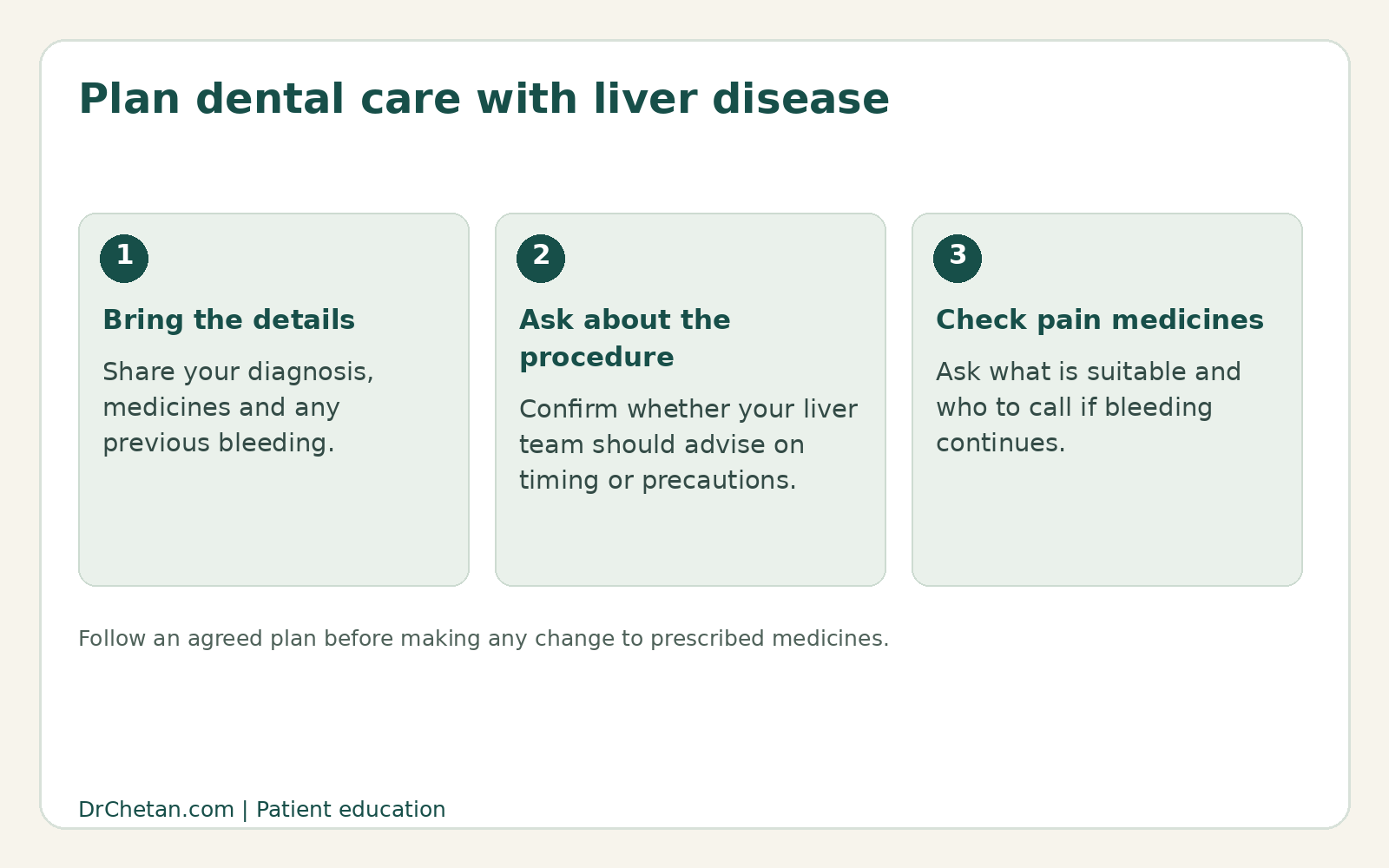
Bring the diagnosis or a recent clinic letter if you have one, a medicines list and the contact details of your treating team. Mention previous bleeding after procedures, easy bruising, any recent hospital admission and whether you take an anticoagulant or antiplatelet medicine. If your medical team has provided recent blood tests, bring those too.
Routine examinations and preventive care can often go ahead. Tell the clinic if your condition has recently changed or if you feel unwell so the team can advise about timing.
How the dentist plans for bleeding
The bleeding plan depends on your history, current health and the procedure. In cirrhosis, an INR result on its own does not reliably predict bleeding from a procedure. The dentist and liver team may consider other results and clinical factors, especially for more involved procedures.
The team may plan local measures such as pressure, a dressing or stitches, and tell you how to contact them if bleeding restarts. Ask whether the clinic or a specialist setting is most suitable. Keep taking prescribed medicines unless your treating team gives you an agreed plan to change them.
Check medicines before taking them
Ask which pain medicine, and what amount, is safe for you. Liver disease and other conditions can affect the choice or dose. Some cold, flu and combination products contain paracetamol, so tell the pharmacist or clinician what you already use. Anti-inflammatory painkillers can be unsuitable in cirrhosis. Ask your treating team before using them.
The dentist considers drug interactions and liver function when choosing a medicine. Do not use leftover antibiotics or someone else’s prescription.
After a dental procedure
Follow the written instructions and keep the clinic’s contact details. If bleeding continues despite the advised pressure, contact the clinic or urgent dental service. Seek emergency help for heavy bleeding, faintness, or difficulty breathing or swallowing with swelling.
Frequently asked questions
Does everyone with liver disease need a blood test before dental care?
No. The team decides what information is needed based on the condition and planned procedure.
Can I stop my blood thinner before an extraction?
Ask the dentist and prescribing clinician for an agreed plan before changing any dose.
Will the dentist prescribe an antibiotic automatically?
No. The dentist considers infection, the procedure and individual medical indications.
References and further reading
- College of Dental Hygienists of Ontario: liver disease advisory
- American Association for the Study of Liver Diseases: procedural bleeding risk in cirrhosis
Sources checked 3 November 2026. General patient education. Discuss your individual care with your clinical team. Featured image is an AI-created illustration.

Leave a Reply