
Clear aligners move teeth through a planned series of removable trays. The trays are only one part of the treatment: diagnosis, monitoring and retainers are equally important. If you are considering aligners, this guide explains what the dentist or orthodontist checks, what happens at each stage and what you will need to do at home.
What are clear aligners, and can they treat every bite?
Aligners are close-fitting plastic appliances made to apply planned forces to teeth. Each stage aims for a small change, and the series is prescribed to work towards agreed goals. They can help with selected crowding, spacing and bite problems. Suitability depends on the movements required, the teeth and gums and the wider jaw relationship.
Some complex movements need extra techniques, fixed braces or a combined approach. A jaw discrepancy is not automatically corrected by straightening the visible front teeth. Ask whether the proposal treats the whole bite or only a limited cosmetic concern, and what limitations that creates.
What happens at the first assessment?
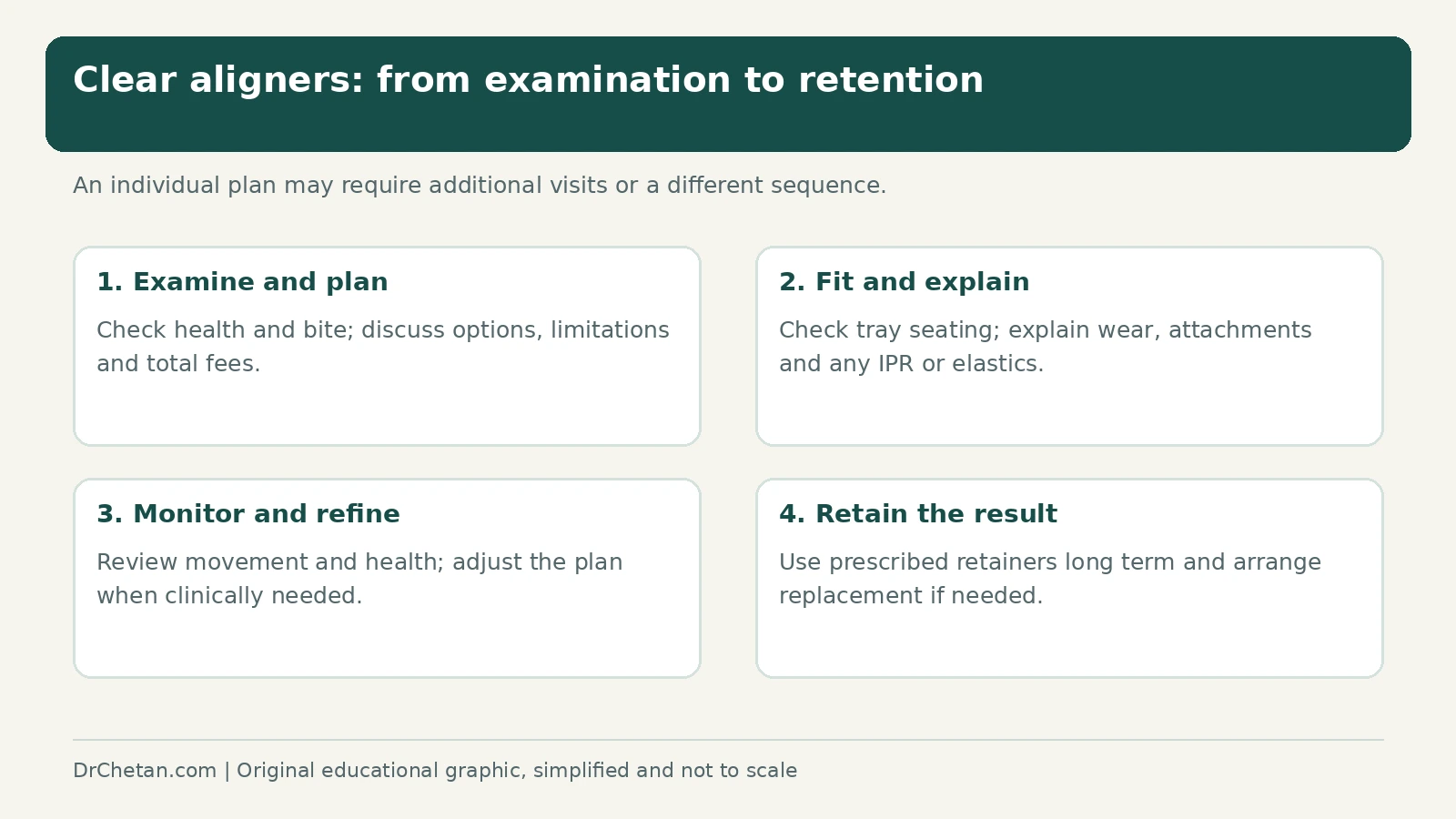
The clinician asks what bothers you, checks dental and medical history and examines the teeth, gums, bite and jaw relationship. Photographs and impressions or scans provide records; selected X-rays may be needed to assess roots, bone and other findings. A scan shows surface shape, but it does not replace the rest of the examination.
Decay and active gum disease need attention before tooth movement where indicated. Discuss previous trauma, root canal treatment, crowns, bridges, implants and any loose teeth. These can affect planning. You should know which clinician is responsible and how to contact them during treatment.
What does the digital treatment plan show?
A computer setup illustrates the intended sequence and possible end position. The clinician reviews and adjusts the plan rather than relying on software alone. Ask about alternatives, including fixed braces or no treatment, the expected compromise in a limited plan, estimated time and likely future retention.
The animation is not a guarantee that living tissues will follow every stage exactly. Ask what happens if a tooth does not move as expected. Obtain a written breakdown covering appointments, additional aligners, replacements, retainers and follow-up. The advertised starting price may not describe the full course you need.
Why might I need attachments, elastics or IPR?
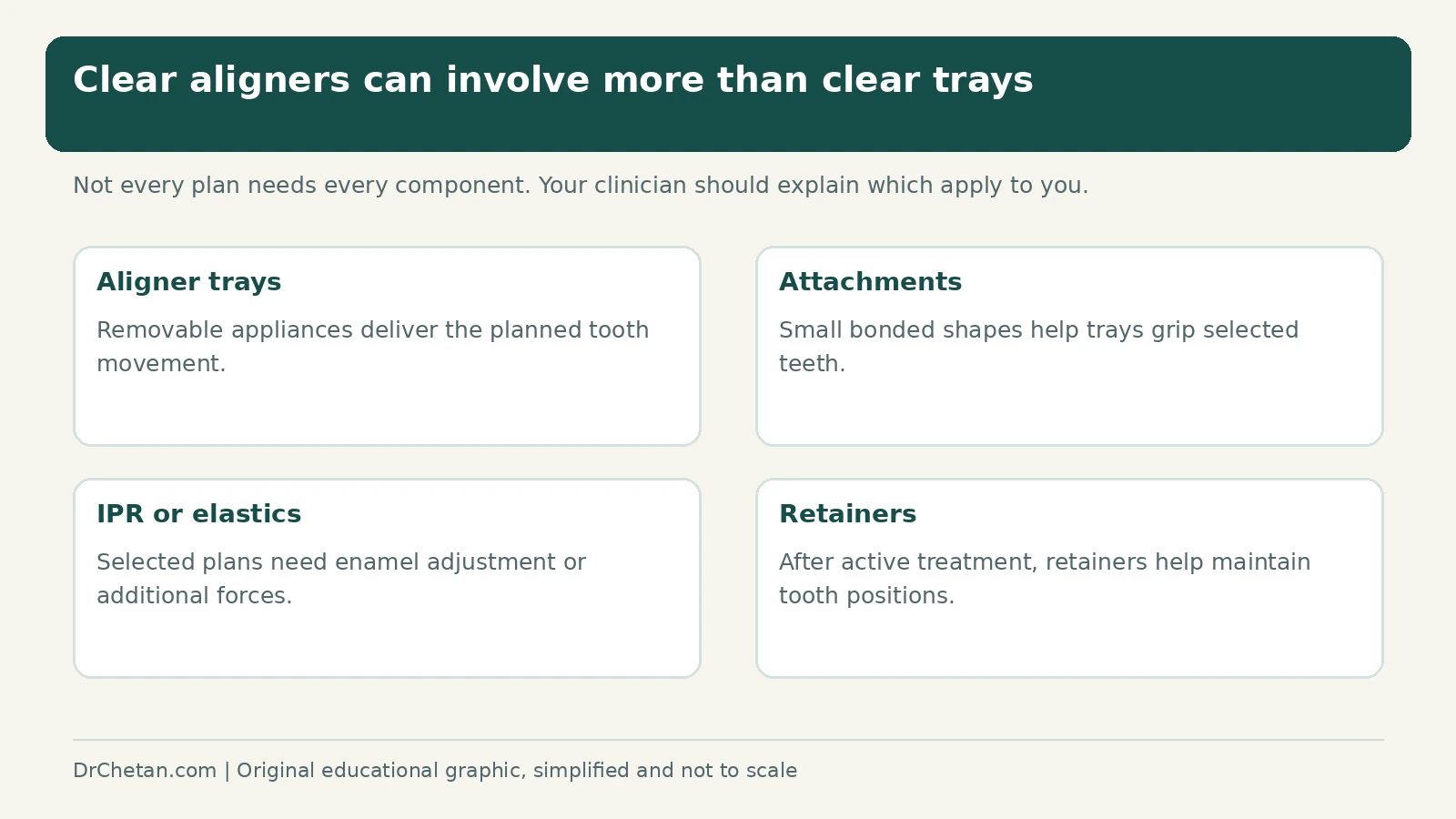
Small tooth-coloured composite attachments may be bonded to selected teeth so the aligner can grip them and deliver particular forces. They can be visible, especially close up. The team removes them appropriately when their role is finished. Some plans also use elastics, which must be worn in the prescribed position and pattern.
Interproximal reduction, or IPR, means carefully reducing a planned amount of enamel between selected teeth to create space or adjust shape. It is irreversible and should be explained before consent. The clinician controls the amount and smooths the surfaces. Never file teeth at home or arrange isolated IPR without coordination with the clinician responsible for your treatment.
Not everyone needs these measures. Ask which are included in your own plan instead of assuming a clear tray always means no bonded additions and no enamel adjustment.
What happens when the first aligners are fitted?
The clinician checks that the trays seat properly and shows you how to insert and remove them without damaging them or your mouth. You receive instructions for wear time, changing trays, cleaning and any attachments or elastics. Make sure you can remove the trays yourself before leaving, and know what to do if a tray is lost or no longer fits.
Each patient follows a prescribed schedule. Full-time treatment often means around 22 hours daily, but use the exact target given by your clinician. Do not move to the next tray early simply because the current one feels comfortable. Keep previous trays if your practice advises it and bring them to reviews.
What is everyday life with aligners like?
Remove aligners for food and drinks other than plain water unless specifically advised otherwise. Hot drinks can distort the plastic, and trapping sugary or acidic liquid around teeth is unhelpful. Store trays in a case when out of the mouth rather than wrapping them in a tissue. Lost trays can interrupt the planned sequence.
Brush with fluoride toothpaste twice daily, clean between teeth daily and keep trays clean using the method recommended. Avoid hot water and harsh cleaners. After meals, clean your teeth before reinserting the aligners where practical and follow the team’s advice about acid exposure. Do not let the convenience of removable trays replace a consistent cleaning routine.
Pressure or tenderness after a new stage and a temporary change in speech can occur. Severe or persistent pain, swelling, gum deterioration or a tooth becoming unexpectedly loose requires clinical advice. Orthodontic movement should be monitored rather than judged only by how straight the teeth look in selfies.
Why are progress checks and refinements needed?
Reviews check seating, tooth movement, oral health and the bite. If a tooth is not tracking, an attachment is lost or a tray is damaged, contact the treating team. They may change the schedule, replace an attachment or obtain new records. Do not force a tray that does not seat or keep advancing through the sequence without advice.
Extra finishing stages, often called refinements, may be needed to improve alignment or contacts. These can add time and may have cost implications depending on the agreement. Treatment length depends on the complexity and biological response as well as following instructions; a short advertised timetable is not a promise for every mouth.
What are the risks and limitations?
Aligners share risks with other orthodontic treatment, including discomfort, decay or gum problems when cleaning is inadequate, root changes, unwanted movement and relapse. Gum or bone conditions and past trauma can change the risk. Attachments and IPR introduce additional considerations. Ask which findings make a risk more relevant to you.
Direct-to-consumer convenience does not remove the need for an appropriate examination and accountable follow-up. A provider should explain who checks oral health, what happens if treatment goes off course and how you obtain in-person care when needed.
What happens after the last aligner?
Finishing is based on clinical assessment, not simply using the last tray in the box. Attachments may be removed, the surfaces polished and final records taken. Retainers are then provided or prescribed to help maintain the result. Retainers may be removable, fixed or a combination.
Teeth can move after treatment and change with age. Expect long-term retention, often lifelong, according to the schedule you are given. Fixed retainers need careful cleaning and checks; removable ones need consistent wear and occasional replacement. Contact the practice promptly if a retainer breaks, is lost or stops fitting rather than waiting for obvious relapse.
What should I ask before committing?
- Who is responsible for my treatment and how are health and progress checked?
- Will I need attachments, IPR, elastics, extractions or fixed braces?
- What happens if the simulation and actual movement differ?
- Are refinements, replacement trays, retainers and follow-up included in the fees?
The best plan is one you understand and can follow, including the years of retention after the active movement has finished.
Frequently asked questions
Are aligners completely invisible?
They are less conspicuous than many braces, but trays, attachments and elastics may be noticeable. Ask to see realistic examples of the components in your plan.
Can I wear them only at night?
Do not reduce a full-time prescription to night-only wear. Follow the exact schedule; inadequate wear can disrupt movement and prolong treatment.
Will I need teeth filed between them?
Only if IPR is part of an appropriate plan. Ask where, why and how much enamel adjustment is proposed before consenting.
What should I do if a tray stops fitting?
Contact the treating practice and follow its advice about which tray to wear. Do not force it or advance through later stages on your own.
Are retainers really necessary afterwards?
Yes, they are generally needed long term to reduce relapse. Your clinician should explain the type, wear schedule, cleaning and replacement arrangements before treatment begins.
Related reading: How to brush your teeth properly. Follow the specific cleaning instructions for your restoration or appliance as well.
Sources and further reading
- British Orthodontic Society: Clear aligners
- British Orthodontic Society: Aligner patient information
- British Orthodontic Society: Interproximal reduction
- British Orthodontic Society: Retainers
- General Dental Council: Clear aligner treatment, complaints and concerns
Educational information for patients. Diagnosis and treatment depend on an examination and your individual circumstances. Consultation artwork is AI-created; explanatory visuals are original simplified educational graphics.

Leave a Reply