
Start with the step that causes trouble. Holding the brush, reaching back teeth, standing at the sink and opening a toothpaste tube are different problems. A dentist, occupational therapist or caregiver can help adapt the routine to your abilities and preferences.
Choose a grip that is easier to hold
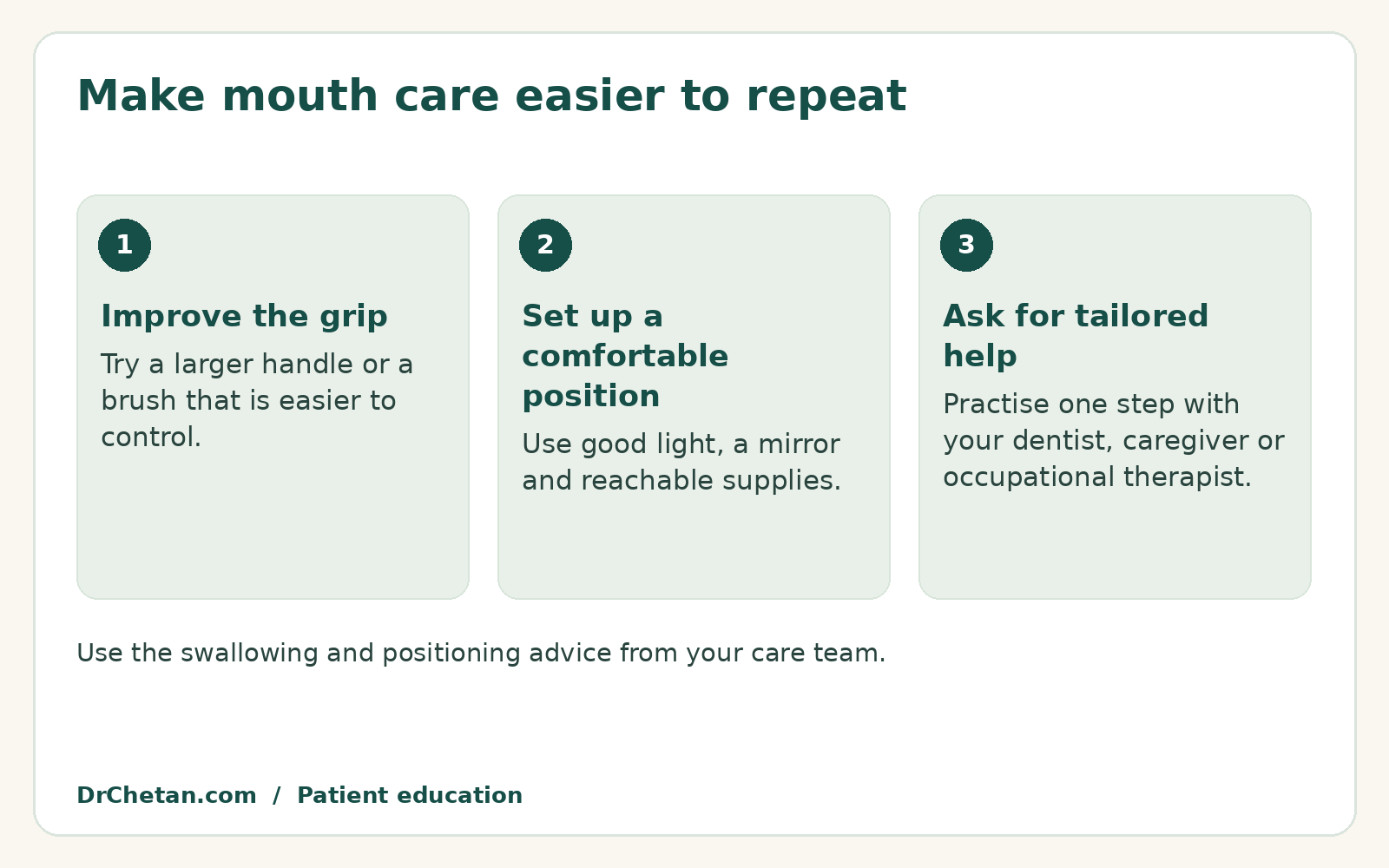
Try a thicker or textured handle if a narrow brush twists in your hand. A purpose-made grip or a suitable adaptation suggested by an occupational therapist can help. Some people find an electric brush easier because the head does the brushing movement, while others find its weight or vibration uncomfortable.
Use a soft brush and fluoride toothpaste twice daily. If squeezing a tube is difficult, try a pump or ask a helper to set out the toothpaste. A smaller brush head can help reach back teeth.
Make the setup safer and more comfortable
Sit where you can see and reach your supplies, and use a mirror and good light. Place a towel or cup within reach if you cannot lean over the sink. If you have swallowing difficulty or a fluid restriction, follow your care plan and ask your team how to adapt rinsing and toothpaste use.
For cleaning between teeth, ask the dentist to show you a suitable interdental brush or floss holder. The right size and shape make a difference. Avoid forcing a tool into a tight space.
Agree on what a caregiver can help with
Ask for help only where you need it, such as setting out supplies or brushing places you cannot reach. A caregiver should explain each step, respect a request to pause, and help from a position that is comfortable and safe. Ask for a demonstration if positioning or swallowing makes assistance difficult.
When to get dental advice
Arrange a check if you repeatedly miss an area, gums keep bleeding, a denture rubs or brushing causes pain. Bring the brush or tool you use so the dentist can adapt the plan. Ask how often to return if cleaning remains difficult or your health changes.
Frequently asked questions
Is an electric toothbrush necessary?
No. Choose a brush you can hold and use comfortably and ask the dentist to check your technique.
Can I replace brushing with a mouthwash?
Mouthwash does not remove plaque the way brushing does. Ask for adaptations if brushing is difficult.
What if I need help only occasionally?
Build a routine that lets you do what you can and have a backup for days when movement or pain is worse.
References and further reading
Featured image is an AI-created editorial illustration.

Leave a Reply