Both the amount of free sugar you consume and how often your teeth are exposed matter for cavities. Sweet tea sipped between meals, a biscuit later and a sugary drink on the way home create repeated opportunities for plaque bacteria to make acid. Reducing free sugar overall and keeping occasional sweet foods or drinks to mealtimes can help. [1,2]
What happens after a sugary snack?
Plaque is a layer of bacteria that builds up on teeth. Some of those bacteria turn sugars into acids. As the environment becomes more acidic, minerals can leave the tooth surface. Saliva helps neutralise acids and return minerals. Fluoride helps protect teeth as part of this everyday cycle. [1,2]
Each new exposure can start the process again. A sweet drink consumed over a long afternoon can keep the teeth exposed more often than drinking it with lunch. There is no exact stopwatch you need to follow. Focus on patterns you can change, like an all-morning drink or a snack every time you get up from your desk.
What counts as free sugar?
Free sugars include sugars added to foods or drinks and those naturally present in honey, syrups, fruit juice and fruit juice concentrates. Jaggery added to chai still counts. Whole fruit and the lactose naturally found in plain milk are treated differently in free-sugar guidance. A product labelled “no added sugar” can still contain free sugars, particularly if it is juice. [1,2]
Check both the ingredient list and the serving size. A packet can contain more than one serving. Sweetened yoghurt, flavoured milk, packaged drinks and coffee drinks can contribute even when you do not think of them as dessert. Small amounts add up when they appear several times a day.
A practical way to change your routine
| If this happens most days | Try this first |
|---|---|
| Sweet chai sits on the desk all morning | Finish it with breakfast or a planned meal. Keep plain water at the desk. |
| Children sip juice after school until dinner | Offer plain water between meals and whole fruit as part of a planned snack. |
| A biscuit comes with every tea break | Reduce how often you have biscuits, and choose unsweetened tea or water between meals. |
| A sweet drink is part of the bedtime routine | Make the last routine drink after brushing plain water. Ask your child’s clinician about feeding if you have an infant or specific medical needs. |
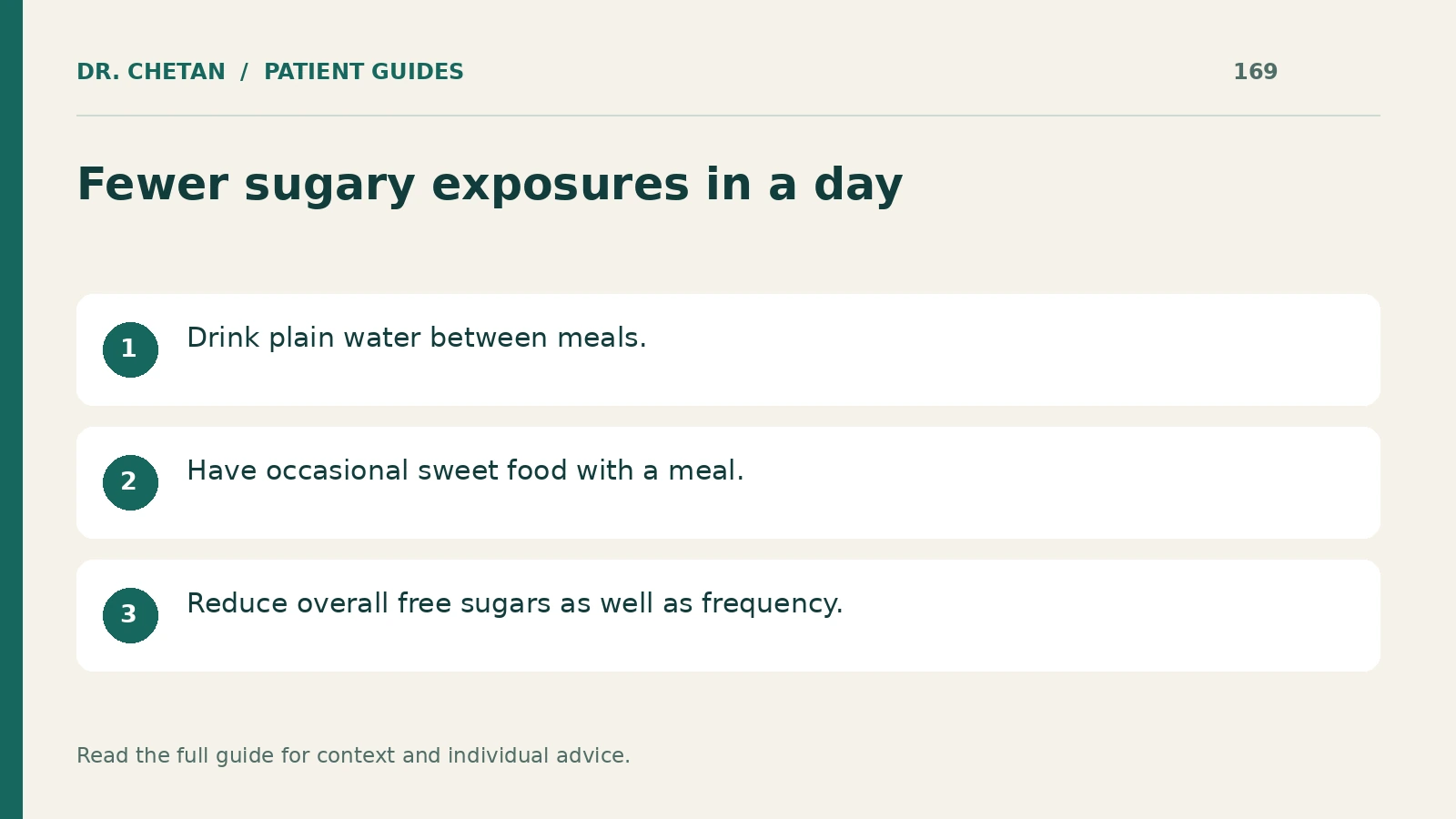
Choose one pattern to change this week. The aim is fewer repeated exposures and less free sugar overall. Mealtime changes complement, rather than replace, brushing twice daily with fluoride toothpaste and attending checks based on your dentist’s advice. [1,2]
When your teeth need extra help
Dry mouth, previous cavities, exposed roots and braces can change your risk. If you need frequent snacks for medical reasons, discuss dental prevention without changing the eating schedule your clinician prescribed. A dentist can check for early mineral loss, suggest extra fluoride when appropriate and help you choose snacks that fit your needs.
A new white or brown mark, a hole, food repeatedly getting trapped, or pain with sweets merits a check. Early decay can be painless. A diet change helps prevent further damage, while a cavity or ongoing pain may need dental treatment. [3]
Frequently asked questions
Is it better to eat sweets all at once?
Keeping an occasional sweet food to a meal can reduce separate exposures. Portion size and total free sugar still matter. You can reduce both how much you eat and how often.
Do honey and jaggery protect teeth compared with table sugar?
When added to a food or drink, they supply free sugars. Treat them as added sweeteners when planning your routine. [1,2]
Does brushing after a sweet snack cancel out its effects?
Regular fluoride brushing helps protect the teeth, and reducing repeated sugary exposures helps in a different way. Aim for both habits, with one brushing session last thing before bed. [2]
References and further reading
- WHO fact sheet on sugars and dental caries
- Delivering Better Oral Health guidance on healthier eating
- NIDCR guide to tooth decay
Sources checked 3 November 2026. This guide provides general information. Your dental or medical team can advise on your individual needs.

Leave a Reply