
Some swelling is expected after wisdom tooth surgery, especially after a difficult removal. It often builds over the first few days before settling. The important questions are whether it fits the procedure you had, whether the overall trend is improving and whether warning symptoms are present.
Why does the face swell?
Surgery causes a local inflammatory response as the tissues start to heal. The amount varies with the tooth’s position, the work needed to remove it and individual healing. Mild bruising and jaw stiffness may accompany the swelling.
A straightforward removal can feel quite different from surgery involving more tissue manipulation. Comparing your face with someone else’s photograph is not a reliable way to judge recovery.
What timeline is common?
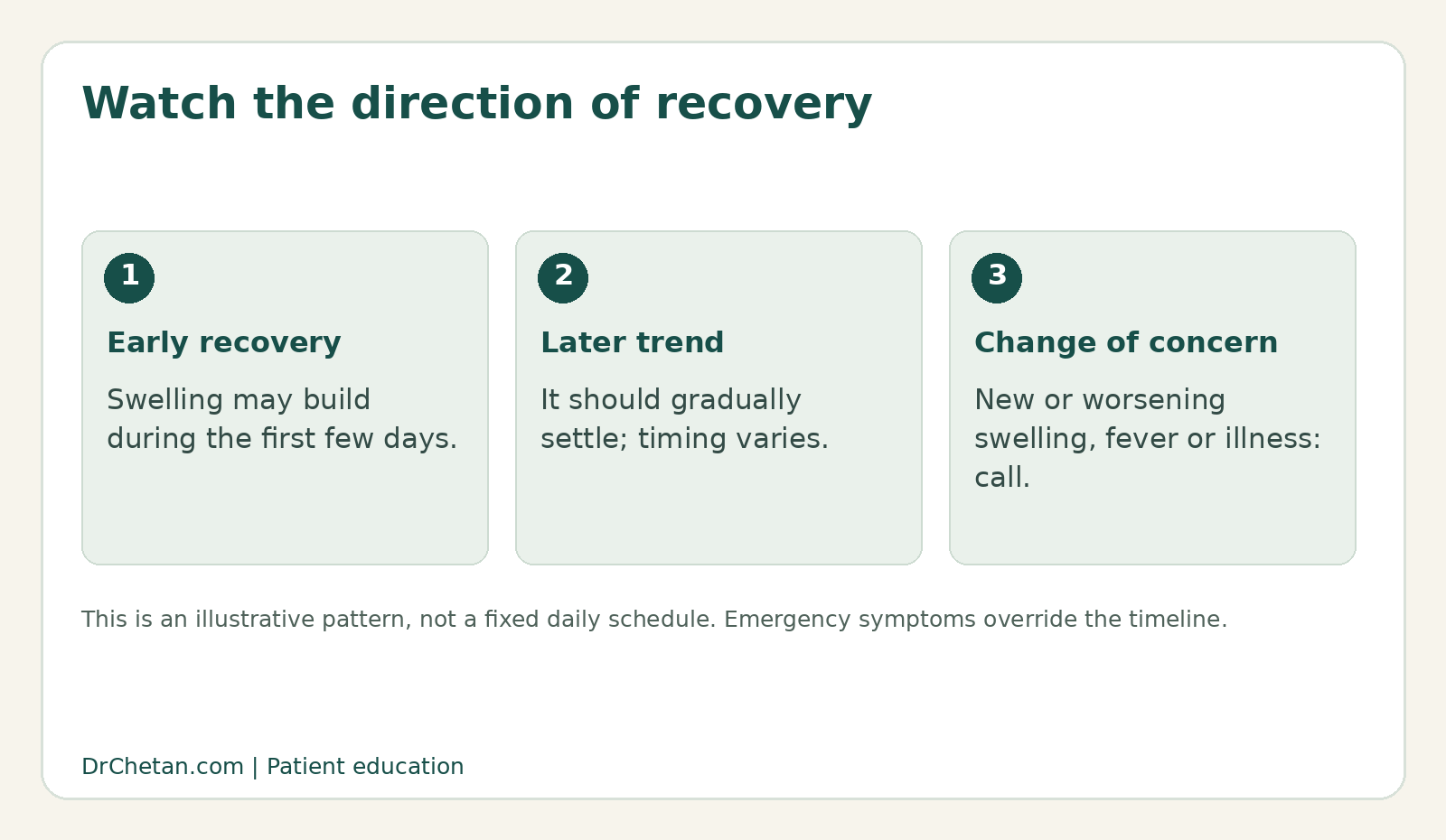
Hospital guidance varies, but pain and swelling are often most noticeable during the first two or three days. Improvement is usually gradual rather than a sudden return to normal. Some soreness, bruising or stiffness can last longer, sometimes up to a couple of weeks after more involved surgery.
These are broad patterns, not a promise that swelling must peak or disappear on a particular day. If it becomes markedly worse, returns after improving or comes with fever or feeling unwell, contact the dental team rather than waiting for a calendar deadline.
What can help at home?
- Follow the surgeon’s written instructions for the procedure you had.
- If advised, use a cold pack wrapped in cloth outside the cheek; do not put ice directly on skin.
- Rest initially and avoid strenuous activity as instructed.
- Choose comfortable soft foods and keep drinking adequate fluids.
- Take only pain medicines that are suitable for you, following the label or prescription.
- Avoid smoking and follow the advice given about alcohol.
The cold compress in the featured illustration is wrapped to protect the skin. It is a comfort measure, not treatment for a spreading infection.
Should I rinse the socket or brush it?
Protect the blood clot. Avoid forceful rinsing or spitting during the first 24 hours unless the treating clinician gives different instructions. After that, gentle mouth care or rinses may be recommended. Clean other teeth carefully and avoid poking the socket with a finger, tongue or object.
Do not direct a high-pressure water flosser or an unprescribed syringe into a fresh socket. If irrigation is needed later, ask when and how the dental team wants you to do it.
How is infection different from ordinary swelling?
The dentist considers the direction of change, pain, temperature, discharge, taste, ability to open the mouth and your general health. Swelling alone does not prove infection, and antibiotics are not automatically required for routine postoperative swelling.
Increasing or renewed swelling, fever, pus or feeling unwell needs prompt advice. A painful socket without much facial swelling can have other causes, including dry socket. An examination may be needed to distinguish them.
When should I call urgently?
Contact the treating dentist or surgeon for worsening pain or swelling, symptoms not manageable with the agreed plan, difficulty drinking, or bleeding that does not stop with the advised pressure measures. Describe when the tooth was removed and how symptoms have changed.
Get emergency medical help for difficulty breathing, swallowing or speaking, or rapidly spreading mouth or neck swelling. Do not wait for an ordinary follow-up appointment.
What might happen at a review?
The team checks the wound, nearby tissues and symptoms. Treatment depends on what they find: reassurance and revised aftercare may be enough, while an infection or other complication needs a specific plan. The need for imaging, a dressing or medicines is decided from the examination.
Frequently asked questions
Is day-three swelling always normal?
No symptom is judged by the day alone. The amount, trend and associated warning signs matter.
Should I take antibiotics just in case?
No. Contact the team if you are worried; do not use leftovers or another person’s prescription.
Can I return to exercise once the swelling is smaller?
Follow the surgeon’s advice for your procedure. Reduced swelling does not necessarily mean the wound is ready for strenuous activity.
References and further reading
- NHS: Wisdom tooth removal
- UCLH: Dental extractions postoperative instructions
- Cambridge University Hospitals: Removal of impacted wisdom teeth
- NHS inform: Wisdom tooth removal
Sources checked 2 November 2026. This is general patient education; an examination and an individual treatment plan may be needed.

Leave a Reply