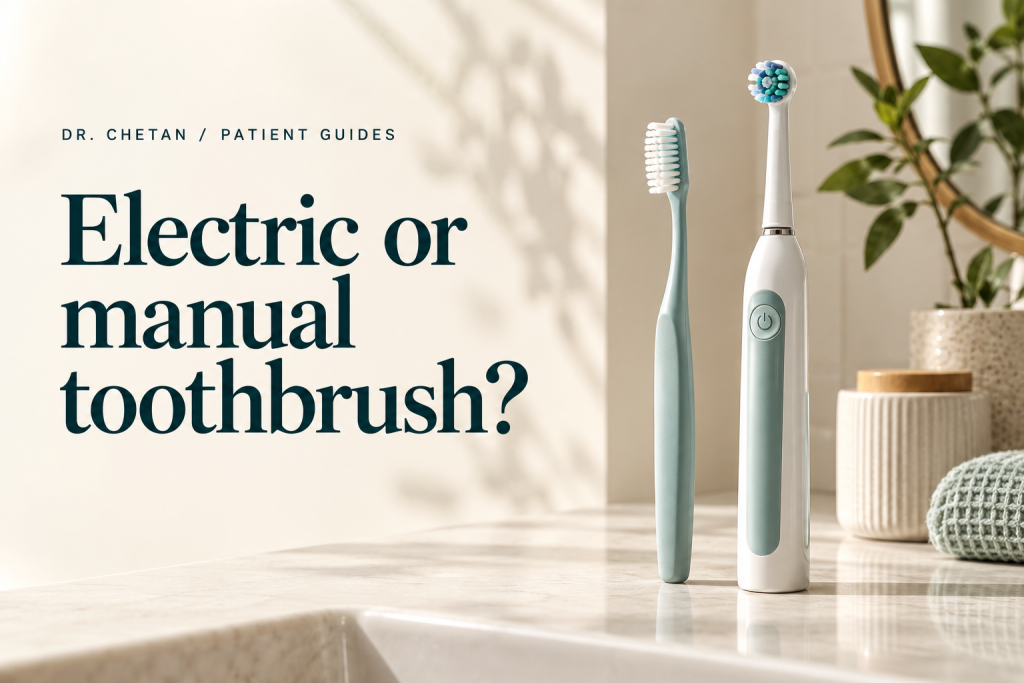
Should you replace a perfectly usable manual toothbrush with an electric one? Or will a better brushing routine make the bigger difference?
Both manual and powered brushes can clean effectively. Electric brushes can offer practical advantages, and research shows an average benefit for plaque and gum inflammation, but owning one does not guarantee thorough cleaning.
What does the evidence show?
A Cochrane review found that powered toothbrushes reduced plaque and gingivitis more than manual brushes, on average. The evidence was of moderate quality, and the importance of the differences for long-term dental health remained unclear. Its searches ran to January 2014, so it should not be presented as a test of every current model.
This supports considering an electric brush; it does not establish that the most expensive model is necessary or that a manual brush is inadequate for everyone. Technique, access and consistency still need attention. Your dental team can assess actual plaque and gum findings at a review, rather than judging by the brush you own.
Compare the practical differences
| Factor | Manual brush | Electric brush |
|---|---|---|
| Movement | You create the cleaning movement. | The powered head moves; you guide it carefully. |
| Hand control | Requires a comfortable grip and controlled movement. | May help with limited dexterity, though the handle and vibration must suit you. |
| Reminders | A separate timer or familiar route can help. | Some models include timers and pressure feedback. |
| Ongoing needs | Regular replacement of the brush. | Replacement heads plus charging or batteries. |
| Travel | Simple to carry and use anywhere. | Check size, battery arrangements and availability of heads. |
Imagine a person who brushes carefully but cannot comfortably grip a narrow handle. Their priority may be handling. Someone else may brush for only 30 seconds: a timer and a consistent route may help. These are different problems, so they need different solutions.
When a manual toothbrush is a reasonable choice
A manual brush is a reasonable option when you can reach all surfaces, use gentle movements and maintain the routine. Choose soft bristles, a head that comfortably reaches the back teeth and a handle you control easily. Harder bristles are not a shortcut to cleaner teeth.
Use small, controlled movements at the gumline and work over the outside, inside and chewing surfaces. A mirror can help while you learn. Ask your dental team to watch you brush if you are unsure where plaque remains.
A manual brush is also straightforward to keep as a travel or backup option. The important question is whether you are cleaning well when you use it, not whether it looks simple.
When an electric toothbrush may help
An electric brush may be helpful if hand or arm movement makes manual brushing difficult, or if timing and pressure feedback make the routine easier to manage. Some people find a larger handle useful; others dislike the weight or vibration. Try to assess comfort rather than assuming every powered handle feels the same.
Oscillating-rotating and sonic brushes move differently. Follow the instructions for your particular head. Generally, guide it slowly and systematically around the teeth instead of adding forceful manual scrubbing. The motor supplies movement, but it cannot decide which surface you have missed.
Which features are worth considering?
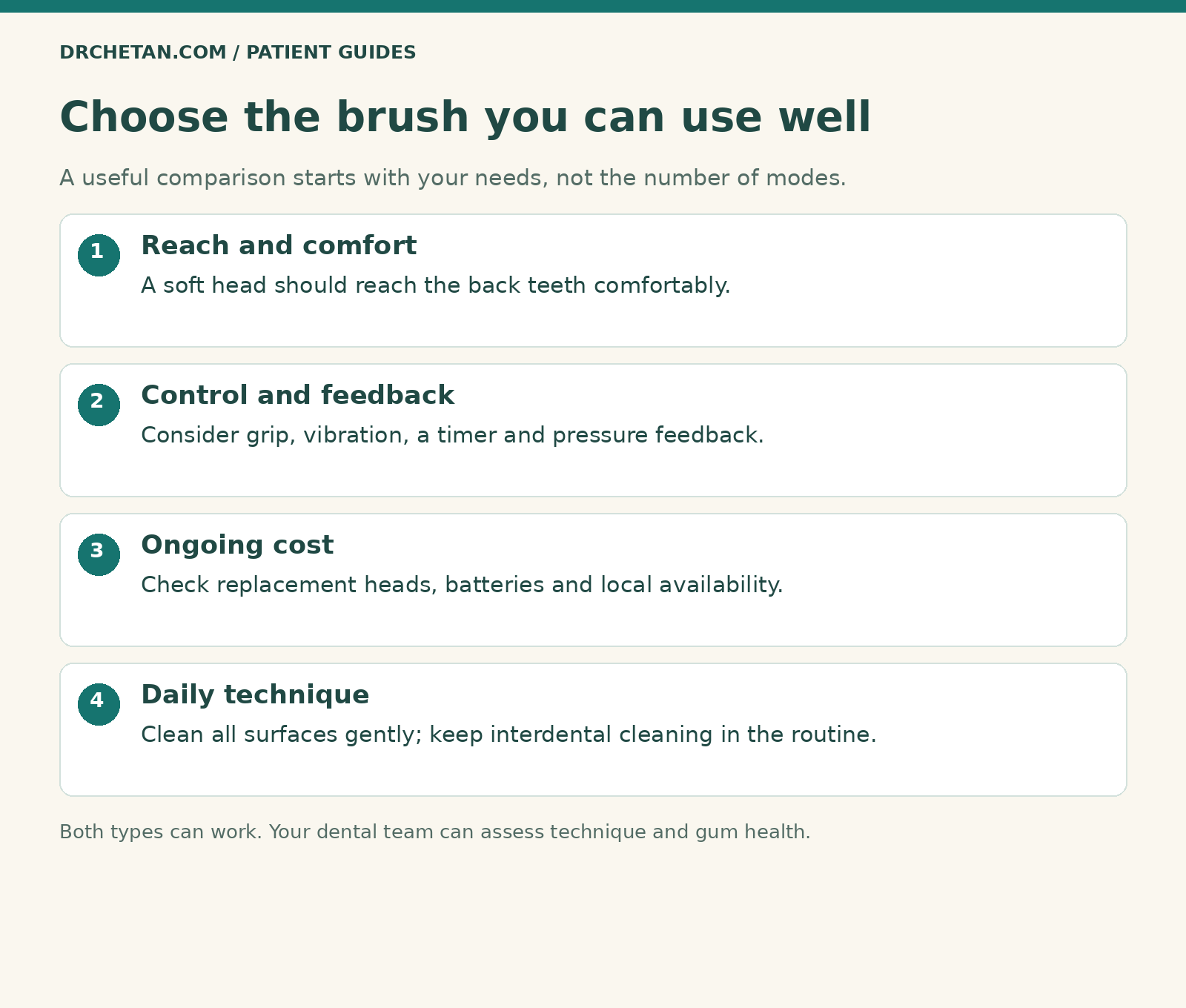
- A two-minute timer: useful if you tend to finish too quickly.
- Pressure feedback: may help you notice excessive force.
- A comfortable, soft head: check size and access to the back teeth.
- Readily available replacement heads: include these in the ongoing cost.
- Simple controls: choose settings you can actually understand and repeat.
Extra modes and app connections are optional. A basic daily-clean mode is enough for many people. A “whitening” button is not a promise of a different natural tooth colour.
Before buying, check the price of several replacement heads, not just the handle. If replacements are difficult to obtain where you live, that can affect whether the brush remains convenient in six months.
The habits that matter with either type
Brush for about two minutes twice daily with fluoride toothpaste. Include every tooth surface and avoid pressing hard. Spit out the excess toothpaste; keep cleaning between teeth daily because a toothbrush does not fully clean tight contacts.
A practical route is to complete the outside, inside and chewing surfaces in one area before moving to the next. Use the same route each time. If a timer finishes while you still have surfaces to clean, finish them; the signal is not proof of complete coverage.
If gums repeatedly bleed or brushing hurts, ask for an assessment. Do not solve the problem by increasing pressure, switching to harder bristles or avoiding the area indefinitely.
Replacement, cleaning and special situations
Replace the brush or head about every three to four months, or sooner if bristles become matted or frayed. Rinse it after use, let it air-dry and do not share it. Follow the manufacturer’s directions for cleaning powered handles and chargers.
For children, choose an age-appropriate head and help or supervise brushing as needed. A powered brush does not remove the need for an adult to check technique. Braces, implants, a bridge or recent surgery may need tailored instructions and additional cleaning aids.
If a caregiver helps you brush, include them in the demonstration. A brush that is comfortable for the person giving assistance can make the daily routine easier, provided it also suits the person receiving care.
Questions patients often ask
Will an electric brush stop me getting cavities?
No brush guarantees that. Cleaning, fluoride, diet, saliva and individual risk all matter. Ask for a prevention plan if you keep developing decay.
Should I scrub with an electric brush?
Do not add hard scrubbing. Guide the head as the device instructions explain and use gentle pressure.
Do I need an app?
No. It can be useful for some people, but it is an optional aid. A routine you understand and maintain matters more than unused features.
Can I keep using a manual brush if my mouth is healthy?
Yes, when it is comfortable and your technique is effective. You can discuss whether switching would address a particular difficulty at your next dental appointment.
References and further reading
- American Dental Association: Toothbrushes
- Cochrane: Powered versus manual toothbrushing for oral health
- Oral Health Foundation: Toothbrushes
- Oral Health Foundation: Electric toothbrushes
- NHS: How to keep your teeth clean
- American Dental Association: Dental floss and interdental cleaners
Sources checked 30 October 2026. This guide provides general patient information; your dental team can advise on your individual needs.

Leave a Reply