You brush, use a mint and feel reassured for a while. Later, an unpleasant taste returns, or someone you trust mentions your breath. The next step does not have to be a stronger product.
Bad breath, also called halitosis, has several possible causes. Bacteria in the mouth, dry mouth, gum problems, food and tobacco can all contribute. Finding the cause makes it easier to choose care that helps beyond a short-lived fresh taste.
If it continues despite a few weeks of improved home care, arrange a dental appointment. Book sooner if you have toothache, painful or bleeding gums, a loose adult tooth or denture problems.
In this guide
- Why bad breath can persist
- Common causes to consider
- If you already brush well: a practical next-step checklist
- A daily routine that helps
- What mouthwash can and cannot do
- What to do about dry mouth
- Care for dentures and other dental work
- When to seek professional help
- What happens at a dental appointment
- Frequently asked questions
Why bad breath can persist
Brushing the visible tooth surfaces is only part of cleaning your mouth. Odour-producing bacteria and food debris can remain around the teeth, between them and on the tongue. Persistent bad breath commonly has an oral source, so these areas are a useful starting point.
There may also be a problem that home brushing cannot resolve. Hardened plaque, called tartar or calculus, needs professional removal. Gum disease may require treatment alongside changes to your daily cleaning.
This is why the question to ask is not simply “Which mouthwash smells strongest?” It is “Is there a source that needs better cleaning, a dental problem that needs treatment, or dryness that needs attention?”
Common causes to consider
| Possible contributor | What you might notice | Useful next step |
|---|---|---|
| Food debris and bacteria on teeth or tongue | Breath concerns despite a quick brushing routine | Review tongue cleaning and cleaning between teeth. [2] |
| Gum disease | Bleeding or swollen gums, a bad taste, recession or loose teeth | Arrange a dental assessment. [5] |
| Decay or infection | Tooth pain, a bad taste or swelling | Have the tooth checked; suspected infection needs prompt attention. [1,6] |
| Dry mouth | A sticky mouth or difficulty eating dry food | Discuss symptoms, medicines and saliva support. [7] |
| Strong-smelling foods or drinks | A link with garlic, onions or coffee | Notice the pattern and keep up regular oral care. [1] |
| Tobacco use | Tobacco-related smell or gum concerns | Ask for help to stop and get your gums checked. [1] |
Fasting and crash dieting can also affect breath. Medical causes, including some throat or nasal conditions and acid reflux, may need consideration if dental assessment does not explain the problem. Avoid diagnosing a stomach condition from breath alone.
If you already brush well: a practical next-step checklist
Start with a calm review of the routine and symptoms. Do not keep adding stronger products without knowing what you are trying to change.
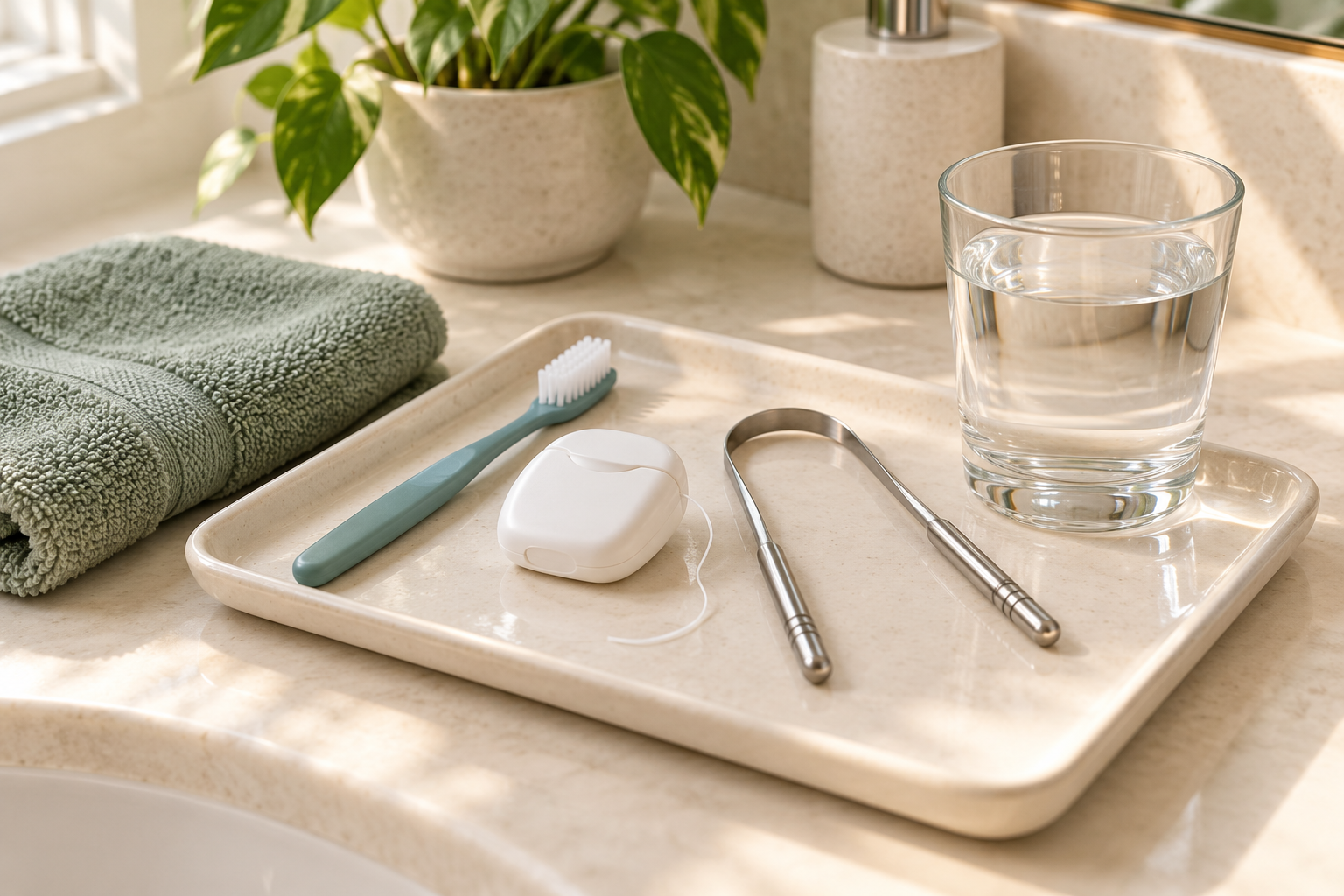
- Check the parts brushing does not fully cover. Are you cleaning between the teeth daily and cleaning the tongue gently? A quick pass over the front teeth is different from a complete routine. Do not scrape harder until the tongue is sore.
- Notice dryness. Does your mouth feel sticky on waking, or do you often need water with dry food? Note mouth breathing and any recent medicine changes. Bring the medicine list to the appointment; do not stop treatment yourself.
- Look for dental symptoms. Recurring gum bleeding, swollen gums, toothache, a bad taste or problems with a denture are reasons for assessment. A mint can cover a sensation without treating the cause.
- Record a useful pattern. Note when the concern occurs, whether it follows certain foods, and whether it continues despite the routine. This information helps a clinician ask better questions; it is not a home diagnostic test.
- Arrange the right review. See a dentist if the concern persists despite a few weeks of improved care, and sooner for associated symptoms. If examination does not identify an oral explanation, discuss whether a doctor should assess dryness, throat or nasal symptoms, reflux or other concerns. Do not diagnose a stomach condition from odour alone.
For example, someone who brushes carefully but never cleans under a bridge may need a better access method. Another person with a sticky mouth may need a saliva and medicine review. The same breath complaint can therefore lead to different next steps.
Do not wait through the home-care period when there is swelling, fever, severe pain or difficulty swallowing or breathing. Use the urgent-care guidance below.
A daily routine that helps
1. Brush thoroughly twice a day
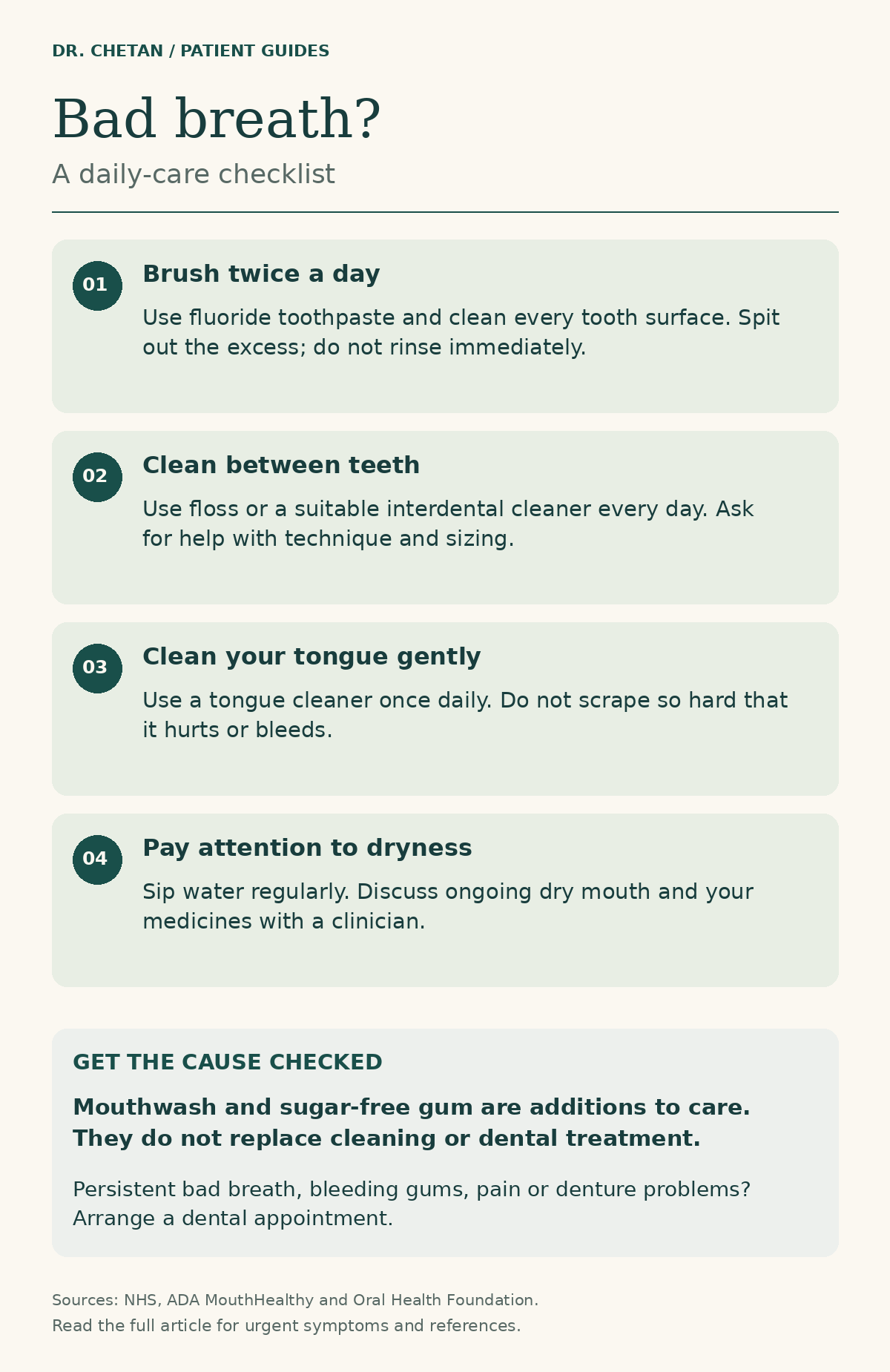
Brush for about two minutes, including before bed and on one other occasion. Clean the outside, inside and chewing surfaces of the teeth. For most adults, use a fluoride toothpaste containing at least 1,350 ppm fluoride unless your dentist advises otherwise.
After brushing, spit out the excess toothpaste. Do not immediately rinse it away with water. If you use a mouthwash, choose a different time rather than using it straight after brushing.
2. Clean between teeth every day
A toothbrush cannot fully clean the spaces between teeth. Floss, a suitable interdental brush or another tool recommended by your dental team can help remove food debris and plaque there. Choose something you can use consistently and comfortably.
Guide floss gently instead of snapping it into the gums. If a space is difficult or painful to clean, ask for help with technique and tool selection. Leaving it untouched or repeatedly forcing a tool through it will not solve the underlying difficulty.
3. Clean the tongue gently
Use a tongue cleaner or scraper gently once a day. The aim is to clean the surface comfortably, without making the tongue bleed. Harder pressure is not a better treatment. Ask your dental team to demonstrate if you are unsure or find it uncomfortable.
4. Make the routine easy to maintain
Place your interdental cleaner beside your toothbrush, choose a regular time for it and keep the tongue cleaner within reach. Use the same sequence each day so you are less likely to skip a step. The purpose is to make the recommended brushing and interdental cleaning habits practical.
What mouthwash can and cannot do
Mouthwashes differ. Cosmetic rinses mainly provide temporary freshening. Therapeutic rinses contain ingredients intended to help control specific problems, which may include plaque, gingivitis or oral odour. A product’s minty taste does not tell you which role it serves.
A suitable rinse can be an addition to care, but it does not replace brushing, cleaning between teeth or treatment of a dental problem. Ask your dentist what the rinse is meant to do and how long to use it.
Chlorhexidine is generally intended for a limited course when appropriate. It can stain teeth, and toothpaste can affect how it works, so follow the instructions about timing and duration. Avoid turning a short course into an indefinite daily routine on your own.
Sugar-free gum can stimulate saliva and can be useful after strong-smelling food. It remains an addition to cleaning. Regular reliance on mints, gum or mouthwash to cover a recurring smell is a reason to discuss the cause with your dental team.
What to do about dry mouth
Saliva helps moisten the mouth and wash away food particles. When there is too little, the mouth may feel sticky and breath may worsen. Persistent dryness also increases the risk of decay and oral fungal infections. It should not simply be accepted as an inevitable part of getting older.
Take regular sips of water. If suitable for you, sugar-free gum may help stimulate saliva. A dentist, doctor or pharmacist can advise about saliva substitutes or other products when dryness continues. Mention difficulty chewing, swallowing or speaking.
Some medicines and mouth breathing at night can contribute to dryness. Bring a medicine list to the appointment, but do not stop a prescribed medicine yourself. If choosing a mouthwash for a dry mouth, ask about an alcohol-free product and follow professional advice.
Care for dentures and other dental work
Removable dentures need their own cleaning routine as well as care for your mouth. Clean them as advised, rinse away food debris and remove them at night unless your dentist has told you otherwise. Do not use ordinary toothpaste to scrub the denture surface, because it may damage it.
Continue cleaning your remaining teeth, gums and tongue. A denture that is loose, painful or associated with persistent bad breath needs review; freshening products cannot correct its fit or treat an infection.
If you have a bridge, braces or other dental work, ask your dental team which interdental tools will help you reach difficult areas. The best choice depends on the spaces and what you can manage reliably.
When to seek professional help
Arrange a dental appointment
Get checked if bad breath continues despite improving your routine. Do not wait for it to become painful. Gum disease can be painless, and persistent bad breath or a bad taste can be a warning sign.
Ask for urgent dental advice
Tooth or gum pain with facial swelling, pus, fever or a suspected abscess needs urgent dental care. A dental abscess does not resolve simply by masking the smell or rinsing. Very sore, swollen gums or a newly loose adult tooth also need urgent assessment.
Get emergency medical help
Swelling that makes breathing, swallowing or speaking difficult, swelling affecting an eye, or a large amount of mouth swelling needs emergency assessment. Go to an emergency department. In India, call 112 for emergency assistance. Bad breath on its own is not a reason to call an emergency number.
What happens at a dental appointment
Be ready to describe when you notice the problem, how long it has been happening and what you have tried. Mention a bad taste, bleeding, pain, dryness, dentures, tobacco use and relevant health or medicine changes. Bringing your usual cleaning products can help you discuss the routine clearly.
The dentist can examine the teeth and gums, check for plaque and tartar, and assess whether gum treatment is needed. When appropriate, gum examination includes measuring the spaces around teeth and assessing the supporting bone.
Care might involve professional cleaning, a gum-treatment plan, help with home cleaning or management of dry mouth. If your dentist finds the mouth healthy but the concern continues, they may recommend medical assessment for another cause.
Frequently asked questions
Why do I still have bad breath after brushing?
Your routine may be missing the spaces between teeth or the tongue. Dryness, gum disease, decay or another cause may also need attention. Brushing more forcefully is not a substitute for finding that cause.
Does bad breath always come from the stomach?
No. Persistent bad breath commonly relates to bacteria and conditions in the mouth. Reflux or other medical problems can sometimes contribute, but do not assume you need stomach treatment before a dental assessment.
Can drinking water cure it?
Water can help with dryness, but it will not remove tartar or provide treatment for gum disease. Whether it helps your breath depends on what is causing the problem.
How do I know if others can smell my breath?
It can be difficult to judge your own breath. If you are comfortable, ask someone you trust, or discuss the concern directly with your dentist. A strange taste alone does not establish the cause.
Should I use stronger mouthwash if the smell returns?
Not automatically. The rinse may provide only temporary freshening, or another problem may need care. Ask your dentist to help choose a product for a clear purpose.
*This guide provides general information. A dentist can help identify the cause and recommend care suited to your mouth.*
References
Accessed 29 October 2026.
- ADA MouthHealthy: Bad Breath
- NHS: Bad breath
- Oral Health Foundation: Bad breath
- NIDCR: Periodontal (Gum) Disease
- NHS: Gum disease
- NHS: Dental abscess
- NIDCR: Dry Mouth
- NHS: How to keep your teeth clean
- ADA MouthHealthy: Flossing
- Oral Health Foundation: Are mouthwash and sugar-free gum as good as brushing?
- American Dental Association: Mouthrinse (Mouthwash)
- NHS: How and when to use chlorhexidine
- NHS: Dry mouth
- NHS: Dentures
- ADA MouthHealthy: Gum Disease
- Government of India: Emergency Response Support System
- ADA MouthHealthy: Common Questions About Going to the Dentist

Leave a Reply