
A cavity in a baby tooth should be assessed even though the tooth will eventually fall out. Treatment depends on the lesion, symptoms, the time until the tooth is expected to shed, and what the child can comfortably manage. Not every cavity needs the same procedure.
Why not simply wait for the tooth to fall out?
Some baby teeth need to function for several more years. Untreated decay can cause pain, infection and problems eating or sleeping. On the other hand, a tooth close to natural shedding may be managed differently from one that is still important for chewing and maintaining space.
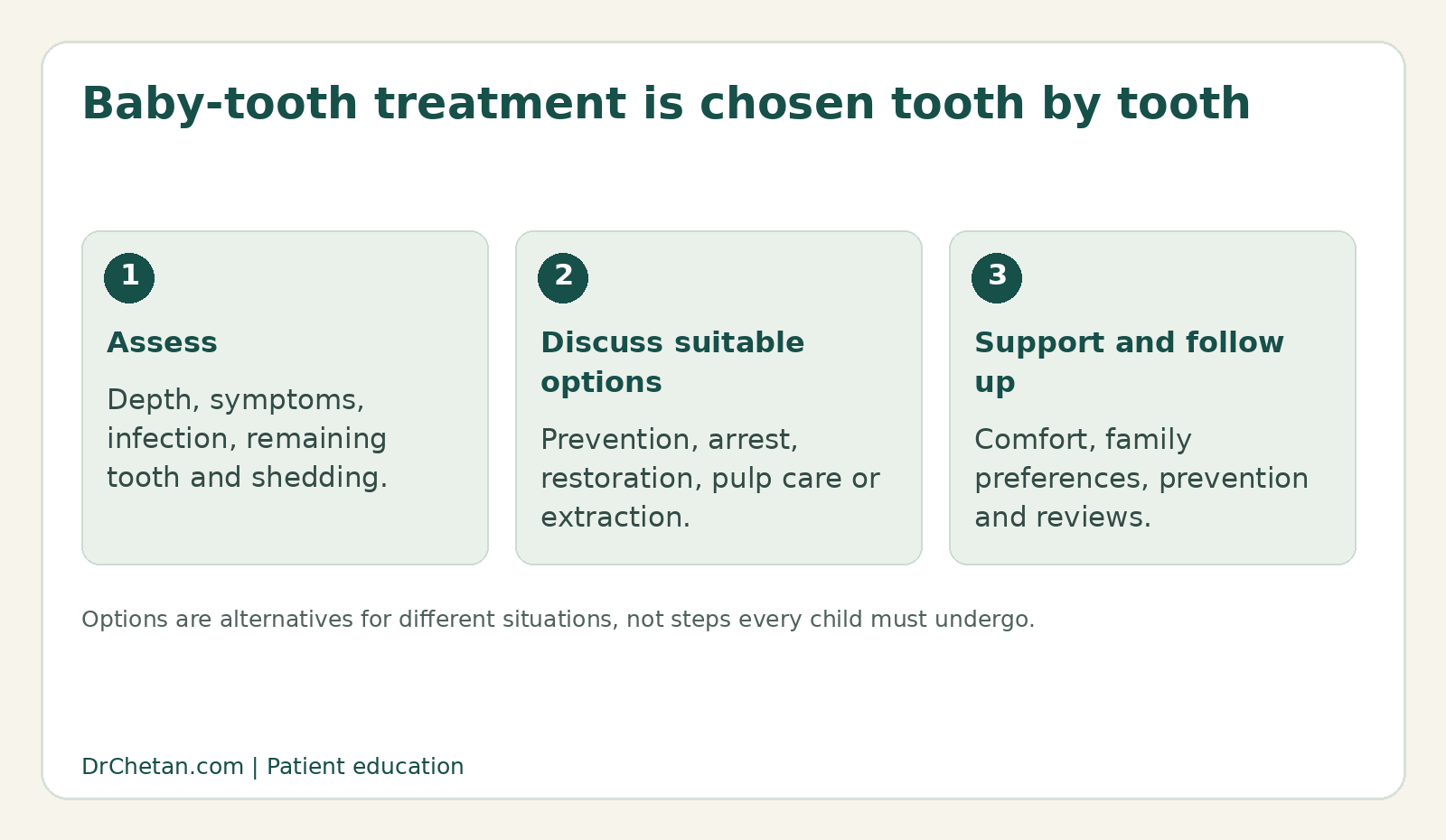
The decision is made tooth by tooth as part of an overall plan. A child’s age alone does not establish when a particular tooth will be lost.
What will the dentist ask and examine?
Tell the team about pain, night waking, swelling, food getting stuck, medicines, allergies and previous dental experiences. Mention what helps your child feel comfortable, including communication or sensory needs.
The dentist checks which teeth are affected, how much structure remains and whether there are signs of pulp disease or infection. Selected X-rays can reveal decay between teeth and help plan care. The team also assesses caries risk and discusses a realistic daily prevention routine.
Could prevention or a non-drilling approach be enough?
Some early lesions can be managed with active prevention and monitoring, including fluoride measures and changes to frequent sugar exposure. This is planned care with reviews, not simply ignoring the tooth until it hurts.
Silver diamine fluoride may be offered to arrest suitable decay. It darkens the treated carious area, often permanently black, and may need reapplication and monitoring. It does not rebuild a missing tooth surface and is not a treatment for every painful or infected tooth. Discuss appearance and alternatives before consent.
When might a filling or crown be chosen?
A filling can restore an appropriate cavity when enough tooth remains. A preformed crown may give better coverage for a more extensively affected back baby tooth. In selected cases, the Hall technique seals suitable decay beneath a preformed metal crown without conventional drilling; suitability depends on the diagnosis.
Ask why the proposed approach fits that tooth. Different materials and techniques have different limits. A tooth-coloured option is not always the most durable choice in a particular situation, and a silver-coloured crown is not automatically an excessive treatment.
Can the pulp be treated instead of removing the tooth?
Sometimes. In a suitable living primary tooth, pulp-preserving treatment or a pulpotomy may be considered. Selected teeth may have other pulp treatments, including pulpectomy, depending on the diagnosis, restorability and treatment setting.
An abscessed, unrestorable or otherwise poor-prognosis tooth may need extraction. Ask whether early loss creates a need to assess space for the permanent teeth. A space maintainer is not automatic after every baby-tooth extraction.
Will treatment hurt, and how many visits are needed?
The team should explain pain control and support in language your child can understand. Local anaesthetic may be used. Some children need additional behavioural support, staged visits, sedation or treatment under general anaesthesia. These options require their own assessment and consent.
A small restoration may be completed in a visit; multiple affected teeth or more complex care can require several appointments. Avoid promising a child that nothing will be felt. Instead, agree how they can signal that they need a pause.
What happens after treatment?
Keep the review and prevention appointments. Help with twice-daily brushing using age-appropriate fluoride toothpaste, and ask about cleaning between teeth and sugar frequency. Restoring one hole does not remove the risk of another cavity developing elsewhere.
Contact a dentist promptly for facial swelling, fever, increasing pain or difficulty eating or drinking. Swelling affecting breathing or swallowing requires emergency medical care.
Frequently asked questions
Does no pain mean a cavity is harmless?
No. Decay may progress before a child reports pain. The examination helps determine what needs attention.
Is a crown the same as removing a tooth?
No. A crown covers a retained tooth. Extraction removes it.
Can I choose the least invasive option?
Ask which feasible options address the disease safely. The least invasive suitable plan depends on the tooth, the child and the risk of pain or infection.
References and further reading
- SDCEP: Caries management in primary teeth
- ADA: Silver diamine fluoride
- AAPD: Pulp therapy for primary and immature permanent teeth
- EAPD: Guidance for deep carious lesions in primary teeth
- Guy’s and St Thomas’: Dental decay treatment for children
Sources checked 2 November 2026. This is general patient education; an examination and an individual treatment plan may be needed.

Leave a Reply