
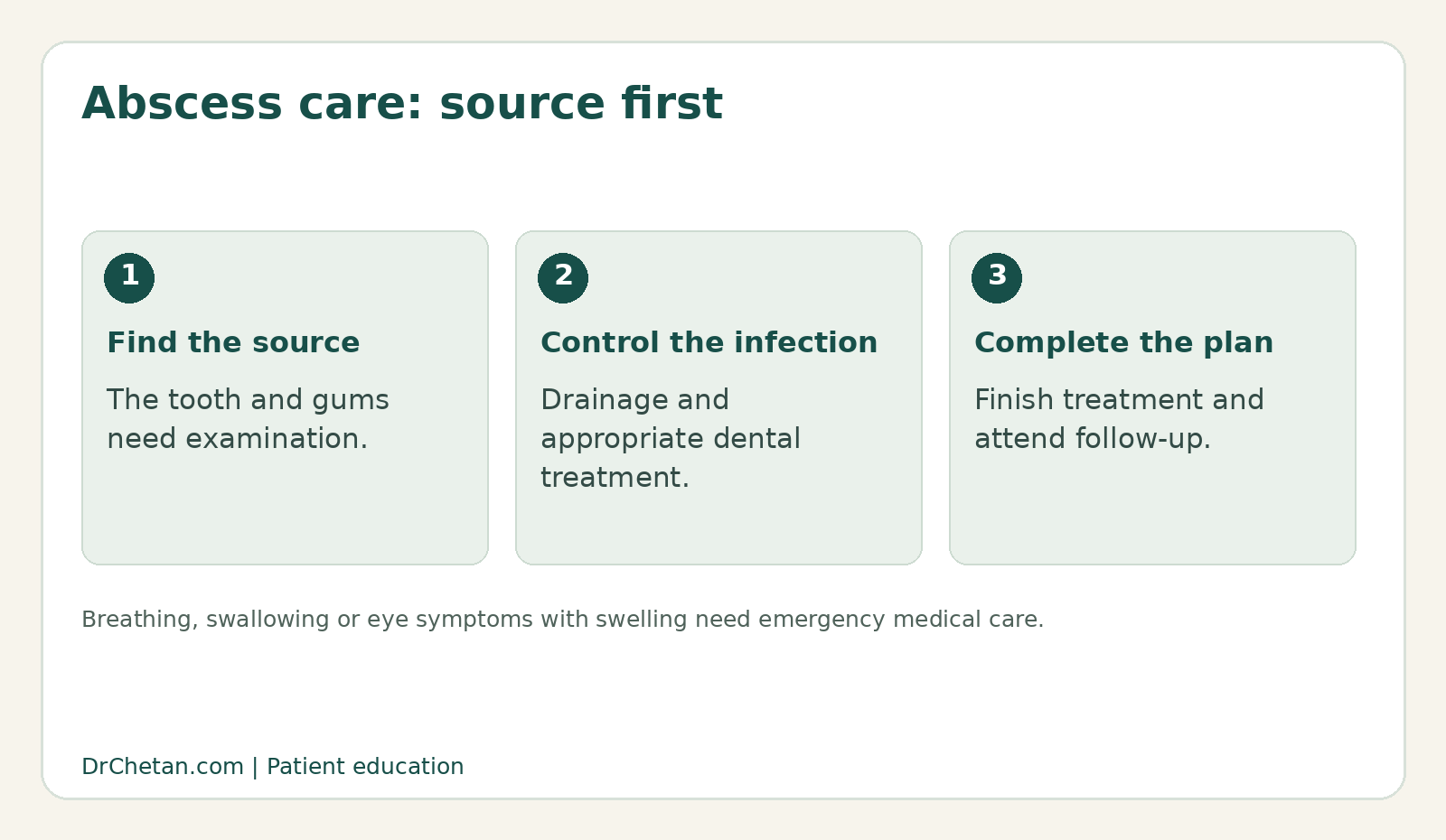
A suspected dental abscess needs urgent dental assessment. Treatment aims to control the infection and address its source. Depending on where the infection began and whether the tooth can be restored, the dentist may recommend drainage, root canal treatment, gum treatment or extraction. These are not interchangeable options for every patient.
What is a dental abscess?
An abscess is a collection of pus associated with infection. Infection can develop around the end of a tooth root after the pulp—the tissue containing nerves and blood vessels—dies and becomes infected. A gum-related abscess can develop in the tissues supporting a tooth. Establishing the source matters because treatment differs.
There may be throbbing pain, tenderness when biting, a swollen gum, bad taste or facial swelling. Some infections drain through a small opening and become less painful. Reduced pain does not prove the infection has gone.
When should I go straight to emergency care?
Seek emergency medical help for difficulty breathing, swallowing or speaking; swelling under the tongue or into the neck; major difficulty opening the mouth; or swelling involving the eye or vision. Rapidly increasing swelling or serious illness also needs immediate assessment. Do not wait for a routine appointment or for antibiotics to start working.
Without these warning signs, contact a dentist urgently and describe the swelling, pain and any fever. Tell them about diabetes, immune suppression or cancer treatment when arranging care.
What will the dentist ask and examine?
Explain when symptoms began, how quickly swelling developed, previous treatment or injury, and medicines already taken. The dentist checks the affected area, nearby teeth, gum tissues and signs of spread. They may assess the tooth’s response to cold, tenderness and gum pocket depths. An X-ray can help evaluate the roots, surrounding bone and whether the tooth is restorable.
Ask, “Is the infection coming from inside the tooth or from its supporting tissues?” The answer helps make the treatment recommendation understandable. A scan is not automatically necessary.
How are the treatment options chosen?
Drainage: if there is an accessible collection of pus, the clinician may release it through the tooth or a controlled incision in the soft tissue. Drainage can relieve pressure, but an incision alone may not deal with the diseased tooth that caused it. Never squeeze, pierce or cut an abscess yourself.
Root canal treatment: when infection comes from inside a restorable tooth, the canals can be cleaned, disinfected and sealed. The tooth then needs an appropriate final restoration. A tooth with a previous root canal may need retreatment or specialist assessment.
Extraction: removal may be recommended when a tooth cannot be restored predictably, has an unfavourable fracture or very poor support, or when alternatives do not fit the patient’s circumstances. Ask about the outlook for retaining it and the implications of removal.
Gum treatment: a periodontal abscess requires assessment and treatment of the gum pocket and local cause. Root canal treatment is not automatically appropriate simply because pus is present nearby.
Will I need antibiotics first?
Not always. Dental treatment is central. Antibiotics may be appropriate for spreading infection, systemic illness, particular medical risks, or certain circumstances where prompt drainage cannot be achieved. They do not repair a cavity or reliably eliminate an untreated source. The decision includes your examination, allergies and other medicines.
Will treatment hurt, and how many visits are needed?
The team discusses local anaesthetic and checks comfort before proceeding. Tell them if you still feel pain so the plan can be adjusted. An urgent visit may provide initial treatment, followed by completion of root canal treatment, a restoration or a review. Ask which stage is being done today and which appointments remain.
Follow the individual aftercare plan and contact the practice if swelling increases, you develop fever or you are not improving as expected. Keep planned follow-up even if pain settles. For overnight pain while arranging care, see toothache at night.
Frequently asked questions
If the abscess bursts, can I cancel my appointment?
No. Drainage can reduce pressure while the source remains. Arrange assessment.
Does an abscess always mean extraction?
No. A restorable tooth may be treatable. The prognosis and alternatives should be discussed.
Can I wait until my antibiotic course ends?
Do not delay dental assessment unless the treating team specifically directs you. Worsening symptoms need earlier help.
References and further reading
- NHS: Dental abscess
- AAE: Abscessed teeth
- SDCEP: Local measures for dental abscess
- AAE: What is a root canal?
- ADA: Antibiotics for dental pain and swelling
Sources checked 2 November 2026. This is general patient education; an examination and an individual treatment plan may be needed.

Leave a Reply