
When an older adult takes several medicines, more than one may contribute to a dry mouth. The first step is to collect an accurate medicines list and ask a dentist, prescriber or pharmacist to review it. Keep prescribed medicines on their usual schedule unless the prescriber advises a change.
Make a list that the team can use
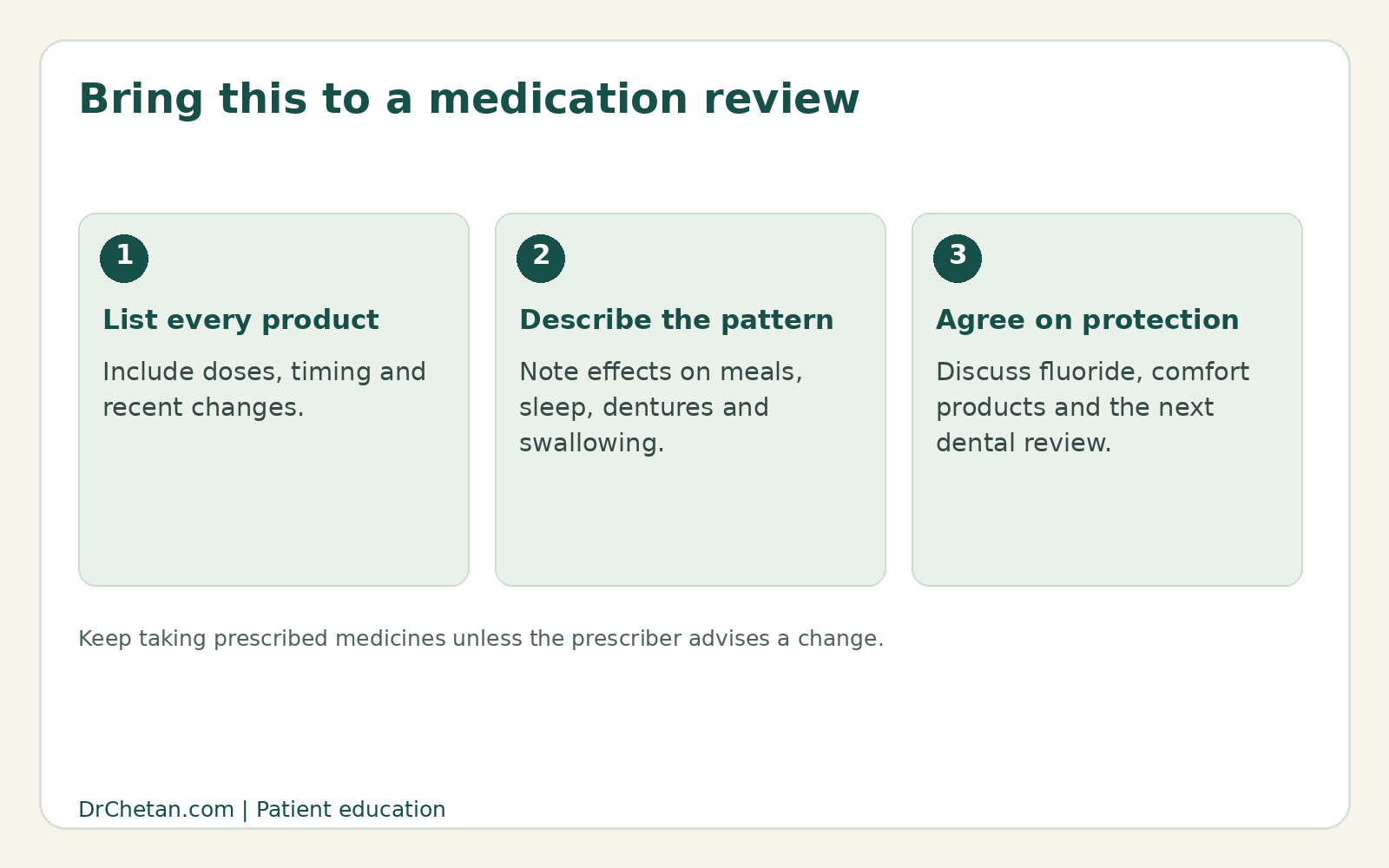
Include each prescription, non-prescription product and supplement, with the dose and when it is taken. Note any medicine that was started, stopped or changed around the time the dryness began. Write down whether symptoms are worst on waking, during meals or all day, and whether they interfere with sleep, speech or wearing dentures.
Bring the list to both the dental visit and the medication review. The dentist can check for damage and oral infection. The prescriber or pharmacist can review which medicines may contribute and whether a change is safe. Sometimes the most appropriate plan is to keep the medicines and manage the effects on the mouth.
Protect exposed roots and denture-bearing tissues
Less saliva makes it harder to clear sugars and acids. Exposed root surfaces can become vulnerable to decay, and a dry mouth can make dentures rub. Ask the dentist to check the gumline, sore areas and denture fit. Brush twice daily with fluoride toothpaste, and ask whether extra fluoride or a shorter review interval is appropriate.
Choose water over sweetened drinks when you can and avoid frequent sugary lozenges. A saliva gel or spray can help with comfort. Sugar-free gum may help some people who can chew and swallow safely, but is unsuitable for some people with swallowing difficulty or poorly fitting dentures.
Adapt the plan to other health needs
For someone with a fluid restriction, ask the medical team how much they can sip and whether a topical moisturising product would help. If the person coughs when drinking or has a swallowing plan, follow that plan and ask their care team before offering gum, lozenges or extra drinks. A caregiver can help by keeping the medicines list up to date and recording changes.
When to contact a clinician
Arrange a review if dryness persists, sores recur, or chewing and swallowing become difficult. Call promptly if the person cannot keep up with permitted fluids or food or seems unwell. Report rapid facial swelling, fever with dental symptoms or difficulty breathing or swallowing urgently.
Frequently asked questions
Is dry mouth an inevitable part of ageing?
No. Medicines, health conditions and treatment history can contribute. A review can help identify what is driving the symptoms.
Should I stop one medicine to see if the mouth improves?
Ask the prescriber first. Stopping some medicines suddenly can cause harm, and a pharmacist can help review the full list.
Can a moisturising gel prevent cavities by itself?
A gel can ease discomfort. Fluoride, daily cleaning and a preventive dental plan help manage decay risk.
References and further reading
Sources checked 3 November 2026. General patient education. Discuss your individual care with your clinical team. Featured image is an AI-created illustration.

Leave a Reply