
The numbers a dentist calls out during a gum examination are usually measurements in millimetres. They describe the space between the gum margin and the point a slim measuring probe reaches beside the tooth. The pattern helps the dental team decide whether your gums need preventive care, further assessment or treatment.
What the dentist measures
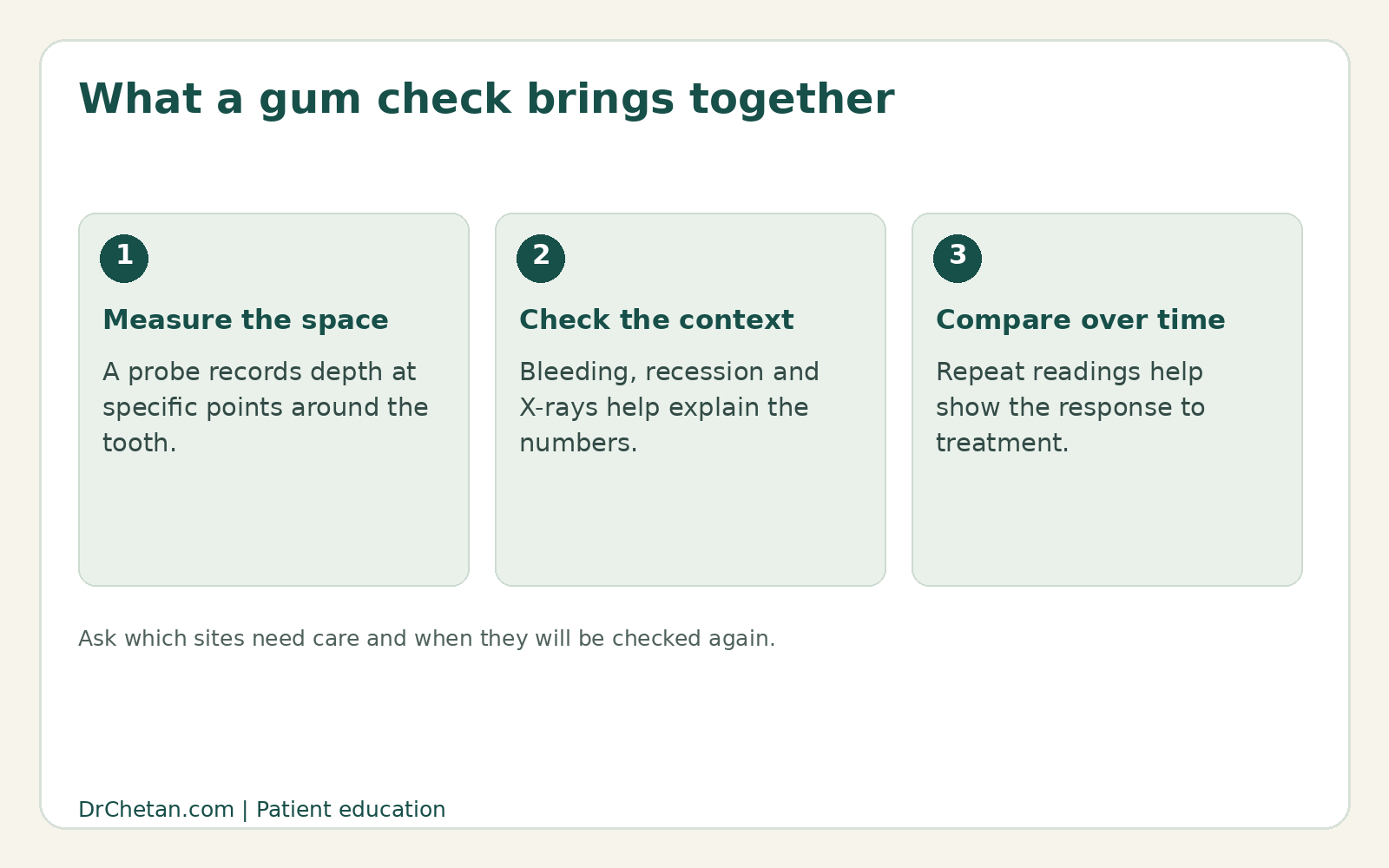
Every tooth has a shallow space where the gum meets it. The dentist gently slides a calibrated probe into this space and records how far it goes. A full periodontal chart often takes several readings around each tooth because the findings can vary from one side to another. The dentist can also record bleeding on probing and the position of the gum margin.
A deeper reading can reflect swelling, loss of attachment that normally holds the gum around the tooth, or a combination. Receding gums can also leave part of the root exposed even when the measured pocket is shallow. That is one reason the dentist reads the chart as a whole.
How to understand the numbers
A shallow measurement without bleeding is generally reassuring. A site that bleeds or repeatedly measures deeper needs context. The dentist may compare it with nearby sites and previous charts, look for recession, and use X-rays when needed to assess bone around the teeth. Plaque, smoking, diabetes and previous gum disease can also influence the overall assessment and follow-up.
For example, two people can have the same reading. One may have swelling without loss of support, while the other may have lost attachment and bone. Ask whether the dentist saw signs of attachment loss and how those findings change the plan.
What can happen after the check
For inflammation limited to the gums, the plan may start with plaque control at home and professional cleaning. If the examination indicates periodontitis, the team may clean below the gumline, address risk factors and reassess after healing. Some persistent or complex sites need specialist care. Measurements taken later help show how sites have responded.
What to ask before you leave
Ask which teeth need attention, whether the findings suggest loss of support and when they will be measured again. Let the team know if probing is uncomfortable or if your gums bleed at home. Trying to measure a pocket yourself can injure the area and gives you little usable information.
Frequently asked questions
Does the measurement hurt?
You may feel light pressure or brief tenderness at an inflamed site. Tell the dental team if a site is painful so they can adjust the examination.
Does one deep reading mean I need surgery?
The chart, bleeding, attachment, X-ray findings and response to initial treatment all influence that decision.
Can a pocket measure smaller later?
Yes. Inflammation may settle and the measurement may improve after care. The team also checks other findings to understand what changed.
Related guide: Common causes of bleeding gums.
References and further reading
- European Federation of Periodontology: gum disease treatment and assessment
- National Institute of Dental and Craniofacial Research: gum disease
Sources checked 3 November 2026. General patient education. Discuss your individual care with your clinical team. Featured image is an AI-created illustration.

Leave a Reply