
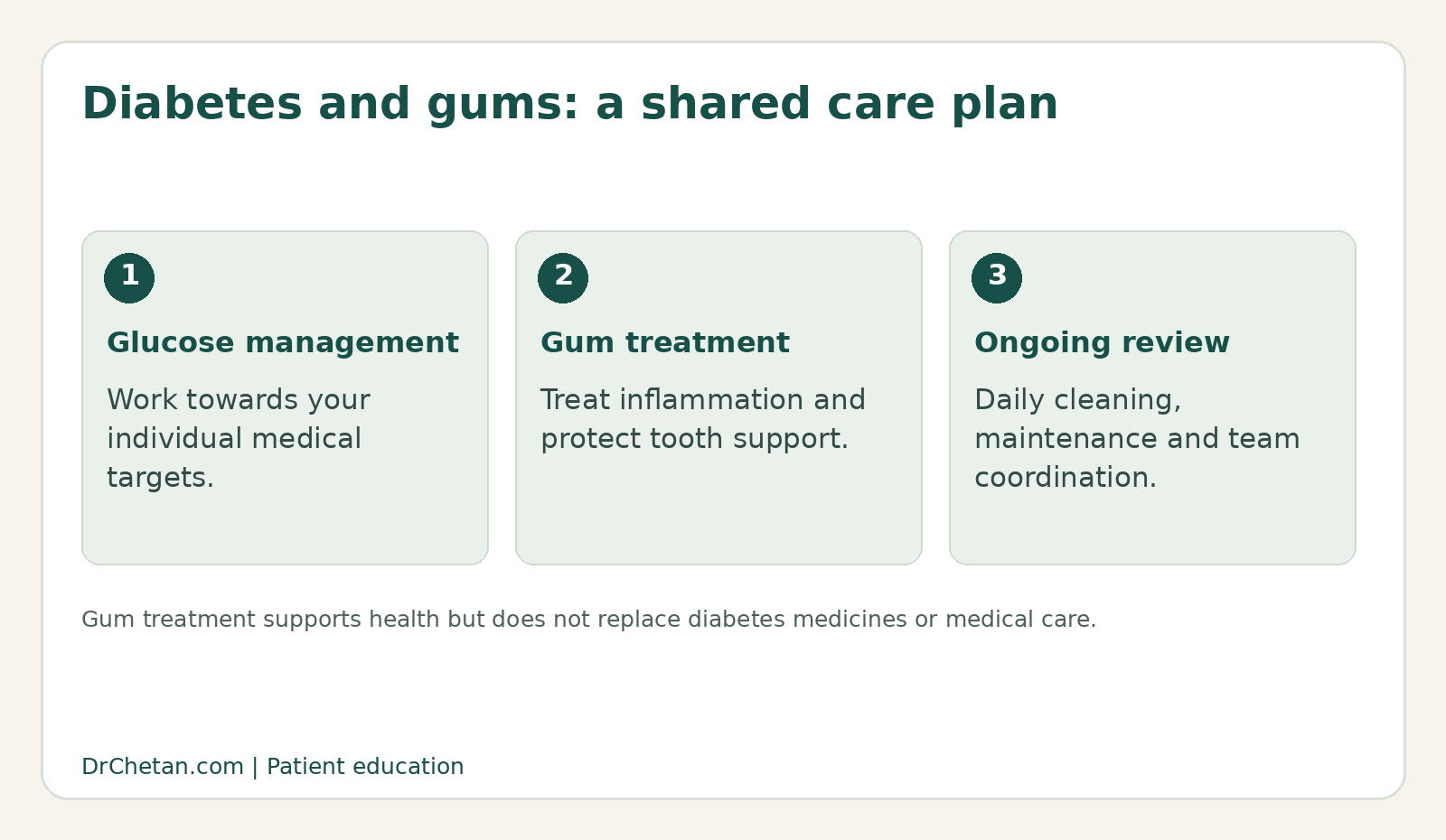
Diabetes increases the risk of gum disease, especially when glucose levels are above the person’s target range. Gum inflammation may also make glucose management more difficult. Looking after both conditions is useful, but dental treatment does not replace diabetes medicines or the care of your medical team.
What is the difference between gingivitis and periodontitis?
Gingivitis is inflammation of the gums, often with swelling or bleeding. It can improve with effective daily cleaning and appropriate professional care. Periodontitis involves damage to the tissues and bone supporting the teeth. It needs ongoing management; brushing alone cannot rebuild the support already lost.
Gum disease is not a personal failure. Plaque bacteria, the body’s response, tobacco use, diabetes and other factors influence risk. The aim of a dental visit is to find what is happening and make a workable plan, not to blame the patient.
How do diabetes and the gums affect each other?
Persistently high glucose can affect the body’s response to infection and healing. People with diabetes can develop more severe periodontal disease. Dry mouth may add to other oral problems, including decay, and should be discussed separately rather than assumed to be gum disease.
Periodontitis creates a continuing inflammatory burden. Research supports a relationship in both directions, but this does not mean bleeding gums diagnose diabetes or that every person with diabetes will lose teeth. Individual risk and findings matter.
What symptoms should I report?
- Gums that bleed during brushing or cleaning between teeth.
- Persistent redness, swelling, tenderness or bad taste.
- Receding gums, new spaces, loose teeth or a change in the bite.
- Persistent bad breath, difficulty chewing or gum swellings.
- Dry mouth, sores or white patches, which may indicate another problem.
Some periodontal damage develops with little discomfort, so absence of pain is not a reason to avoid routine assessment. Tell the dentist about diabetes even when you feel well. Report your latest HbA1c if available, current medicines, glucose patterns and other health conditions.
What will the dentist check?
The examination includes gum inflammation, plaque and calculus, the spaces around teeth and tooth stability. A small measuring instrument helps record gum pockets. Appropriate X-rays may show changes in supporting bone. These findings establish the gum diagnosis; the colour of a toothbrush after brushing does not show the full extent of disease.
Ask for the findings in ordinary language: “Is this gingivitis or periodontitis? Which areas need treatment? What will you measure again?” This makes it easier to follow the plan and understand why more than a cosmetic polish may be recommended.
What does treatment involve?
The team helps you choose an effective brushing and interdental cleaning routine. Professional cleaning removes deposits that cannot be brushed away. Periodontitis may require cleaning below the gumline, often called subgingival instrumentation or scaling and root planing, with local anaesthetic when needed.
After initial treatment, the dentist reassesses healing and any remaining deep pockets. Further treatment or referral to a periodontist may be appropriate. Maintenance visits are tailored to risk and response. Antibiotics and surgery are not automatic for everyone with diabetes.
Will treating the gums lower my blood sugar?
A Cochrane review found moderate-certainty evidence that periodontal treatment can improve HbA1c in people with both diabetes and periodontitis. Most participants had type 2 diabetes. This is an average benefit from studied groups, not a promise of a particular reduction for an individual.
The main reason to treat gum disease remains protecting oral health and function. Continue glucose monitoring and prescribed medical care. Only your diabetes team should advise changes to diabetes medicines; an improved gum examination is not a reason to stop them.
How can I make the plan practical?
Ask for a demonstration using your own brushing and cleaning tools, and explain any difficulty with dexterity, costs or daily routines. Request help to stop tobacco if needed. Agree how the dentist and diabetes clinician will share relevant information and when to review each condition.
For an acute painful swelling, pus or feeling unwell, contact a dentist promptly. Breathing or swallowing difficulty with swelling needs emergency medical care. Do not wait for a routine diabetes review before asking about a possible oral infection.
Frequently asked questions
Do bleeding gums mean my diabetes is uncontrolled?
Not necessarily. They need a dental assessment; glucose management is assessed with your diabetes team.
Can teeth be kept if I have periodontitis?
Many can be maintained with treatment and continuing care, but prognosis varies by tooth and disease severity.
Is mouthwash enough?
No. A rinse may be an adjunct in selected cases; it does not replace cleaning or periodontal treatment.
References and further reading
- NIDCR: Diabetes and oral health
- CDC: Periodontal gum disease
- Indian Society of Periodontology and RSSDI joint guidance
- Cochrane: Periodontal treatment for glucose management
- Standards of Care in Diabetes 2026: Dental care
Sources checked 2 November 2026. This is general patient education; an examination and an individual treatment plan may be needed.

Leave a Reply