
Pain when you bite is a reason to arrange a dental assessment, but it does not identify one particular diagnosis. A cracked tooth, a loose or damaged filling, decay, or inflammation around a tooth can produce similar complaints. The useful question is what triggers the pain, what else is happening, and what the examination shows.
What might cause pain when biting?
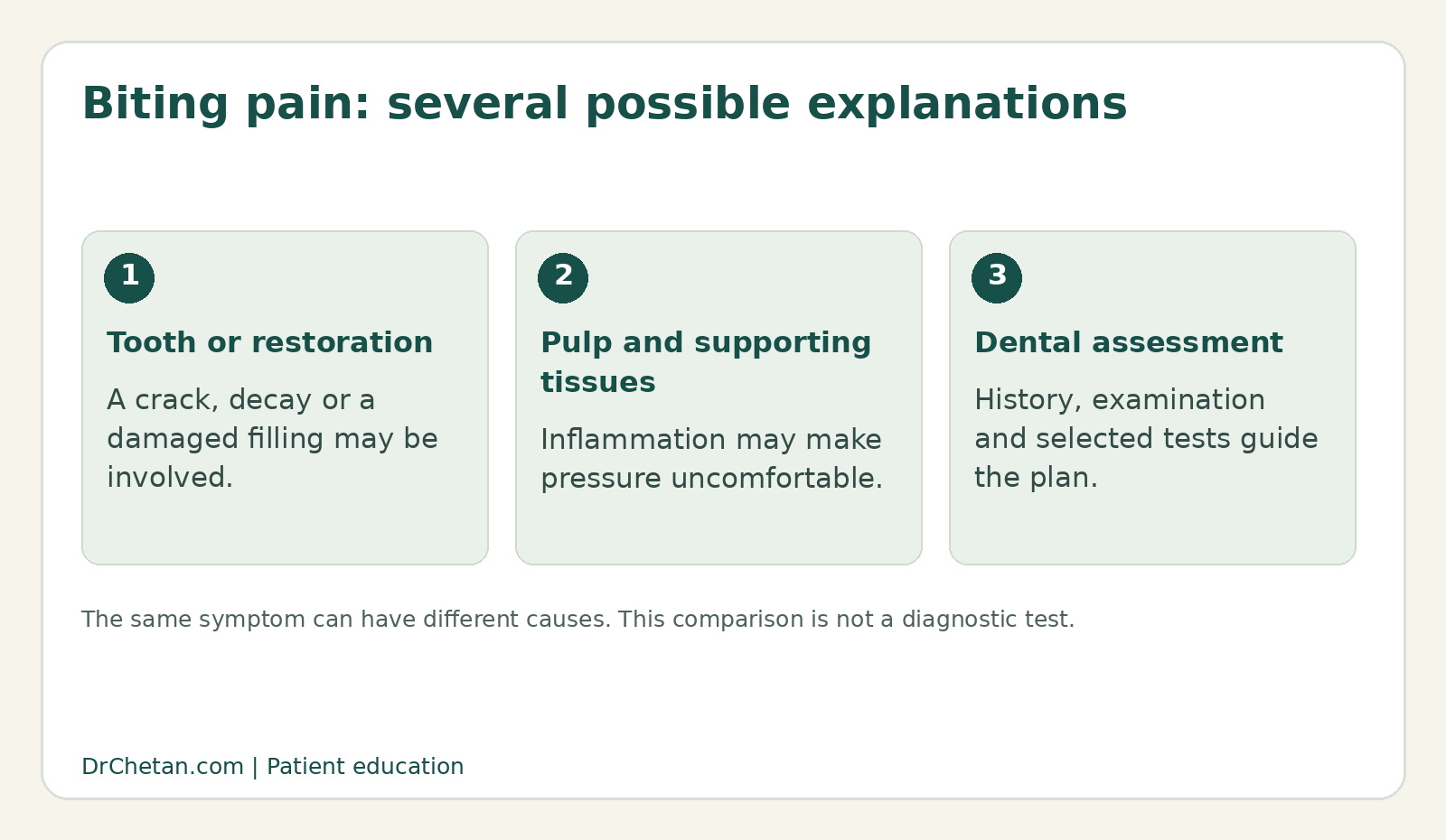
A crack or a broken cusp: pressure can move weakened parts of a tooth and irritate the tissues inside. Some people notice a sharp twinge as they release their bite; others notice temperature sensitivity. These clues raise suspicion, but do not prove there is a crack.
A filling or bite problem: a damaged or loose restoration can make chewing uncomfortable. After a recent filling, tell the dentist if that tooth seems to touch before the others. A contact that needs adjustment is one possibility; a deep cavity, crack or pulp problem may need a different response.
Decay or inflammation: a cavity can weaken the tooth, and the pulp—the soft tissue containing nerves and blood vessels—may become inflamed. Inflammation in the tissues supporting the root can also make the tooth tender under pressure. Sometimes the source is less obvious than the place you feel the pain.
Which details should I tell the dentist?
- When the pain started, and whether there was a hard bite, injury or recent treatment.
- Whether it happens while pressing down, releasing the bite, or both.
- Whether cold, heat or sweet foods also trigger symptoms, and whether pain continues afterwards.
- Whether there is pain without eating, disturbed sleep, swelling, a bad taste or a loose tooth.
- Your medicines and medical conditions.
A short note about the pattern is more useful than repeatedly testing the tooth with hard food. If you cannot point to one tooth confidently, say so. Do not assume the nearest visible filling is necessarily responsible.
How will the dentist find the cause?
The dentist examines the tooth, its restorations, the gums and the way the teeth meet. Depending on the findings, they may use a controlled bite test, gentle tapping, gum measurements, a light or magnification, and cold or other pulp sensibility tests.
Selected dental X-rays can help assess decay, roots and supporting bone. Fine cracks may not be visible on an ordinary radiograph, so a normal-looking image does not settle every question. Further imaging or referral is considered when it could change the plan; a scan is not automatically needed for everyone.
What treatment might be offered?
A bite adjustment may help when a restoration is creating an unsuitable contact. A damaged filling may need repair or replacement. A weakened cusp may need protection with an appropriate restoration. If pulp disease is present, the discussion may include pulp-preserving treatment in selected cases or root canal treatment.
Some teeth cannot be predictably restored and extraction may be recommended. Treatment should follow the diagnosis and the tooth’s restorability, rather than the symptom alone. Ask what the proposed treatment addresses, what alternatives exist and what would happen if you wait.
What can I do while waiting?
Avoid hard chewing on the painful area, keep cleaning gently, and contact the practice for an appointment. A pharmacist can advise whether a pain medicine is suitable for you. Do not place aspirin or harsh remedies on the tooth or gum, try to file a filling, or take leftover antibiotics.
If symptoms occur overnight, see the practical guide to toothache at night. Temporary relief does not establish that the underlying problem has healed.
When is it urgent?
Seek urgent dental care for severe or worsening pain, swelling, fever or feeling unwell with dental symptoms. Swelling that affects breathing, swallowing or speaking needs emergency medical help. Do not postpone care because you hope the tooth will become less sensitive.
Frequently asked questions
Does pain when releasing my bite definitely mean a crack?
No. It is a useful clue to report, not a home diagnostic test. Examination and other findings are needed.
Will I automatically need a root canal?
No. Some causes can be addressed by restoring the tooth or correcting a contact. Pulp treatment is considered only when the findings justify it.
Can I wait if the pain comes and goes?
Intermittent symptoms still deserve assessment. A crack or restoration problem can be present even when the tooth is comfortable between meals.
References and further reading
- American Association of Endodontists: Tooth pain
- American Association of Endodontists: Cracked teeth
- NHS: Toothache
- MouthHealthy: Dental emergencies
- AAE: Cracking the cracked tooth code
Sources checked 2 November 2026. This is general patient education; an examination and an individual treatment plan may be needed.

Leave a Reply