
A small chip, an uneven edge or a gap can make you notice one tooth every time you smile. Composite bonding is one way a dentist may repair or reshape that tooth by attaching tooth-coloured resin. It can preserve a great deal of natural tooth, but the best choice depends on why the problem developed and how your teeth meet.
What is composite bonding?
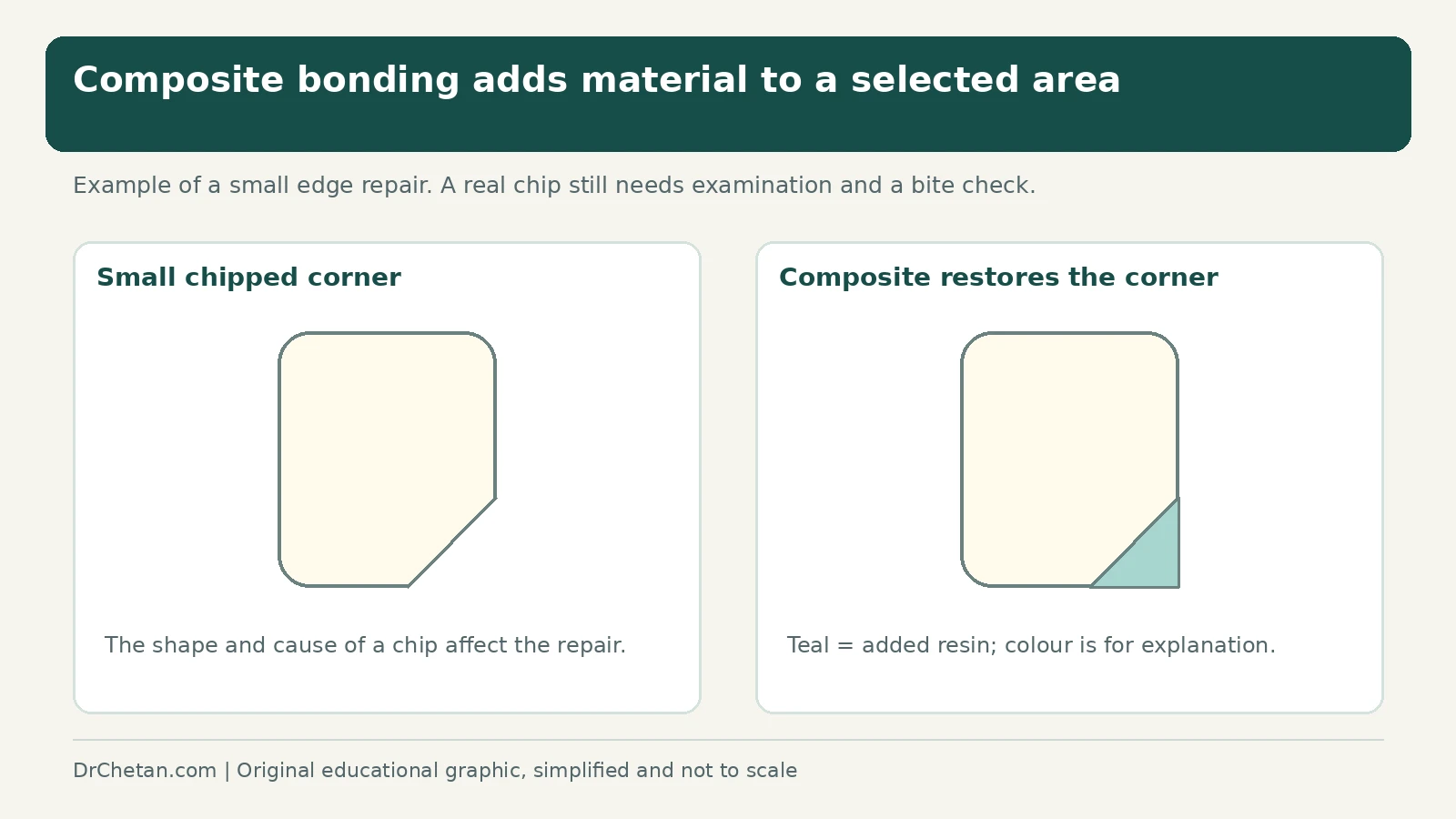
Composite is a tooth-coloured restorative material. With bonding, the dentist attaches it directly to the tooth and shapes it into the planned contour. The material is often related to the resin used for white fillings. A filling mainly replaces tooth structure lost through decay or damage; cosmetic bonding may add to a healthy tooth to change an edge, proportion or appearance.
The name describes a material and an attachment technique, rather than one identical procedure. A tiny edge repair is different from covering a whole front surface with a composite veneer or rebuilding several worn teeth. Ask which surfaces will be treated and what the dentist expects the material to do.
What can it help with, and what are its limits?
Bonding may be suitable for a small chip, an irregular edge, a modest change in tooth shape or selected small spaces. It can mask some colour differences. It does not move the roots, treat an unhealthy pulp or correct a substantial jaw discrepancy. Adding material to close a large gap may produce teeth that look or feel too wide.
For example, a small corner that chipped after biting a hard object may suit a local repair. Repeated chips in the same place need a check of the bite and possible grinding; simply adding more resin without understanding the load may lead to another break. Newly damaged teeth should be examined even when the visible chip looks small.
What happens at the assessment?
The dentist asks about the chip or cosmetic concern, previous repairs, symptoms and your goals. They examine the teeth and gums, how your upper and lower teeth contact, and whether there is decay, wear or a crack. Selected X-rays or other tests may be needed when the findings justify them. A photograph alone is not a complete assessment.
Discuss alternatives such as monitoring a harmless variation, smoothing a very small rough edge, whitening where appropriate, orthodontic movement, or another restoration. A mock-up can help you understand a proposed change, but it is a planning aid rather than a guaranteed result. Ask about the cost of later polishing and repairs as well as the initial treatment.
How does the dentist do composite bonding?
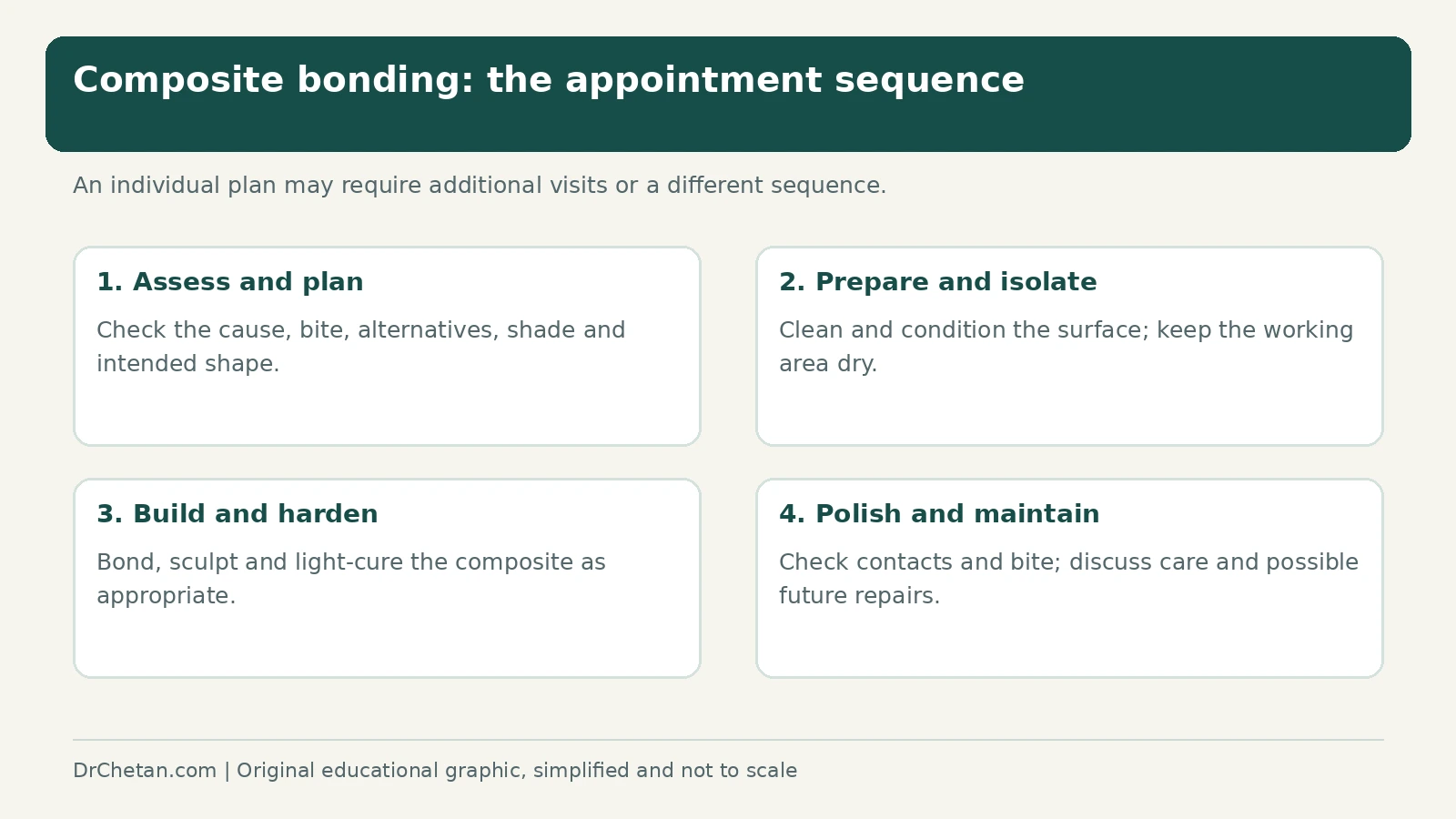
1. Agree the shape and choose the shade
The dentist selects a shade and discusses the amount and position of the addition. If you are planning whitening, mention it before colour matching: whitening natural teeth later may leave existing resin a different shade. The order and waiting interval should be planned with your dentist.
2. Prepare and keep the tooth dry
The surface is cleaned and any necessary preparation is kept appropriate to the repair. Some mainly additive cases need little or no drilling, while damaged edges or decay may need preparation. Cotton rolls, suction or a rubber dam help control moisture. A protective strip may separate the treated tooth from its neighbour.
3. Bond, build and harden the resin
The dentist conditions the surface and applies an adhesive using the chosen system. Composite is placed and shaped, often in small layers. A dental curing light hardens the light-cured material. This is a controlled clinical process; applying household glue or a home repair kit is not an equivalent treatment.
4. Finish, polish and check your bite
The dentist refines the edges, polishes the surface and checks how the repair meets the opposing teeth. Contacts between neighbouring teeth should allow appropriate cleaning. Tell the dentist if an edge catches your tongue or the tooth feels as though it contacts first when you close.
Will it hurt or need an injection?
A small addition confined to enamel may not need local anaesthetic. Deeper preparation, treatment of decay or an already sensitive tooth may require it. Tell the dentist about sensitivity and anxiety before starting. You should be able to signal if you feel pain rather than trying to tolerate it silently.
One small repair is often possible in one visit; multiple teeth, bite planning or disease treatment may require more. A quick appointment is not the same as a promise that every concern can be solved immediately.
Is bonding reversible, and how long does it last?
Bonding can be conservative, but do not assume that it can always be removed without changing the original surface. Preparation removes tissue, and separating resin from enamel later requires care. Ask exactly what will be removed before agreeing to treatment.
Composite can chip, stain, wear or lose polish. The size and location of the addition, the bite and habits matter. There is no fixed replacement date that applies to everyone. Some problems can be managed by polishing or repairing an area rather than replacing the whole restoration; the dentist first checks the cause and condition of the tooth.
How should I look after bonded teeth?
Brush twice daily with fluoride toothpaste and clean between teeth each day. Avoid using the repaired edge to open packets or bite hard objects. Discuss clenching, grinding and sports protection with your dentist. If the area is numb after treatment, wait for normal feeling before chewing to avoid biting your lip or cheek.
Contact the practice if the repair becomes sharp, loose, repeatedly traps food or feels high in the bite. New or increasing pain needs assessment. Facial swelling with difficulty breathing or swallowing requires emergency medical care. Do not attempt to file or glue the repair yourself.
What should I ask before choosing bonding?
- What caused the problem, and is that cause being managed?
- Will you add material, remove tooth structure, or both?
- Would movement, whitening or a smaller repair meet my goal?
- What maintenance, repair and replacement costs should I expect?
The useful goal is a comfortable, cleanable repair that suits the tooth and your expectations. An extremely white or perfectly uniform smile is not required for dental health.
Frequently asked questions
Is bonding the same as a veneer?
A small bonded repair may cover only an edge. A composite veneer covers much of the front surface; a ceramic veneer is a separately made shell. Ask which treatment is proposed.
Can bonding close every gap?
No. The size and cause of the space, tooth proportions and bite determine whether adding resin is sensible or tooth movement is a better option.
Will whitening lighten the bonding?
Do not expect resin to whiten like natural enamel. Discuss whitening before the shade is selected, or you may need further work to address a colour mismatch.
Does chipped bonding always need complete replacement?
No. A dentist may be able to polish or repair a limited defect after checking the tooth and the cause of the damage.
Can I eat normally afterwards?
Follow the practice’s instructions. Light-cured composite is hardened during treatment, but wait until numbness has worn off before chewing and avoid testing the repair with hard objects.
Related reading: How to brush your teeth properly. Follow the specific cleaning instructions for your restoration or appliance as well.
Sources and further reading
- Canadian Dental Association: Bonding and veneers
- American Dental Association: Materials for direct restorations
- Bristol Dental School: Composite build-ups for tooth wear
- NHS: Chipped, broken or cracked tooth
- Ontario Dental Association: Cosmetic dentistry
Educational information for patients. Diagnosis and treatment depend on an examination and your individual circumstances. Consultation artwork is AI-created; explanatory visuals are original simplified educational graphics.

Leave a Reply