
Food repeatedly packing into the same space deserves a dental check. Cleaning removes the debris, but the reason it collects may involve the contact between teeth, a filling or crown, tooth position, or changes in the gum. The best treatment follows the cause rather than simply closing every visible gap.
Why does it keep happening in one place?
Adjacent teeth normally have a contact area, with gum tissue below it. Food can be forced down from the chewing surface when the contact or chewing relationships are unsuitable. It can also collect from the side when the gum no longer fills the space. These patterns may feel similar but need different solutions.
Decay, a broken restoration, an altered tooth shape or drifting teeth can contribute. A new food trap beside a crown is worth reporting, but it does not establish that the crown is defective. The dentist needs to examine the restoration, neighbouring tooth and supporting tissues together.
What will the dentist ask?
Point out the exact place, which foods are difficult and when the problem began. Mention recent dental work, whether floss slips through loosely or catches and shreds, soreness after meals, bleeding, a bad taste or sensitivity. If the problem happens only during chewing, say so even if nothing is trapped at the appointment.
Useful questions are: “Is the contact open, is the gum space enlarged, or is there a problem with the tooth or restoration?” and “What finding makes you recommend this treatment?” These questions can prevent an assumption that every food trap needs a new crown.
What does the examination involve?
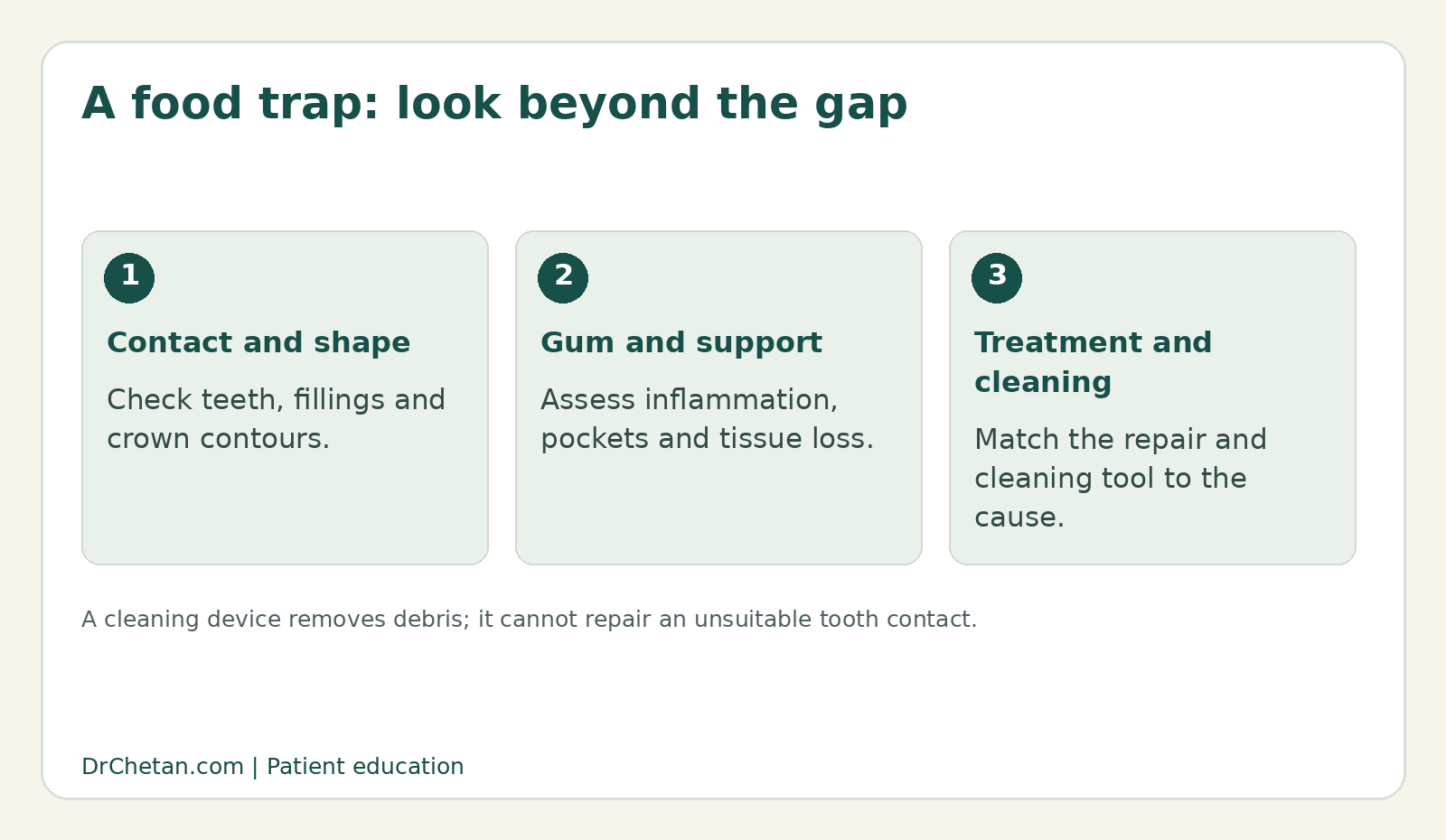
The dentist examines the contact, restoration edges and contours, tooth alignment and bite. They can assess how floss passes between the teeth and check for gum inflammation, pockets and mobility. Selected X-rays may help identify decay or changes in supporting bone that are not visible from the surface.
Bring previous dental images if available. X-rays are chosen for a diagnostic purpose, not automatically for every food trap. A normal-looking photograph cannot show all the areas involved.
How might the dentist treat it?
A tooth or restoration problem: treatment may involve repairing or replacing a defective filling, treating decay, or correcting the shape or contact of a restoration. Whether a small repair is reasonable depends on the material, remaining tooth and location. A full replacement is not always required.
A gum-related space: periodontal assessment, suitable cleaning tools and treatment of gum disease may be the priority. Adding filling material does not recreate lost gum support. Overfilling a space can make cleaning harder, so the plan should consider access as well as appearance.
A bite or tooth-position issue: carefully selected adjustment, restorative treatment or orthodontic assessment may be considered. Removing sound tooth structure is irreversible and needs a clear reason. Do not try to smooth a sharp edge or reshape the contact yourself.
There may be more than one contributing factor. Ask what improvement is realistic, whether the problem may recur, and how success will be checked after treatment.
How can I clean it safely while waiting?
Use floss gently, curving it around each tooth rather than snapping it onto the gum. An appropriately sized interdental brush or a water flosser may help in some spaces. Ask the team to demonstrate the tool and size that suits you; forcing a large brush can injure tissue.
Avoid pins, needles, sharp objects and repeated digging. If floss catches, hurts or cannot be removed comfortably, contact the practice rather than pulling forcefully. Keep brushing twice daily with fluoride toothpaste. Cleaning tools help control debris; they do not alter a damaged restoration or diagnose decay.
Will treatment hurt, and how many visits are needed?
A straightforward assessment and cleaning advice may fit one visit. A repair, crown replacement, gum treatment or orthodontic plan can require more. Local anaesthetic can be discussed for procedures that need it. Ask for a review if the area still traps food after treatment rather than assuming you must live with it.
Seek urgent dental advice for increasing pain, pus or swelling. Facial swelling with trouble breathing or swallowing requires emergency medical care.
Frequently asked questions
Does shredded floss prove I have a cavity?
No. A rough restoration, tight contact or another cause may be responsible. Report it for examination.
Can mouthwash fix the gap?
No. It does not change tooth contacts or restoration contours.
Should I stop cleaning because the gum bleeds?
Use gentle cleaning and arrange assessment. Persistent bleeding needs investigation; digging harder is not the answer.
References and further reading
- Food impaction in dentistry: Revisited
- Classification and treatment of food impaction, 2025
- MouthHealthy: Flossing and interdental tools
- NIDCR: Gum disease assessment
- MouthHealthy: When dental X-rays are needed
Sources checked 2 November 2026. This is general patient education; an examination and an individual treatment plan may be needed.

Leave a Reply