You finish brushing, spit into the basin and notice pink foam or a little blood. It may happen without any pain, which makes it tempting to ignore.
Bleeding gums deserve attention, especially when it keeps happening. Arrange a dental appointment and continue gentle cleaning. Repeated bleeding, swollen gums or persistent bad breath can be signs of gum disease. A small amount during brushing is usually different from heavy bleeding that will not stop.
Why do gums bleed?
One common reason is a build-up of dental plaque, the sticky film that forms on teeth. Bacteria in plaque can trigger inflammation where teeth and gums meet. Inflamed gums bleed more easily when a toothbrush or floss touches them.
Plaque can also harden into tartar, also called calculus. Brushing at home cannot remove this hardened deposit; it needs professional cleaning. This is why brushing more forcefully is not a solution to every gum problem.
Other contributors include rough cleaning, pregnancy-related changes and certain medicines. A dental assessment can help identify the cause.
Gingivitis and periodontitis: what is the difference?
These terms describe different problems affecting the tissues around your teeth.
| Condition | What it means | Why it matters |
|---|---|---|
| Gingivitis | Inflammation affecting the gums; they may swell or bleed, sometimes without pain. | Plaque-related gingivitis is reversible with effective cleaning and appropriate dental care. |
| Periodontitis | Gum disease involving damage to the supporting tissues and bone around teeth. | It needs professional treatment and ongoing care. Brushing alone does not restore lost support. |
Bleeding by itself cannot tell you which condition you have. A gum examination is more useful than trying to diagnose yourself from the amount of blood or the appearance of your smile.
Could the toothbrush or floss be causing it?
Yes. Hard brushing can irritate your gums, so switch to a soft-bristled brush and use gentle pressure. Do not scrub harder to try to make the bleeding stop. If bleeding happens regularly, do not assume the brush is the whole explanation.
Floss should slide between teeth rather than snap down onto the gums. Curve it around the side of each tooth and move it gently along that surface. If a particular space remains painful to clean, ask your dentist to check it and demonstrate a suitable technique.
If you have only just started flossing, a little initial bleeding may settle in about a week. Bleeding that persists, recurs or concerns you still needs assessment. You do not need to wait a week before booking an appointment.
What should you do at home?
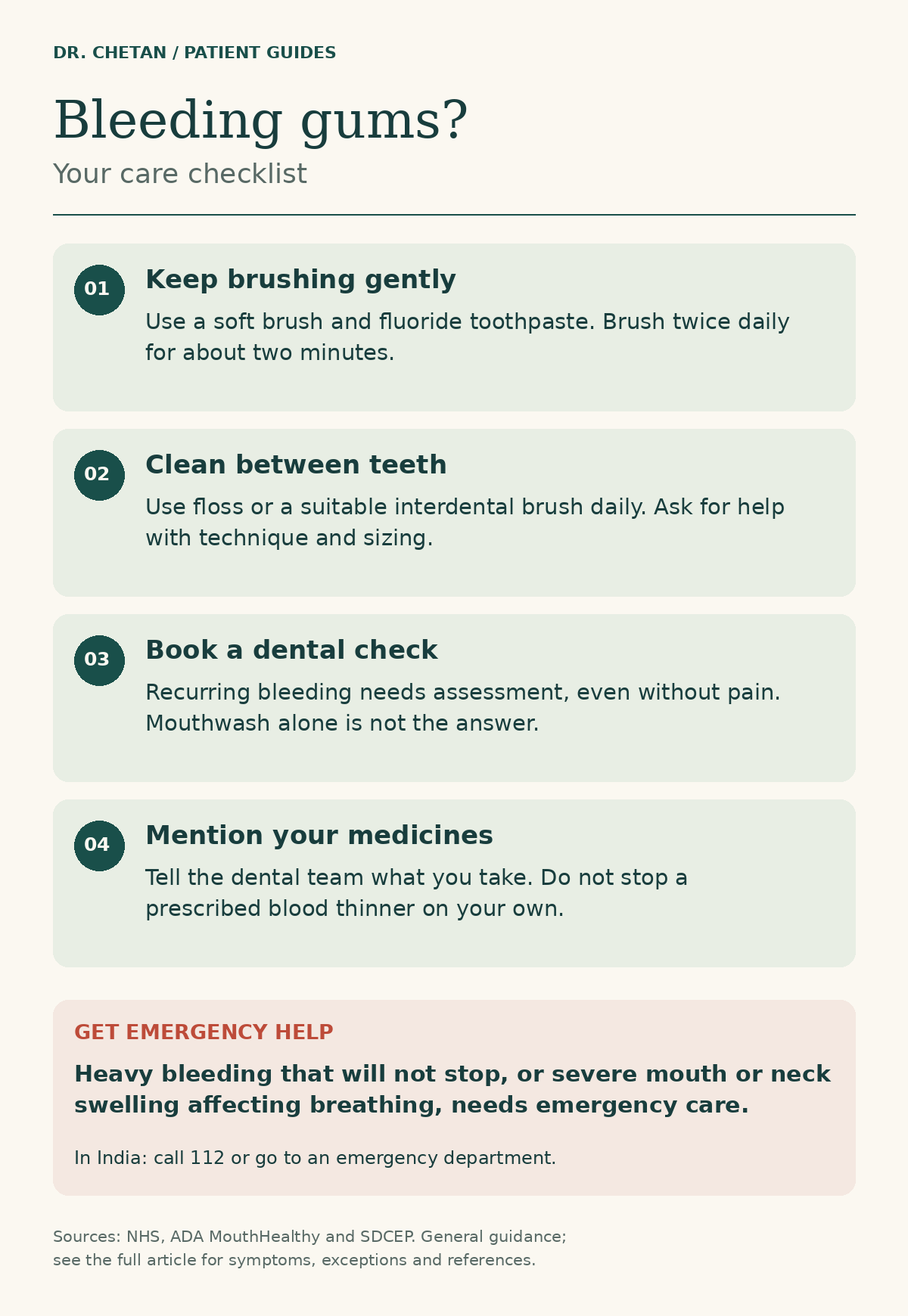
1. Continue gentle, regular brushing
Avoiding a bleeding area can leave the plaque that is contributing to inflammation in place. Keep cleaning gently while arranging advice. With improved plaque removal, inflamed gums should become healthier and bleed less; continuing symptoms need professional attention. This advice concerns mild bleeding during cleaning, rather than an actively bleeding wound after an injury or procedure.
For most adults, a useful routine is:
- Brush twice a day for about two minutes, including before bed.
- Use fluoride toothpaste containing 1,350–1,500 ppm fluoride, unless your dentist advises otherwise.
- Clean the outside, inside and chewing surfaces of every tooth.
- Spit out excess toothpaste after brushing; do not immediately rinse it away with water.
Pay attention to the tooth surfaces at the gumline. Ask your dental team to show you how to reach them without scrubbing the gum tissue. A demonstration using your own brush can make the advice easier to repeat at home.
2. Clean between your teeth every day
A toothbrush does not fully clean the spaces between teeth. Use a suitable interdental cleaner as part of your daily routine. Floss can help in tight contacts; interdental brushes may suit spaces that can accommodate them. Your dentist can help select the tool and size.
Do not repeatedly force a tool through a painful space. If cleaning hurts despite a careful technique, get advice rather than abandoning the area or pushing harder.
3. Get help with factors that make gum disease harder to control
Tell your dentist if you have diabetes, use tobacco or have a family history of serious gum disease. These details help them assess your risk and plan care. If you have diabetes, continue the management plan agreed with your medical team.
Smoking can hide some outward signs of gum disease, including bleeding. Having little or no bleeding therefore does not prove that a smoker’s gums are healthy. Ask for support to stop tobacco use.
Will mouthwash or a special toothpaste fix it?
Mouthwash may have a place in a dentist’s treatment plan, but it does not replace removing plaque with a toothbrush and suitable interdental cleaning. Repeatedly changing products can delay the examination needed to identify the cause.
Chlorhexidine mouthwash is generally used for a limited course when appropriate. It can stain teeth, and the recommended schedule depends on the product and reason for treatment. If it is advised, follow the instructions about duration and its timing around toothbrushing. Avoid making it an indefinite daily treatment on your own.
What if you are pregnant or taking blood thinners?
During pregnancy
Hormonal changes can make gums more prone to inflammation and bleeding. Tell your dentist that you are pregnant and describe the symptoms. Routine preventive care and necessary dental treatment can be provided during pregnancy; pregnancy alone is not a reason to leave bleeding gums unchecked.
While taking blood-thinning medicines
These medicines can make bleeding more noticeable. Tell both your dentist and the clinician managing the medicine about new or persistent bleeding. Do not stop or change a prescribed medicine yourself, including a prescribed blood thinner or aspirin. Take an up-to-date medicine list to your appointment.
If bleeding does not stop quickly or is more than a small amount, seek prompt clinical advice. Bleeding that occurs without brushing, continues despite treatment or comes with other unexplained symptoms may need medical assessment as well as a dental check.
When should you seek help?
Book a dental appointment
Arrange a check if your gums bleed during brushing, flossing or eating, particularly if it keeps happening. Mention swelling, soreness, bad breath or a bad taste. A child with sore, bleeding gums should also be assessed.
Ask for urgent dental advice
Do this if the gums become very sore and swollen, an adult tooth becomes loose, or you notice a mouth lump or concerning patch. An ulcer lasting two weeks or longer also needs prompt assessment. Tell the dental team what has changed so they can decide how quickly to see you.
Get emergency medical help
Heavy mouth bleeding that will not stop, or severe mouth or neck swelling affecting breathing, needs emergency care. Go to an emergency department or call your local emergency service. In India, the integrated emergency number is 112.
What will the dentist check?
Expect questions about when the bleeding started, whether it happens in one place or throughout the mouth, your cleaning routine, medical conditions and medicines.
The dentist may examine the gums for inflammation and recession, measure the spaces around teeth with a small probe, and check whether teeth are loose. X-rays may be needed to assess the supporting bone. The findings determine whether you need routine cleaning, more extensive gum treatment or referral to a periodontist, a dentist specialising in gum disease.
Before the appointment, note whether bleeding happens only during cleaning or also on its own. Bring the names of your medicines and mention anything else that seems unusual. These details help the clinician decide whether further investigation is needed.

How are bleeding gums treated?
Treatment depends on the cause and the condition of the supporting tissues.
For plaque-related gingivitis, care usually combines improved daily cleaning with professional removal of deposits where needed. Your dental team can help you make your routine more effective and review the response.
Periodontitis may require cleaning below the gumline, ongoing monitoring and sometimes specialist treatment. Long-term home care remains essential. The aim is to control the disease and protect the support that remains; do not assume that one cleaning appointment ends the need for follow-up.
Frequently asked questions
How long should it take for bleeding to improve?
Mild bleeding related to starting flossing may improve in about a week. Inflamed gums can take longer to settle with effective care. There is no guaranteed deadline that applies to every cause. Arrange assessment for recurring bleeding, and seek advice sooner if it worsens.
Does no pain mean the gums are healthy?
No. Gum disease can be painless, including when the supporting tissues are affected. Keep regular dental appointments even when your mouth feels comfortable.
Does gum bleeding mean I need vitamins?
Not automatically. Nutritional deficiencies are among the possible causes, but plaque, local irritation and other factors also need consideration. A clinician can decide whether a medical investigation or supplement is appropriate; bleeding alone does not identify a deficiency.
Should I wait until it hurts to see a dentist?
No. Earlier assessment makes it possible to identify and manage a gum problem before more support is lost. You do not have to accept bleeding as a normal part of brushing.
*This guide provides general information. Your dentist can advise you after examining your teeth and gums.*
References for the article
Accessed 29 October 2026. Keep these source links in the published article or in a compact references section.
- NHS: Gum disease
- NIDCR: Periodontal (Gum) Disease
- American Dental Association, MouthHealthy: Bleeding Gums
- SDCEP: Information about gingivitis
- SDCEP: Information about periodontitis
- American Dental Association, MouthHealthy: Flossing
- Oral Health Foundation: What should I do if my gums are bleeding?
- NHS: How to keep your teeth clean
- American Academy of Periodontology: Gum Health and Tobacco Use
- SDCEP: Oral hygiene aids
- NHS: How and when to use chlorhexidine
- American Dental Association: Pregnancy
- NHS: Apixaban
- MedlinePlus: Bleeding gums
- NHS: Emergency and urgent dental appointments
- Government of India: Emergency Response Support System
- American Dental Association, MouthHealthy: Gum Disease

Leave a Reply