
Oil pulling means swishing an edible oil around the mouth. If it is part of your routine, keep brushing with fluoride toothpaste, cleaning between your teeth and getting dental care when needed. There is no reliable evidence that oil pulling can replace those steps.
What have studies actually measured?
Some small studies have looked at short-term changes in plaque, gum inflammation or bacteria after oil pulling. Those findings do not establish that it prevents cavities, treats gum disease or safely whitens teeth over time. The American Dental Association does not recommend oil pulling as a dental hygiene practice because it lacks reliable evidence. An improvement in how your mouth feels after rinsing does not tell you whether a tooth or gum problem has improved.
Which parts of daily care matter most?
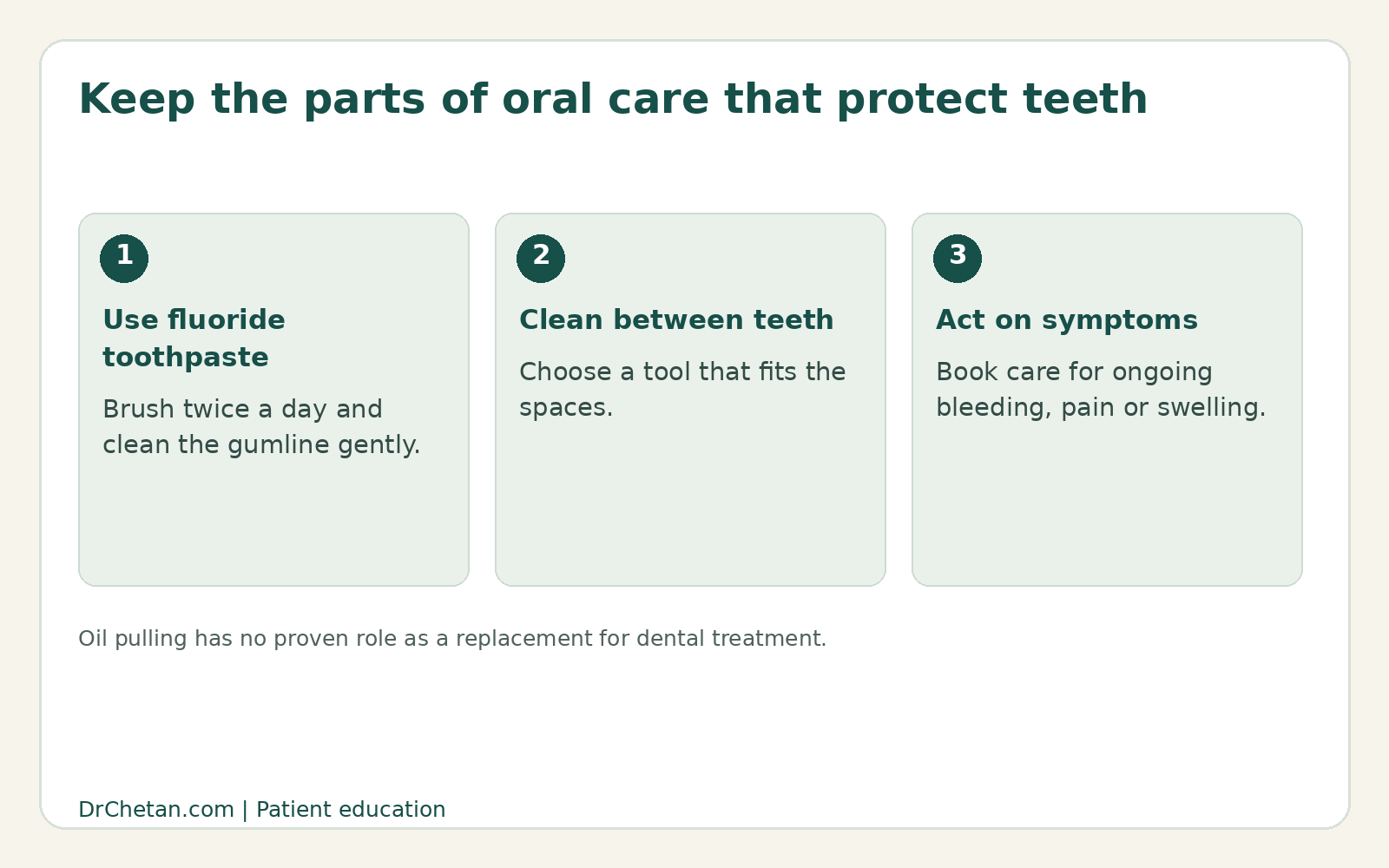
Brush twice daily with fluoride toothpaste, including last thing at night. Use gentle pressure and cover the gumline and all tooth surfaces. Clean between teeth daily using floss or a tool that fits the spaces. Fluoride helps prevent decay, and brushing and interdental cleaning physically remove soft plaque. A professional can remove hardened tartar and assess bleeding, sensitivity or other changes.
What if I use it for a particular symptom?
Persistent bad breath can have causes such as gum disease, tongue coating, dry mouth or a dental infection. Bleeding gums can be a sign of inflammation. A painful tooth, a gum lump or a broken filling needs an examination. Swishing oil cannot repair a cavity or treat infection inside a tooth. Book a dental check if symptoms persist. Seek urgent advice for worsening pain, swelling, fever or pus, and emergency help for trouble breathing or swallowing.
What if swallowing or spitting is difficult?
Avoid asking a young child or someone with swallowing difficulties to swish oil. A person needs to be able to spit it out safely. Ask a dentist or relevant clinician to help adapt everyday oral care if you or someone you support finds brushing, rinsing or spitting difficult. Tell the dentist about products you use so they can answer specific questions.
Frequently asked questions
Can coconut oil replace fluoride toothpaste?
Keep using fluoride toothpaste. An edible oil does not provide its proven cavity-prevention benefit.
Does a cleaner feeling mean tartar came off?
A cleaner feeling does not show that hardened deposits have gone. Ask a dental professional to check a rough or persistent deposit.
Can I try oil pulling first for toothache?
Arrange a dental assessment. Pain relief or a temporary change in symptoms does not treat the underlying cause.
Related guide: More about dental plaque.
References and further reading
Sources checked 3 November 2026. General patient education. Discuss your individual care with your clinical team. Featured image is an AI-created illustration.

Leave a Reply