Gum disease can damage the tissues and bone that support your teeth. Researchers have also found links between periodontitis, the more advanced form of gum disease, and conditions such as diabetes and cardiovascular disease. The meaning of the link differs by condition. Treating gum disease protects your mouth and is part of caring for your health alongside your regular medical care. [1–3]
Start with what gum disease does in the mouth
Gingivitis is inflammation at the gum margin and can cause bleeding during brushing. With periodontitis, the tissues and bone that support teeth are damaged. It may lead to loose teeth, problems chewing and tooth loss. Gum disease can progress with little pain. Persistent bleeding, receding gums, loose teeth or ongoing bad breath are reasons to arrange a dental examination.
The dentist may measure gum pockets and use X-rays when indicated to assess bone support. Home care and professional treatment have different jobs. Daily cleaning reduces plaque buildup, while the dental team can remove deposits below the gumline and plan follow-up.
Diabetes and gum disease can affect one another
High blood glucose can increase the risk and severity of periodontitis. People with diabetes and periodontitis may also have more difficulty managing blood glucose. Research suggests that periodontal treatment can improve blood glucose control modestly in some people with diabetes, particularly over the following months. Individual responses vary. Keep following your diabetes plan and tell both teams about changes in your health. [1,2]
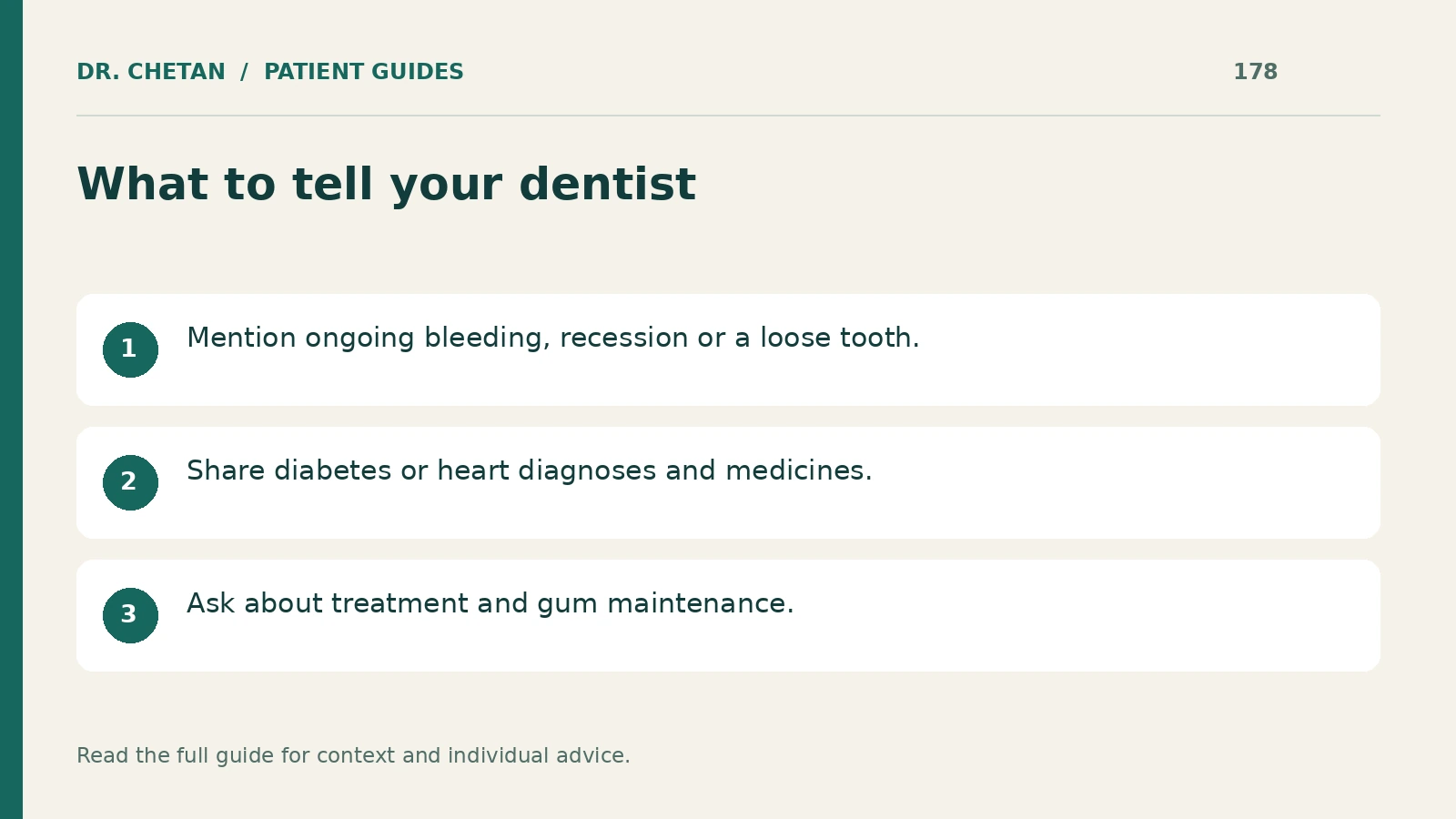
If you have diabetes, tell your dentist about your medicines and your recent blood glucose or HbA1c results if you know them. If you have periodontitis and symptoms or risk factors for diabetes, ask your doctor whether diabetes screening is appropriate.
What the heart disease link means
Studies find that people with periodontitis have higher rates of some cardiovascular conditions. Smoking, diabetes and other shared risk factors help explain part of the relationship. Inflammation and other biological pathways are being studied. An association alone cannot show that gum disease caused a heart attack or stroke in a particular person. Evidence has yet to establish that treating gum disease prevents those events. [1,3]
Continue medical treatment and preventive care for your heart. Tell the dentist about a heart condition, devices and blood-thinning medicines when they are planning care. This helps with safe dental treatment and is separate from the question of whether gum disease affects long-term heart risk.
What you can do now
- Arrange a dental assessment for recurring bleeding, swelling, gum recession or a loose tooth.
- Brush twice daily with fluoride toothpaste and clean between your teeth with an aid that fits.
- Ask how to clean areas that are tender or hard to reach, and when to return for periodontal maintenance.
- Share changes in diabetes, heart health, smoking or medicines with your dental team.
- Get urgent dental advice for pus, fever with dental swelling or rapidly worsening symptoms. Breathing or swallowing difficulty with swelling needs emergency care.
Frequently asked questions
Do bleeding gums mean I have diabetes or heart disease?
No. Bleeding gums can have several local causes and need a dental examination. A doctor can assess diabetes or cardiovascular risk using the appropriate history, examination and tests.
Is a professional cleaning enough?
The plan depends on whether you have gingivitis or periodontitis, and on its severity. Periodontitis can need deeper cleaning, follow-up assessment and ongoing maintenance. Ask the dentist what the examination shows and what your next visit is for.
References and further reading
- EFP and WONCA consensus on periodontal and systemic health
- European Federation of Periodontology on periodontal health and diabetes
- American Heart Association on periodontal and cardiovascular disease
Sources checked 3 November 2026. This guide provides general information. Your dental or medical team can advise on your individual needs.

Leave a Reply