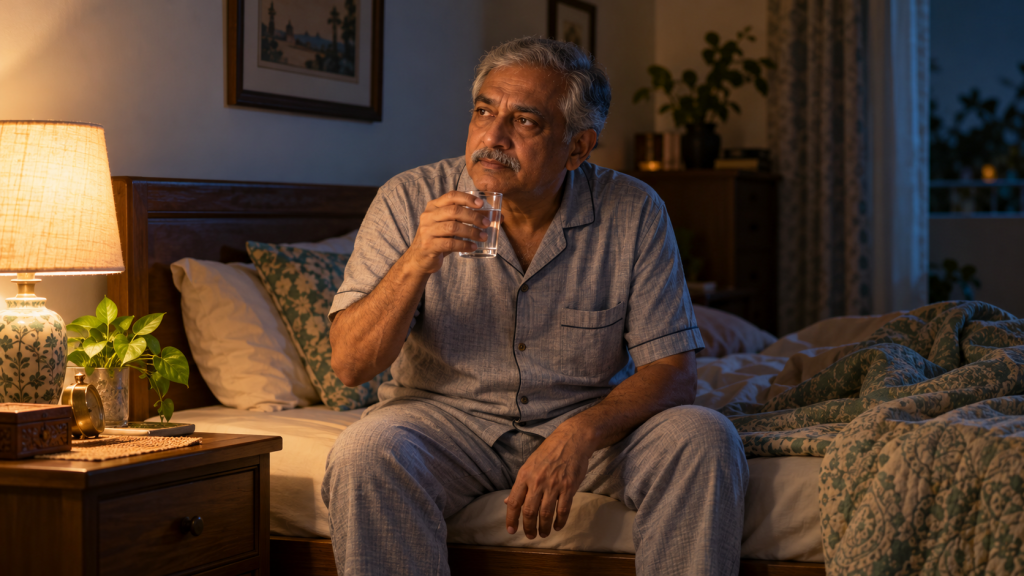
Repeatedly waking with a dry mouth is worth discussing with a dentist or doctor. Mouth breathing, medicines and medical conditions can contribute. Comfort measures may help, but persistent dryness also needs attention because saliva protects your teeth and mouth lining. Do not stop a prescribed medicine because you suspect it is the cause.
Why does my mouth feel dry at night?
Breathing through the mouth during sleep, for example when the nose is blocked, can contribute to dryness. Dehydration, anxiety and the effects of medicines may also be relevant. Several causes can be present together, and a dry sensation does not always mean saliva production is severely reduced.
Hundreds of medicines can cause dryness, including some used for blood pressure, mood or bladder problems. The effect is not necessarily a sign that you took them incorrectly. Bring the complete list, including over-the-counter products, to your assessment.
Diabetes, Sjögren’s disease, previous head and neck radiotherapy and some other conditions can affect the mouth. Dryness is more common in older people partly because of medicines and health problems; it is not an inevitable normal consequence of ageing.
Why does saliva matter for teeth?
Saliva helps clear food, buffer acids and support the mineral balance around teeth. It also makes speaking, chewing and swallowing more comfortable. Persistent dryness can increase the risk of decay, sensitivity, soreness and fungal infection.
Repeatedly sipping sweet drinks or using sugary sweets for relief adds a further challenge to teeth. Managing dryness therefore has two goals: improving comfort and preventing damage, even when the underlying cause cannot be removed immediately.
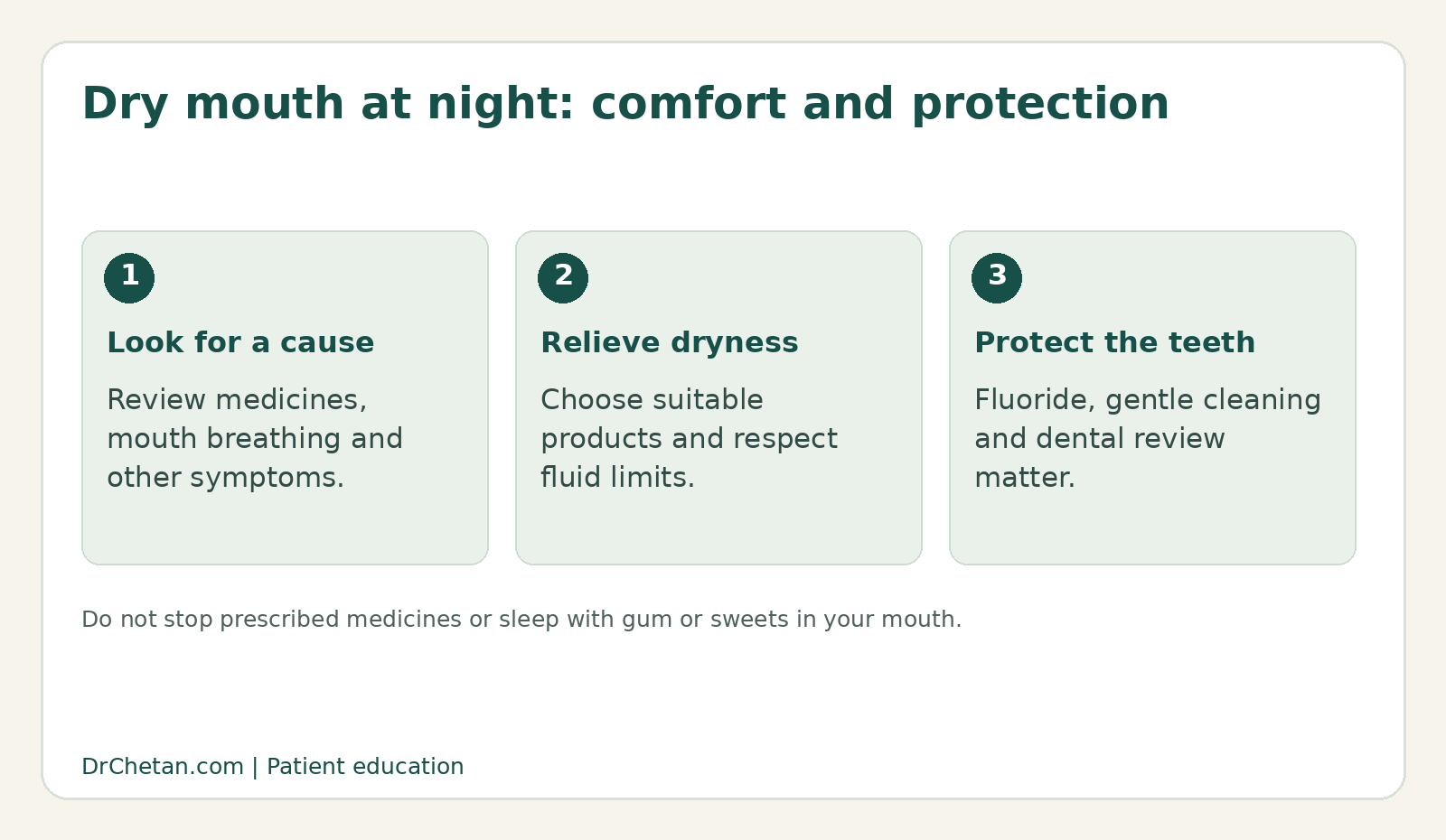
What can I try safely at home?
- Keep plain water available and take small sips as appropriate. If you have a medical fluid restriction, stay within it and ask for alternatives.
- Ask a pharmacist about a suitable saliva substitute, moisturising gel or spray. Not every product suits every patient.
- Consider sugar-free gum while awake if chewing and swallowing are safe for you. Do not sleep with gum or sweets in your mouth.
- A clean, properly maintained bedroom humidifier may improve comfort in a dry environment.
- Avoid tobacco, excess alcohol and products that sting or worsen dryness. Limit sugary and acidic drinks.
Do not use lemon juice or acidic sweets as a regular saliva remedy. Their acidity can damage teeth. Do not tape your mouth closed to manage night dryness; a blocked nose or possible breathing problem needs assessment.
How should I protect my teeth?
Brush gently twice daily with fluoride toothpaste and clean between teeth using a suitable method. A dentist can assess whether you need additional fluoride or a different prevention plan. Do not assume a moisturising mouthwash replaces brushing or fixes decay.
Choose non-irritating products and ask about an alcohol-free rinse if a rinse is indicated. If you wear dentures, clean them appropriately and follow advice about removing them at night. Persistent soreness, red areas or white patches need assessment rather than indefinite self-treatment.
What will the dentist or doctor check?
Explain whether dryness occurs only on waking or throughout the day, when it began and whether eating, swallowing or taste is affected. Mention dry eyes, frequent urination, new medicines, snoring, nasal blockage and previous cancer treatment.
The dentist examines the mouth lining, saliva, teeth, gums and any dentures. Depending on the findings, a clinician may consider salivary-flow assessment, blood tests or referral. Not everyone needs every investigation.
If a medicine appears to contribute, the prescriber can assess whether a different dose, timing or alternative is appropriate. A medicine that benefits your overall health should not be stopped or changed independently. Sometimes symptom control and stronger dental prevention are the most practical approach.
Could snoring or sleep apnoea be involved?
Dry mouth alone does not diagnose sleep apnoea. However, loud snoring with witnessed pauses in breathing, gasping or marked daytime sleepiness should be discussed with a doctor. A sleep assessment may be appropriate.
If you use CPAP or another prescribed breathing treatment and experience dryness, ask the treating service about mask fit, leaks or humidification. Do not abandon the treatment or alter prescribed settings yourself.
When should I seek help sooner?
Arrange assessment if dryness persists despite simple measures, disrupts sleep, causes difficulty eating or speaking, or is accompanied by soreness, recurrent infections or new cavities. Dry eyes or other general symptoms are also worth mentioning to a doctor.
Seek prompt help if you cannot drink adequately or appear dehydrated. Significant swallowing or breathing difficulty requires emergency medical attention. A persistent ulcer, lump or red or white patch should not be explained away as “just dry mouth”.
Frequently asked questions
Does drinking more water always solve it?
No. Water may improve comfort, but medicine effects, gland problems and mouth breathing may need additional care. Fluid restrictions still apply.
Can dry mouth cause bad breath?
It can contribute, but other causes also need assessment. See the guide to bad breath and what helps.
Are saliva-stimulating prescription medicines suitable for everyone?
No. They have contraindications and side effects. A clinician must assess whether the benefits outweigh the risks.
References and further reading
- NIDCR: Dry mouth
- NHS: Dry mouth
- ADA: Xerostomia, assessment and management
- NHS: Sleep apnoea
- National Kidney Federation: Dry-mouth care within renal restrictions
Sources checked 2 November 2026. This is general patient education; an examination and an individual treatment plan may be needed.

Leave a Reply