
Dental deep cleaning removes plaque and hard deposits from affected tooth surfaces below the gumline to help control periodontitis. It is sometimes called scaling and root planing, root surface debridement or subgingival instrumentation. The appointment is part of a treatment plan that includes home care, reassessment and continuing maintenance.
Why is cleaning below the gumline different?
Plaque is a film of bacteria that forms on teeth. When it is not adequately disrupted, gum inflammation can develop. Gingivitis affects the gums without the attachment and bone loss that define periodontitis. The two conditions need assessment rather than diagnosis from bleeding alone.
In periodontitis, spaces called pockets can develop around teeth and the supporting tissues are damaged. A toothbrush cannot reliably clean deep diseased pockets or remove hard calculus. Treatment therefore targets affected root surfaces as well as improving everyday cleaning.
“Deep cleaning” is a convenient patient term, not a separate cosmetic polishing service. Ask what findings show you need periodontal treatment and which areas are affected.
What will the dentist check first?
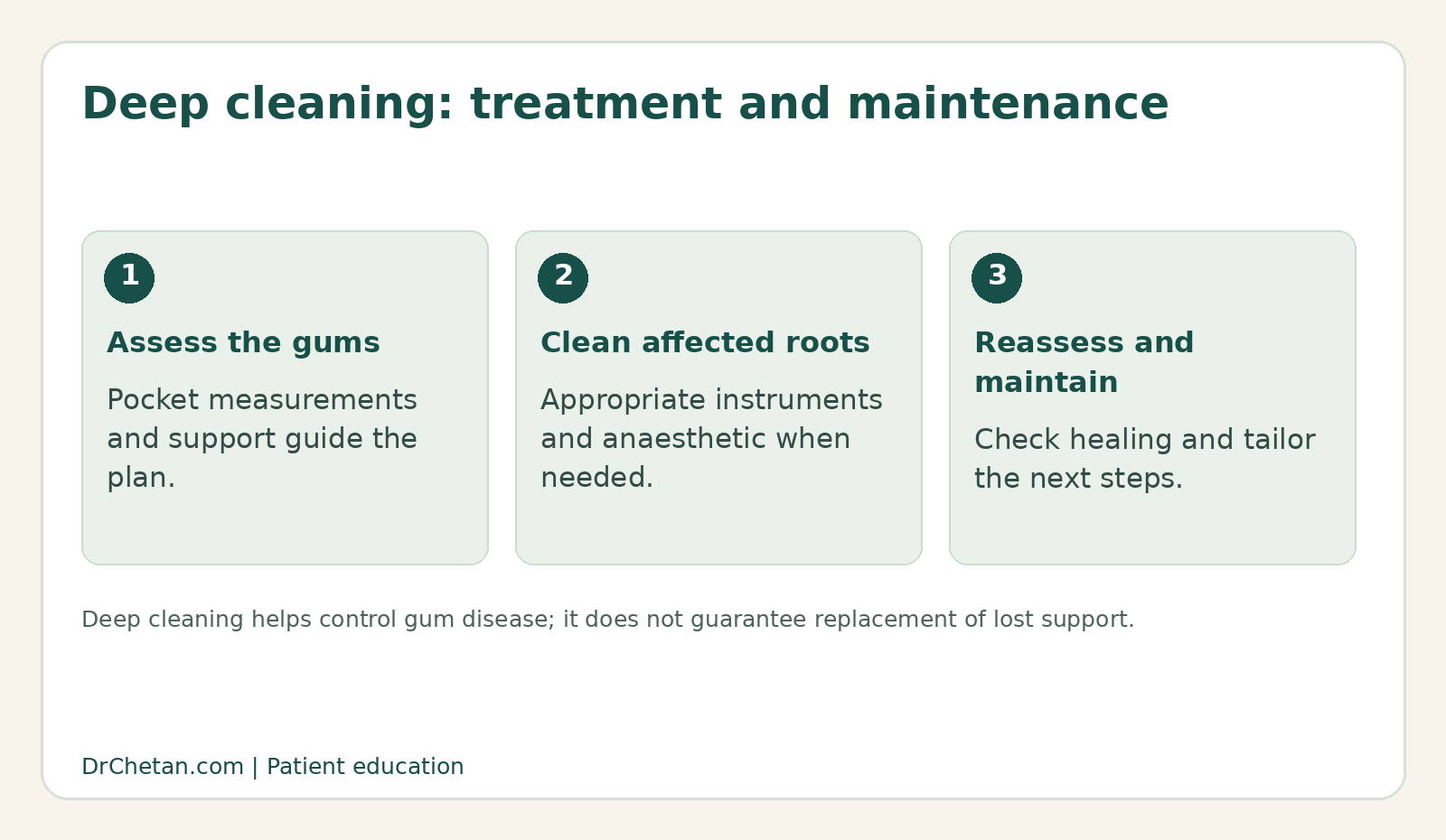
The assessment includes your symptoms, medical history, tobacco use and relevant factors such as diabetes. The clinician measures gum pockets and bleeding, checks recession and tooth mobility, and may take X-rays to assess supporting bone.
You should receive an explanation of the diagnosis and goals. Ask, “Are we treating gingivitis or periodontitis?”, “Which teeth have lost support?” and “How will we know whether the treatment worked?” A specialist periodontal opinion may be appropriate for complex disease.
What happens during deep cleaning?
The dentist or hygienist uses suitable hand instruments, powered ultrasonic instruments or both to disrupt plaque and remove deposits from the affected root surfaces. The aim is to control the bacterial biofilm and create conditions for the gums to heal, while preserving tooth structure.
The treatment does not depend on aggressively scraping away a thick layer of healthy root. The phrase “root planing” can sound as though every root must be extensively shaved; modern care is directed at appropriate debridement.
Local anaesthetic may be used so sensitive areas can be cleaned comfortably. You may notice pressure, vibration and water. Signal if you feel pain so the team can stop and adjust the plan.
How many appointments will I need?
Treatment can be divided into sections of the mouth or organised in another suitable way. The number and length of visits depend on the extent of disease, comfort, medical considerations and how the practice delivers care. Four appointments are not a rule for everyone.
Initial appointments may also focus on brushing, interdental cleaning and factors that influence disease control. These steps are active treatment: professional cleaning is less effective if plaque continues to accumulate every day.
Do I need antibiotics, a mouthwash or a laser?
Antibiotics are not routinely needed for every patient having deep cleaning. The clinician considers specific indications and the disadvantages of unnecessary antibiotic use. Some additional treatments may be considered in selected circumstances, but they do not replace effective instrumentation and daily plaque control.
A prescribed rinse may be useful for a particular period or reason. Ask what it is for, how long to use it and whether it can cause staining or other effects. A claim that one device permanently cures gum disease deserves careful questioning.
What might I notice afterwards?
Some tenderness, mild bleeding or temporary root sensitivity can occur. As swollen gums settle, teeth may appear longer or spaces between them may become more noticeable. This can reveal support already lost to disease rather than indicate that cleaning removed healthy supporting bone.
Follow the team’s instructions for brushing, interdental cleaning, food and pain relief. Do not stop cleaning indefinitely because the area is sensitive; ask for help adapting your technique. For general advice, see gentle toothbrushing.
Why is reassessment important?
After an appropriate healing period, the clinician reviews inflammation, bleeding and pocket measurements. The timing is individual. Improvement may allow a move to supportive periodontal care; persistent sites may need further instrumentation, surgery or specialist assessment.
Deep cleaning cannot promise to replace all lost bone or make every loose tooth firm. The aim is to control disease and preserve useful support. Continuing maintenance is tailored to risk and response, rather than assuming everyone needs the same six-month interval.
When should I contact the practice?
Seek advice for significant or persistent bleeding, increasing pain, swelling, pus, fever or a tooth that suddenly becomes more mobile. Severe swelling with breathing or swallowing difficulty requires emergency medical help.
Frequently asked questions
Is deep cleaning gum surgery?
Usually this term describes non-surgical periodontal treatment. Surgery is a separate option for selected problems after assessment and often after initial treatment.
Will my gums grow back afterwards?
Inflammation can improve, but established recession and bone loss do not simply reverse. Selected defects may have other treatment options.
Can I maintain the result with mouthwash alone?
No. Effective brushing, appropriate interdental cleaning and planned professional review remain important.
References and further reading
- ADA MouthHealthy: Scaling and root planing
- EFP: Four steps of periodontal treatment
- BSP: Healthy gums do matter, non-surgical periodontal therapy
- BSP: Patient information about periodontal disease
- Kent Community Health NHS: Professional mechanical plaque removal
- SDCEP: Oral hygiene aids in periodontal care
Sources checked 2 November 2026. This is general patient education; an examination and an individual treatment plan may be needed.

Leave a Reply