
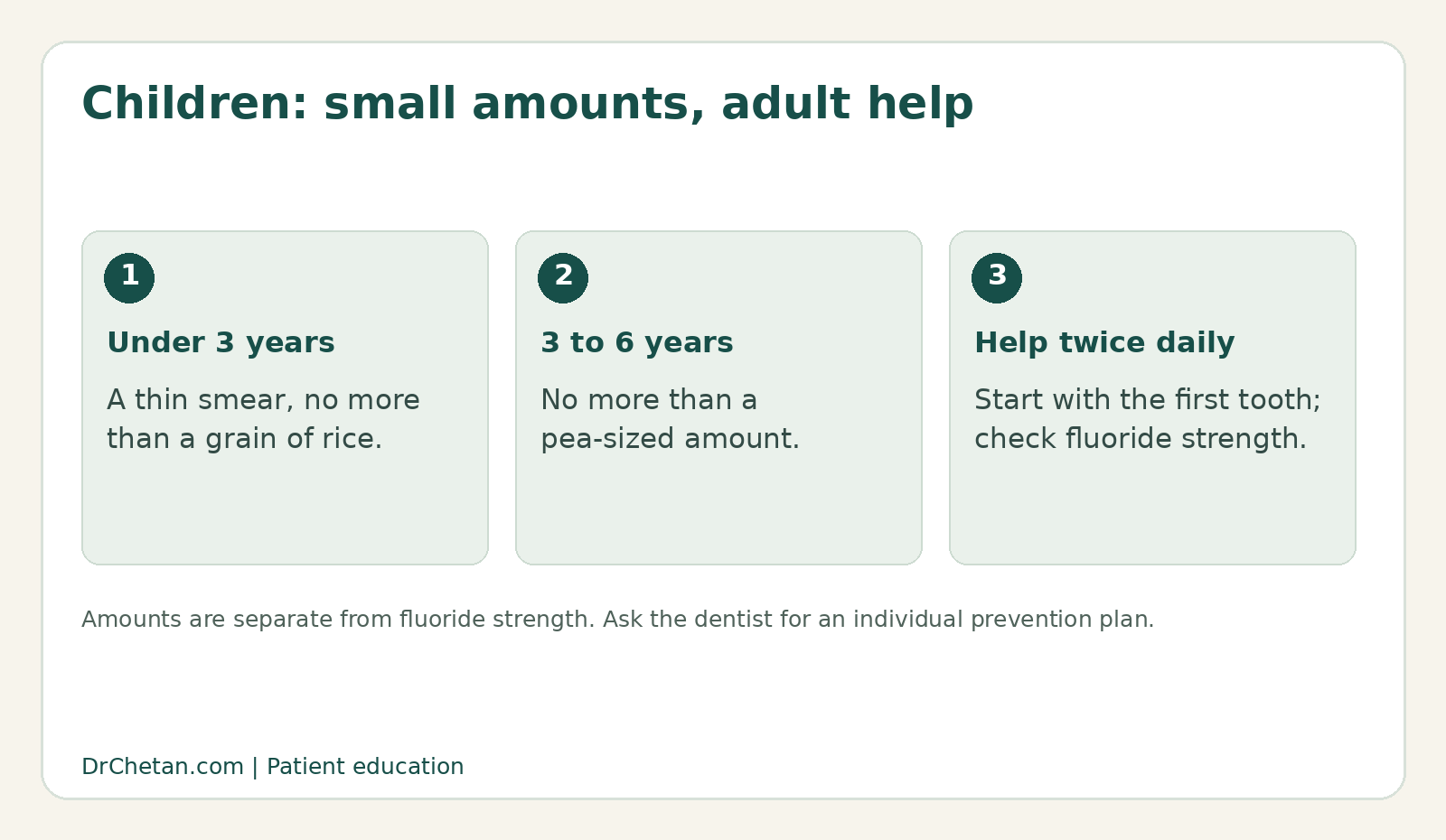
Start brushing as soon as the first tooth appears, using a soft, age-appropriate brush and a small amount of fluoride toothpaste. For children younger than three, use no more than a thin smear about the size of a grain of rice. From three to six, use no more than a pea-sized amount. An adult should dispense the toothpaste and help with effective brushing.
When should brushing begin?
Begin when the first baby tooth comes through. Do not wait until your child has a full set of teeth or can brush independently. Baby teeth can develop decay, and an early routine gives both child and caregiver time to get used to brushing.
Brush twice a day, including last thing before bed and on one other occasion. Work towards a thorough routine of about two minutes as more teeth appear. A baby with only a few teeth needs gentle cleaning of those surfaces, not forceful brushing to fill a timer.
How much toothpaste should I put on the brush?
| Age | Amount | Adult’s role |
|---|---|---|
| Younger than 3 years | A thin smear, no more than a grain of rice | Dispense the paste and brush the teeth |
| 3–6 years | No more than a pea-sized amount | Dispense, help brush and encourage spitting |
| 7 years and older | A small amount appropriate to the child’s needs; a long ribbon is unnecessary | Check technique and continue helping when needed |
The amount and the fluoride strength are different questions. A large blob of a low-fluoride paste is not a substitute for the appropriate product. A whole brush-head ribbon is unnecessary for a young child.
Which fluoride strength should I choose?
Check the fluoride concentration on the label in parts per million, or ppm, rather than choosing only by flavour or the word “kids”. NHS guidance recommends at least 1,000 ppm for children under three, 1,000–1,500 ppm for ages three to six, and 1,350–1,500 ppm from age seven, unless a dentist gives individual advice.
Local fluoride exposure, decay risk and the child’s needs can affect the recommendation. This is particularly relevant where drinking-water fluoride is high or uncertain. Ask the child’s dentist for a suitable toothpaste plan rather than independently adding fluoride supplements or prescription-strength paste.
Keep the tube out of reach between brushing sessions. Toothpaste is not a snack: children should not suck it from the tube or repeatedly lick large amounts from the brush.
How do I position and brush safely?
Choose a stable position where you can see the mouth and support the child comfortably. A small child may sit on your lap with the head supported; an older child may stand in front of a mirror while you help from behind. Do not let a child walk or run with a toothbrush in the mouth.
Use small, gentle movements and a soft, small-headed brush. Clean the outside, inside and chewing surfaces of every tooth and gently reach the gumline. Lift the lip enough to see the upper front teeth. Pay attention to the back teeth, including new permanent molars appearing behind the baby teeth.
Let the child have a turn, then complete the cleaning yourself as needed. Being able to hold a toothbrush is not the same as being able to clean every surface well.
Should my child rinse afterwards?
Encourage a child who can spit to spit out excess toothpaste without rinsing with water. Rinsing immediately washes away fluoride left around the teeth. For a baby or toddler who cannot reliably spit, use the recommended tiny smear and do not give extra toothpaste.
Mouthwash is not a routine substitute for brushing in young children. A rinse requires age-appropriate advice and the ability to spit safely. Ask the dentist before adding it to the routine.
Until what age should I help?
Most young children need hands-on help, commonly until at least age seven. Some older children still need assistance because of dexterity, motivation, sensory needs or disability. Watch the actual cleaning rather than relying on age alone.
For a child with additional needs, ask about a suitable handle, brush size, non-foaming paste or a step-by-step routine. Adaptations should improve access and comfort while preserving effective fluoride-based prevention.
What if my child refuses brushing?
Keep the routine predictable and calm. Offer a small choice, such as which suitable brush or song to use, and build tolerance gradually. Brush together, use a mirror and praise a specific achievement. A short cooperative routine can be built upon; avoid turning every session into a long argument.
If brushing suddenly becomes painful or refusal is persistent, check for soreness, ulcers, injury or decay rather than assuming it is only behaviour. A dentist can demonstrate positioning and help plan an approach that suits your child.
When should my child see a dentist?
Arrange the first visit when the first tooth appears and no later than the first birthday. Earlier advice is useful for individual prevention and establishing a dental home. Do not wait for pain or a visible hole.
Contact a dentist for new marks, a broken tooth, persistent bleeding, pain or swelling. Facial swelling, fever or difficulty eating needs prompt advice; breathing or swallowing difficulty requires emergency assessment.
Frequently asked questions
Can my child use family toothpaste?
Sometimes, if its fluoride strength and formulation are suitable and you use the correct amount. Ask your dentist if uncertain.
Is fluoride-free toothpaste enough for cavity prevention?
Fluoride toothpaste has an established preventive role. Discuss a particular concern with the dentist rather than assuming a fluoride-free product provides the same protection.
What if my child swallows a little during normal brushing?
Using the age-appropriate small amount limits ingestion. If a child eats a substantial quantity from the tube, seek urgent poison-information or medical advice and keep the packaging.
References and further reading
- NHS: Children's teeth and toothpaste guidance
- NHS: Looking after a baby's teeth
- AAPD: Policy on fluoride use
- AAPD: Parent questions, first visits and toothpaste
- ADA: Fluoride, topical and systemic supplements
- UK prevention toolkit: Summary guidance for dental teams
Sources checked 2 November 2026. This is general patient education; an examination and an individual treatment plan may be needed.

Leave a Reply