
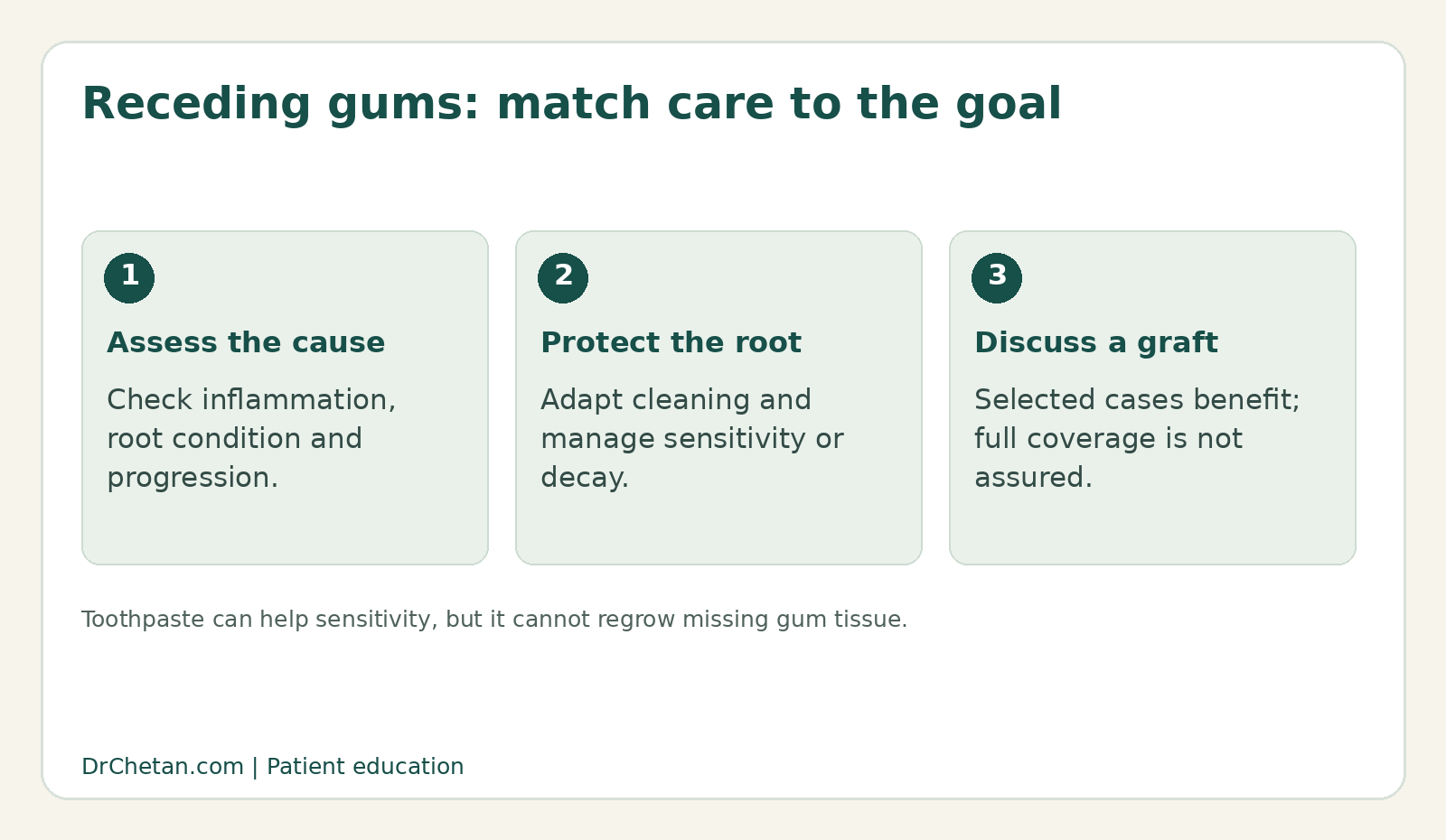
Treatment for receding gums starts with identifying the cause and protecting the exposed root. Some areas need monitoring and better cleaning technique; others need periodontal treatment, sensitivity management or a gum graft. A graft is not necessary for every recession, and toothpaste or mouthwash cannot regrow missing gum tissue.
What does gum recession mean?
Recession means the gum margin has moved away from its usual position around a tooth, exposing some of the root surface. A tooth can look longer, or you may notice a notch or sensitivity near the gumline. The visible change does not by itself tell you whether there is active gum disease.
Root surfaces are more vulnerable to wear and decay than the enamel-covered crown. However, exposed root does not automatically mean the tooth is about to fall out. The dentist needs to assess the supporting tissues and whether the recession is stable or progressing.
Why might the gums recede?
Periodontal disease can damage gum attachment and the supporting bone. Recession can also be associated with thin tissues, tooth position and repeated mechanical injury, including an unsuitable brushing technique. Several factors can occur together.
It is easy to blame all recession on brushing too hard and miss gum disease, or to assume every exposed root requires surgery. Tell the dentist about bleeding, tenderness, tooth movement, orthodontic treatment, tobacco use and any change you have noticed. Older photographs may help establish whether the appearance has changed.
What will the dentist examine?
The assessment may include measurements of the gum margin and pockets, signs of inflammation, tooth position, root wear or decay, the bite and your cleaning technique. Dental X-rays may be appropriate to assess supporting bone or another suspected problem. A periodontist can assess more complicated recession or surgical options.
Useful questions are: “Is there active periodontal disease?”, “Is the recession progressing?” and “What are we trying to improve: comfort, cleaning, root protection or appearance?” Different goals can lead to different treatment plans.
What can be done without surgery?
Adapt home cleaning: the dental team can demonstrate gentle, effective brushing with a soft brush and suitable interdental cleaning. Do not stop cleaning the area altogether. The aim is to remove plaque without repeated injury. For general technique, see how to brush your teeth properly.
Treat gum disease: if periodontitis is present, professional treatment and continuing maintenance help control it. Cleaning can make an already exposed area more noticeable when swollen gums settle. Ask the team to explain what has changed rather than assuming cleaning has damaged a healthy root.
Manage sensitivity and root problems: a suitable desensitising toothpaste or a professionally applied treatment may help. A damaged or decayed root surface may need a restoration. These measures address particular problems; they do not restore the original gum position.
When might a gum graft be considered?
A periodontist may discuss a graft when recession creates significant symptoms, root exposure, cleaning difficulty or an appearance concern, or when tissue conditions make surgery appropriate. The underlying causes and inflammation should be assessed first.
Grafting can use tissue from another area of your mouth, often the palate, or another suitable graft material. The technique depends on the defect and the treatment goal. Ask where the tissue would come from, what the donor area may feel like and how the proposed approach fits your case.
Complete root coverage is not guaranteed. The amount and pattern of tissue loss, especially loss between teeth, tooth position and other factors affect the result. A realistic discussion should cover likely improvement, alternatives, maintenance and the possibility that part of the root remains exposed.
Will treatment hurt, and how many visits are needed?
Initial assessment and advice may be straightforward. Cleaning below the gum or surgery can be performed with appropriate anaesthesia. Tell the clinician if you feel pain during treatment. After a graft, discomfort can occur at both the treated area and any donor site; the team provides an individual pain-control and cleaning plan.
Care can involve an assessment, initial treatment, reassessment and, if appropriate, a surgical appointment with follow-up. Do not brush or manipulate a surgical site according to generic advice; follow the surgeon’s instructions while it heals.
When should I arrange an earlier appointment?
Book a dental assessment for a new or changing gumline, persistent sensitivity or bleeding. Seek urgent advice for a newly loose tooth, swelling, pus, significant pain or a recent injury. Recession itself is often gradual, but associated symptoms can change the urgency.
Frequently asked questions
Can gums grow back with a special toothpaste?
No toothpaste predictably replaces lost gum tissue. Some products can reduce sensitivity or support plaque control.
Does every exposed root need a filling?
No. A filling is considered for a specific defect or disease, not simply because root is visible.
Can recession return after a graft?
Further change is possible. Controlling causes, gentle cleaning and ongoing review remain important after treatment.
References and further reading
- EFP: Gum disease frequently asked questions
- AAP: What is a periodontist?
- AAP: Periodontal surgical procedures, including gum grafts
- AAP: Cosmetic periodontal procedures
- AAE: Tooth pain and sensitivity
Sources checked 2 November 2026. This is general patient education; an examination and an individual treatment plan may be needed.

Leave a Reply