A sip of cold water. The first spoonful of ice cream. A toothbrush passing over one particular spot. If these make you wince, you may describe the problem as “sensitive teeth”.
But sensitivity is a symptom, and different problems can cause it. Exposed tooth surfaces, decay, a crack or a worn filling may need different care. The useful first step is to understand the cause, rather than assume every sharp sensation needs the same toothpaste.
In this guide
- Why teeth become sensitive
- Common causes
- What the pain pattern can tell you
- Home-care steps that may help
- Sensitivity after treatment or whitening
- When to see a dentist
- What to tell your dentist
- Treatment options
- Frequently asked questions
Why teeth become sensitive
Enamel protects the crown of a tooth. A different covering, cementum, protects the root. Under these outer layers lies dentin, a tissue containing microscopic channels.
When dentin loses its protective covering, or becomes exposed as the gums recede, stimuli such as cold or heat can produce discomfort. This does not necessarily mean that the tooth’s nerve is physically exposed in the mouth. It also does not establish the diagnosis: other dental conditions can produce similar symptoms.
Common causes
Exposed dentin and gum recession
Gums can recede and leave root surfaces exposed. Tooth wear can also uncover dentin. Brushing too forcefully or using a hard brush may contribute to the problem. A sensitive spot near the gumline therefore deserves a look at both the tooth surface and your cleaning technique.
Tooth decay
A cavity may cause sharp pain with something cold, hot or sweet. Early decay can also have no symptoms. Being able to settle the pain by avoiding cold drinks does not tell you whether a cavity is present or whether it needs treatment.
A crack or damaged restoration
A cracked tooth can react to temperature or hurt when you bite, sometimes especially as biting pressure is released. Symptoms may come and go. A crack cannot be reliably ruled out simply because you cannot see one in the mirror. Ask for assessment if chewing repeatedly hurts in one area.
Acid-related tooth wear
Repeated acid exposure can wear away tooth tissue. Possible sources include frequent acidic drinks and stomach acid reaching the mouth through reflux or vomiting. Sensitivity may be one consequence. A useful conversation with your dentist includes what you drink and whether you have recurrent reflux or vomiting.
Grinding or clenching
Grinding can wear or damage teeth and may be associated with tooth sensitivity, a tired jaw or headaches. You may not know that you grind during sleep. Mention morning jaw soreness or a partner noticing grinding sounds.
Whitening or recent dental treatment
Sensitivity can occur after some dental procedures or during whitening. Its timing matters, but a recent procedure should not become a reason to dismiss pain that is worsening or behaving differently from what your dentist explained.
What the pain pattern can tell you
Notice what starts the pain, how long it lasts after the trigger is gone and whether it happens without a trigger.
| Pattern | A sensible next step |
|---|---|
| A brief response to cold or heat that settles quickly | Gentle care may help, but arrange a check if it persists or recurs. |
| Pain that lingers after the drink or food is gone | Contact a dentist promptly; the pulp inside the tooth may need assessment. |
| Sharp pain with biting | Have the tooth checked for causes such as a crack, decay or a loose filling. |
| Pain that starts on its own or affects sleep | Seek dental assessment rather than treating it as routine sensitivity. |
These patterns guide the conversation; they do not let you diagnose yourself at home or decide that root canal treatment is inevitable. Ongoing pain needs a dental evaluation.

Home-care steps that may help
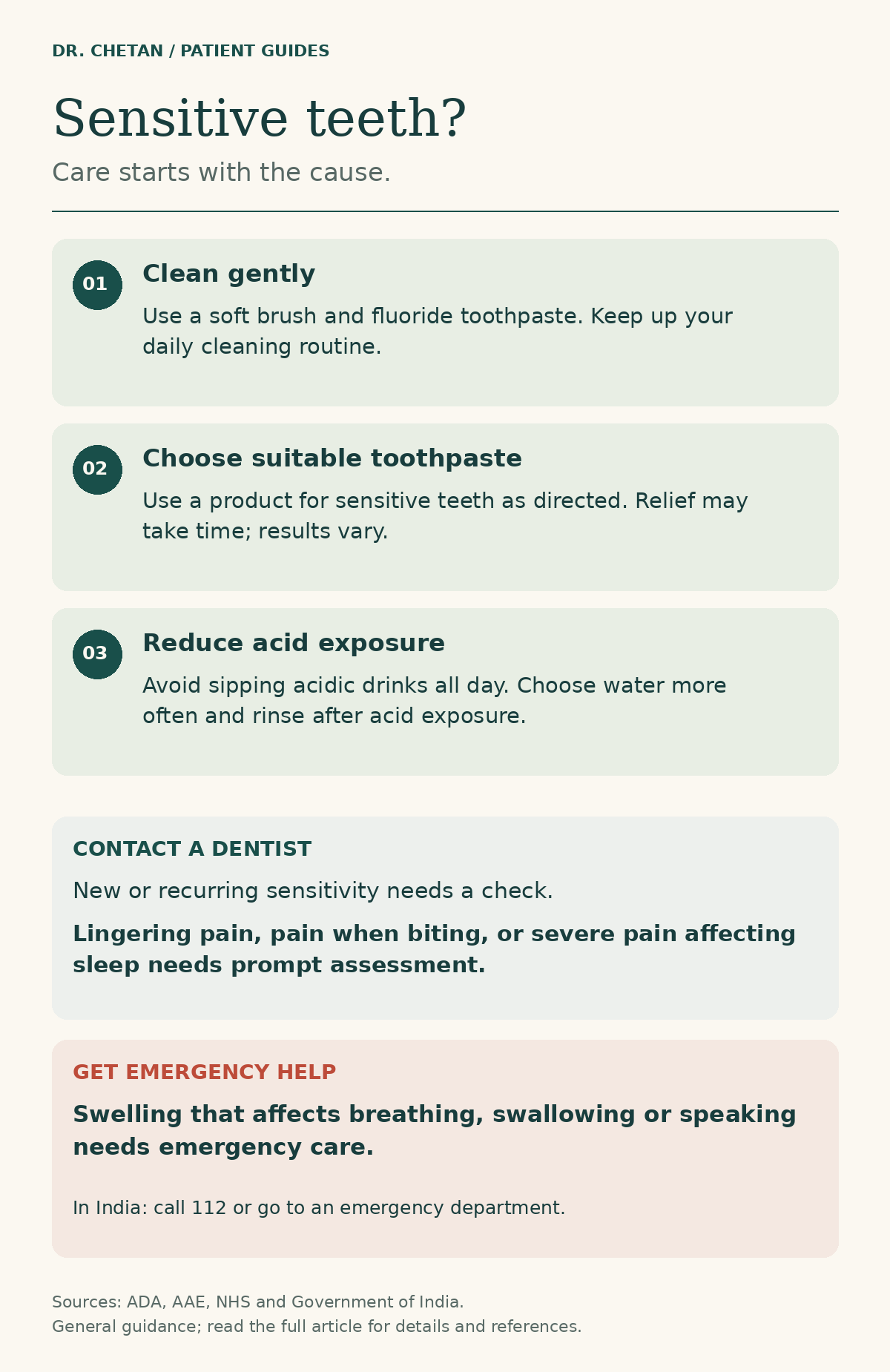
1. Use a soft brush and gentle pressure
Switch from hard scrubbing to careful cleaning with a soft brush. Ask your dental team to demonstrate how to reach the gumline comfortably. Do not keep testing a sensitive spot by scrubbing it harder.
Continue brushing twice daily for about two minutes, including before bed. For most adults, choose fluoride toothpaste containing at least 1,350 ppm fluoride. Spit out the excess rather than immediately rinsing with water. Clean between teeth using a tool that suits the space and your dentist’s advice.
2. Choose a toothpaste intended for sensitive teeth
Look for a fluoride toothpaste specifically intended to reduce sensitivity. Products may contain desensitising ingredients such as potassium compounds, stannous fluoride or arginine. Their formulations differ, so ask your dentist or pharmacist to help you choose rather than relying only on a “sensitive” label or an advertisement.
Use it consistently and follow that product’s directions. Improvement may take days or weeks, depending on the product and the cause. Some products have specific instructions for applying a little paste to a sensitive area; do that only as directed. A toothpaste trial should not delay a check for new, localised or worsening pain.
3. Reduce repeated acid exposure
Avoid sipping an acidic drink throughout the day or swishing it around your teeth. Choose water more often, keep acidic drinks with meals where possible, and rinse with water after acid exposure. Avoid brushing immediately after acidic drinks or vomiting; ask your dentist how to organise brushing if this happens frequently.
“Sugar-free” does not necessarily mean a drink is non-acidic. Diet fizzy drinks can still contribute to acid wear. Reducing how often your teeth meet acid matters, as well as which drink you choose.
4. Avoid harsh DIY scrubs
Do not rub lemon, vinegar or rough homemade scrubs onto sensitive teeth. Prolonged acid contact and overly abrasive materials can damage the protective tooth surface. Normal fruit consumption is different from using fruit acid as a tooth scrub.
5. Ask about grinding if the signs fit
A dentist may recommend a suitable mouthguard to protect teeth from grinding damage, alongside advice about the habit and contributing factors. A guard is not a substitute for checking an already painful tooth, and it does not automatically stop all grinding.
Sensitivity after treatment or whitening
Tell the dental team that treated you when symptoms began and whether they are improving. Some sensitivity after dental work is temporary, but persistent or worsening pain needs review. Do not wait through a planned recovery period if you develop severe pain, swelling or another concerning change.
Whitening can cause temporary sensitivity and gum irritation. If symptoms bother you, contact the dentist supervising the whitening before continuing the course. Do not increase the amount of gel or wear time to finish more quickly. Teeth and gums should be checked for suitability before whitening begins.
When to see a dentist
Arrange an appointment
Get a dental check for sensitivity that is new, keeps returning, suddenly affects one tooth or is not improving. Do not wait several weeks merely to “finish the toothpaste” if one tooth has started hurting.
If the problem is a toothache lasting more than two days, or pain when biting, arrange assessment. Mention a bad taste, fever, red gums or cheek or jaw swelling when booking; these details can change the urgency.
Seek urgent dental care
Contact a dentist urgently for severe pain affecting sleep or daily activities, pain that is not going away, or a broken or loose restoration. Swelling with tooth pain, pus or a suspected dental abscess also needs urgent dental care.
Get emergency medical help
Swelling that makes breathing, swallowing or speaking difficult, swelling around the eye, or a large amount of mouth swelling needs emergency assessment. Go to an emergency department. In India, you can call 112 for emergency assistance.
What to tell your dentist
Before the visit, make a short note of:
- Whether one tooth, one side or several areas feel sensitive.
- Whether cold, heat, sweetness, brushing or biting brings it on.
- Whether it stops quickly or continues after the trigger is removed.
- Any pain without a trigger, swelling or recent tooth damage.
- Recent fillings, whitening or other dental treatment.
Also mention grinding, jaw tiredness, reflux or recurrent vomiting if relevant. The aim is to identify and manage the cause, not simply hide the sensation.
Treatment options
Treatment depends on what the examination finds. Options can include a desensitising product, a professional fluoride treatment, or bonding or another restoration when a damaged area needs protection. In selected cases, gum treatment or a gum graft may be considered. A tooth with a pulp problem may need a different approach, including root canal treatment where indicated. Sensitivity alone does not identify which treatment you need.
Frequently asked questions
Does sensitivity mean I have a cavity?
Not necessarily. A cavity is one possible cause, and a dentist should check new or persistent symptoms. Lack of a visible hole does not exclude early decay.
Can sensitive toothpaste repair a crack?
No. A toothpaste may help some sensitivity symptoms, but a cracked tooth needs assessment. Treatment depends on where the crack is and how far it extends.
Will lost enamel grow back?
Tooth tissue lost through erosion does not grow back. Prevention and treatment aim to reduce further damage and protect the remaining tooth. This is different from treating early mineral changes before substantial tissue is lost.
Does sensitivity after whitening mean my teeth are ruined?
No. Temporary sensitivity is a recognised side effect. Report troublesome symptoms to the dentist, particularly if they persist, rather than assuming either permanent damage or that everything must be harmless.
Should I use this adult toothpaste advice for my child?
Children need toothpaste strength, quantity and supervision suited to their age and dental needs. Ask a dentist about a child’s painful or sensitive tooth rather than simply starting an adult sensitivity product.
*This is general information. A dentist can advise you after assessing your teeth and gums.*
References
Accessed 29 October 2026.
- ADA MouthHealthy: Sensitive Teeth
- Oral Health Foundation: Sensitive teeth
- NHS: Tooth decay
- American Association of Endodontists: Cracked Teeth
- American Dental Association: Dental Erosion
- NIDCR: Bruxism
- American Association of Endodontists: Tooth Pain
- NHS: Teeth whitening
- NHS: Toothache
- NHS: How to keep your teeth clean
- American Dental Association: Toothpastes
- Indian Dental Association: Toothpastes
- SA Dental: Dental erosion
- ADA MouthHealthy: Natural Teeth Whitening
- NHS: Emergency and urgent dental appointments
- NHS: Dental abscess
- Government of India: Emergency Response Support System

Leave a Reply