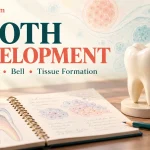
An oral histology and embryology guide for dental students, covering the dental lamina, bud, cap, and bell stages, tissue origins, dentin and enamel formation, and the beginning of root development. A tooth does not begin as a miniature mineralised crown. It begins through interactions between oral epithelial cells and the ectomesenchyme beneath them. Those interactions […]
Dental Students

Build your understanding of dentistry, one concept at a time. Explore student-focused explanations that connect the foundations of dental science with practical and clinical learning.
Find labelled illustrations, comparison tables, worked examples and revision questions on dental anatomy, tooth development, oral histology, radiographic interpretation and other subjects as new guides are added. Whether you are revising for a viva, preparing for a practical or clarifying a difficult topic, use this collection alongside your textbooks and supervised teaching.
Manual Scalers and Curettes: How to Identify and Differentiate Them
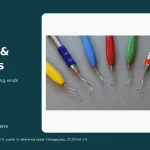
Compare sickle scalers, universal curettes and Gracey curettes by tip, cross-section and cutting edges, with student viva questions.
Dental Extraction Forceps: Types, Identification and Uses

Identify common dental extraction forceps by their beaks, handles and indications, with examples and viva questions for dental students.
Rubber Dam Instruments: Clamps, Forceps, Punch and Frame
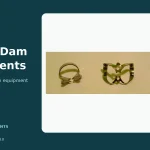
Identify the rubber dam punch, clamp forceps, clamps and frame, and learn their roles with viva questions for dental students.
How to Read an IOPA Radiograph: A Systematic Guide for Dental Students

A practical guide to image quality, normal anatomy, tooth and supporting-structure assessment, descriptive reporting, and the limits of a two-dimensional image. A small dental radiograph can contain a surprising amount of information: tooth structure, restorations, roots, periodontal support, anatomical landmarks, developing teeth, and possible disease. The challenge is not simply recognising a dark area. It […]
Oral Histology Slide Identification: What to Look for First
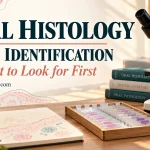
A practical guide for dental students to recognise enamel, dentin, pulp, cementum, periodontal ligament, and oral mucosa, with annotated schematics, comparison tables, worked spotters, and viva questions. An oral histology slide becomes much easier to identify when you stop searching immediately for a familiar pink or brown patch. Begin by asking what kind of preparation […]
Tooth Numbering Systems Explained: FDI, Palmer, and Universal
A detailed guide for dental students, covering permanent and primary teeth, chart orientation, notation conversions, common mistakes, and revision questions. The same tooth can be written as 36 in FDI notation, ?6 in Palmer notation, and #19 in the Universal system. Those identifiers all refer to the permanent mandibular left first molar. At first, this […]
Plaque Disclosing Tablets and Solutions: What They Show and How to Use Them

Your teeth can look clean while a thin film of plaque remains near the gums or between the teeth. A plaque disclosing tablet or solution uses dye to make that film easier to see. It can help you discover the places your usual cleaning routine misses. [1] The dye is a learning aid. It does […]