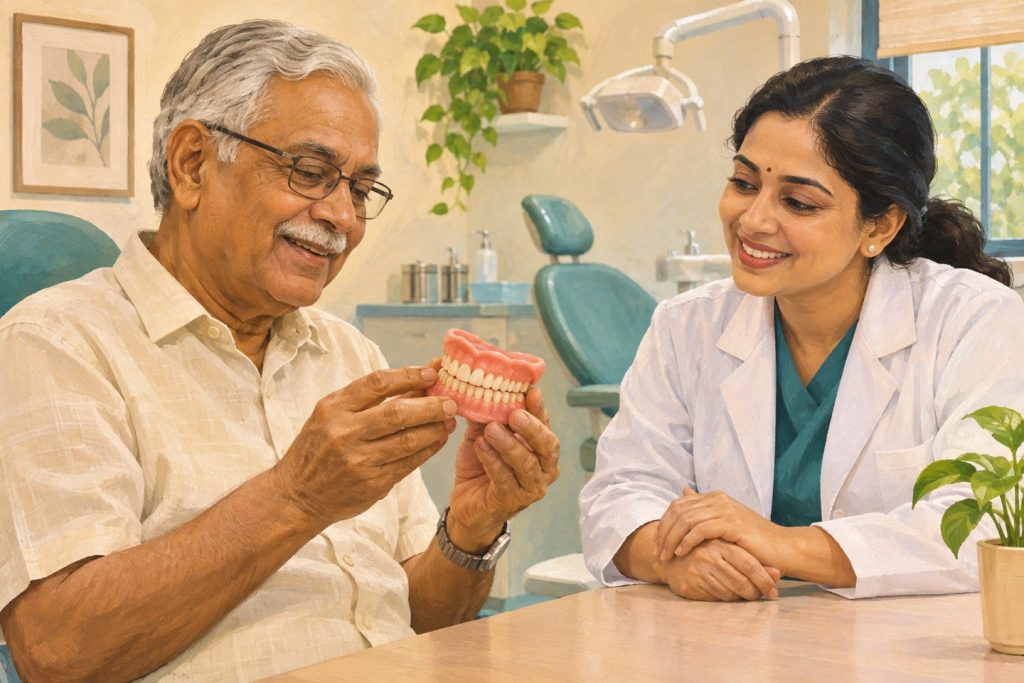
A denture that clips onto implants and a full row of teeth fixed on implants can both feel more secure than a loose conventional denture. They differ in how you clean them, how the replacement occupies the mouth and what happens when a part needs repair. If you’re choosing for a whole upper or lower jaw, start by asking whether you can remove the teeth yourself.
Three ways to replace a full arch
| Option | Can I take it out? | How it is held |
|---|---|---|
| Conventional complete denture | Yes | Fits against the gums. Fit, jaw shape and other factors affect stability. |
| Implant overdenture | Yes | Clips onto individual attachments or a bar. The gum may share support, depending on the design. |
| Fixed full-arch implant bridge | A dentist removes it if needed | Usually held to implants with screws and stays in the mouth during daily care. |
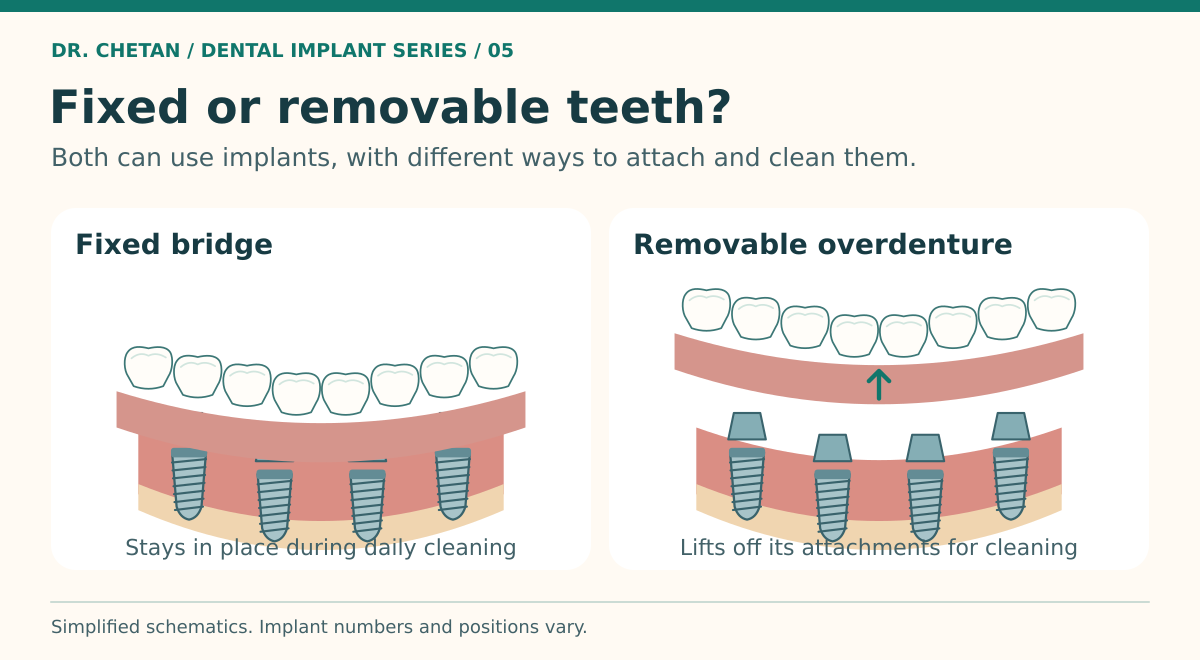
An overdenture can improve retention and still come out for cleaning. Depending on the arch and design, it may need a base that extends over part of the gums or palate. The clips or inserts can wear and need replacement, and the denture base can sometimes need adjustment or relining. Ask to see the attachments and try the movement needed to take the denture out. This matters if you have arthritis or limited hand strength.
With a fixed bridge, you clean beneath it while it stays in the mouth. Some designs replace both teeth and missing gum volume. The shape has to allow speech, support the lips as needed and leave space you can reach with cleaning tools. A fixed restoration that looks compact on a model can feel bulky in the mouth. A trial set or provisional can help the team check appearance, speech and your ability to clean.
How many implants are needed?
Four or six in a treatment name usually refers to the number of implants proposed in one jaw. It does not tell you the number of teeth, whether the teeth are fixed or removable, or how a repair would be handled. A common design for a removable lower overdenture uses two implants. The upper jaw generally needs its own plan, often with more implants, because bone and loads differ. For a one-piece fixed full-arch bridge, ITI guidance recommends a minimum of four appropriately distributed implants, with the number tailored to the patient. A more recent international consensus on the upper jaw suggests considering six for a fixed design to reduce potential complications.
A count on its own says little about where the implants can safely go or how the bridge will be supported at the back. Ask the dentist to show the proposed positions and explain how bone, bite, cleaning space and repair options affected the choice. If teeth are still present, ask which can be kept and what other plans are possible before agreeing to remove them. The implant candidacy guide covers the wider assessment.
What does “teeth in a day” include?
Some patients receive fixed provisional teeth very soon after implant placement. The team needs a suitable situation, including sufficient stability at surgery, to choose that plan. They should explain in advance what temporary option is available if the implants need protected healing. Even if a provisional is fitted that day, you can still need diet restrictions, review visits and a later final set. The same-day implant guide distinguishes fixture placement from connection of the teeth.
Ask about the next five years as well as the surgery
Ask who handles cleaning appointments and urgent repairs. For a fixed bridge, find out what happens if a tooth chips, a screw loosens or one fixture is lost. With an overdenture, ask how often its fit and attachments will be checked and what replacement parts cost. These are different types of maintenance and will vary with the design and how it is used.
A written quote should distinguish any extractions, grafts, scans, implants, provisional teeth and final teeth. Ask whether it covers one jaw or both and which maintenance or repairs are included. Compare the way each option will fit into your daily life as well as the initial price. If you only need to replace one tooth or a shorter span, start with implant crowns and bridges. For support and repair over time, see implant lifespan and long-term care.
References
- International Team for Implantology. Number of implants for fixed complete-arch restorations
- Global Consensus for Rehabilitation of the Edentulous Maxilla. Implant number and timing
- Leeds Teaching Hospitals NHS Trust. Dental implants patient information
- U.S. Food and Drug Administration. Dental implants, benefits and risks
- York Consensus Statement. Two-implant overdentures for the lower jaw

Leave a Reply