
When a missing tooth is replaced with a dental implant, the tooth you see is only the top of the replacement. A small fixture sits inside the jawbone and holds a crown, bridge or denture in place. That foundation explains both the benefit of an implant and why there is usually a healing period before it can carry your usual bite.
The best place to begin is with what you need to replace. A single missing tooth calls for a different design from a row of missing teeth or an entire upper or lower jaw. The parts below describe a common single-tooth implant. Other restorations use the same idea with different connections.
The three parts of an implant tooth
| Part | Where it sits | What it does |
|---|---|---|
| Implant fixture | Inside the jawbone | Provides an anchor in the position planned for the replacement |
| Abutment | At the connection above the fixture | Joins the fixture to the replacement tooth |
| Crown | At the level of the other teeth | Restores the shape of the visible tooth and provides a surface to bite on |
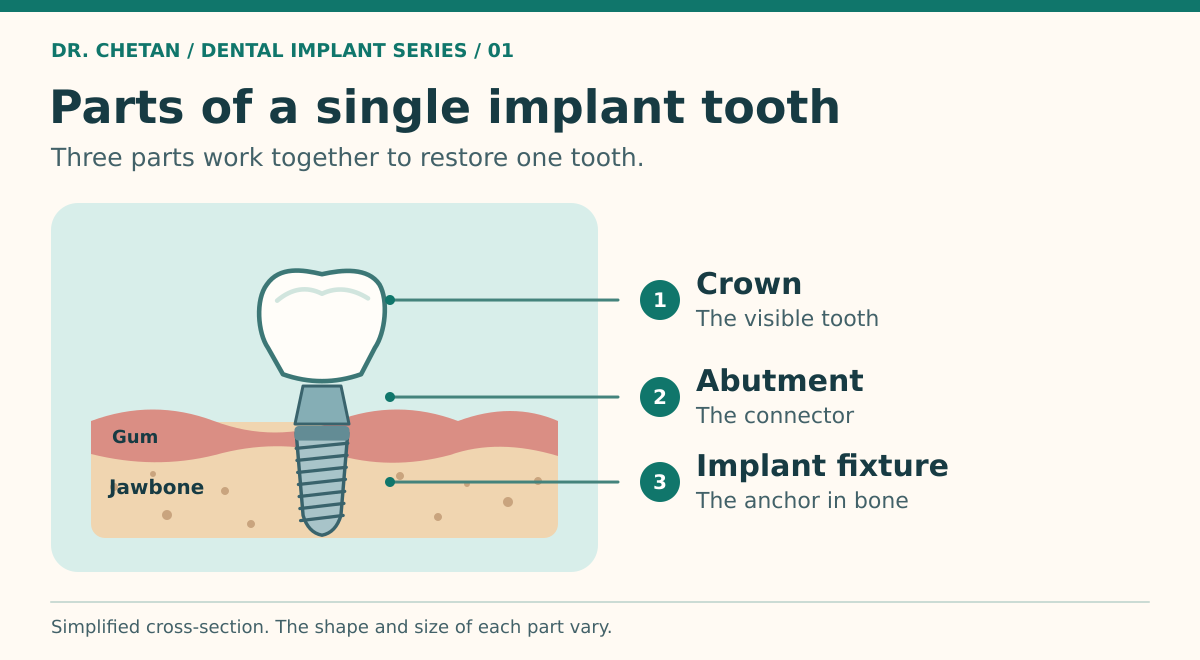
The fixture is often shaped like a short screw and made from titanium or a titanium alloy. The crown can be made of a tooth-coloured ceramic, and the material of the crown can differ from the material of the fixture. Designs vary. For instance, the connecting part may be incorporated into a screw-retained crown, and some systems combine the fixture and connector in one piece. Ask your dentist to point to each part in your own plan.
The same distinction matters when someone says their “implant” feels loose. A loose crown or connecting screw can feel similar to a loose fixture. The cause needs an examination. Avoid chewing on a moving restoration and arrange a dental check.
How bone holds an implant
At surgery, the implant needs an initial mechanical grip in the bone. Dentists call this primary stability. The implant’s threads and the available bone contribute to that early grip. During the following weeks and months, living bone forms and remodels along the implant surface. Direct contact between living bone and the surface is called osseointegration. It is the biological support that helps a healed implant carry chewing forces.
Gums can look settled before this process is far enough along. For example, Leeds Teaching Hospitals describes soft-tissue healing commonly taking about one to two weeks, while implant integration often takes two to six months. That range describes the bone-healing stage. Your full treatment may also include extraction, grafting, scans, a temporary tooth and time for the dental laboratory. The implant procedure and timeline breaks down those stages.
An implant also changes how force reaches the jaw. A natural root has a thin ligament between the root and bone, with sensory fibres that help detect pressure. Bone contacts the healed implant directly. You still get feedback from the rest of the mouth and jaw, although an implant tooth can feel different when you bite. At the fitting visit, tell your dentist if it feels as if the new tooth meets first.
What an implant can support
One implant often supports one crown. Several neighbouring missing teeth may be replaced with a connected bridge on fewer implants than there are teeth in the bridge. Where a whole jaw needs replacement, implants can support a fixed set of teeth or help retain a denture you can take out. The position of the implants, room to clean and expected bite forces all help determine the design. See the comparison of implant crowns and bridges and the guide to full-arch implants and implant dentures.
If the tooth is still present, ask about its chances with treatment to save it. If a tooth is already missing, you can also discuss a tooth-supported bridge, a removable replacement or, in selected situations, leaving the gap. An implant can avoid preparing healthy neighbouring teeth for a conventional bridge, but it needs surgery, enough support at the site and regular care.
Which parts need ongoing care?
The crown surface cannot develop tooth decay, but plaque can collect around the gum where the restoration meets the implant. Inflammation around an implant can damage the tissues that support it. Parts above the gum can also wear or loosen with use. At your fitting, ask the team to show you how to reach the gumline and the underside of any bridge, then practise with your own restoration. If you’re deciding whether this is practical for you, start with what makes someone a candidate for implants.

Leave a Reply