
Before you leave the clinic after implant surgery, make sure you know what to eat, how to clean around the site and whom to call outside office hours. The written instructions from your own team are especially important if you had extractions, a bone graft, a sinus lift, sedation or an immediate temporary restoration. These procedures can change the aftercare plan.
What is common in the first few days?
Soreness, some swelling or bruising and a small amount of blood mixed with saliva can occur. Swelling can become more noticeable over the first two or three days before it settles. The degree of discomfort and downtime varies with how much surgery you had and the work you need to return to. Note whether symptoms are gradually improving. A new increase after they had started to settle deserves a call.
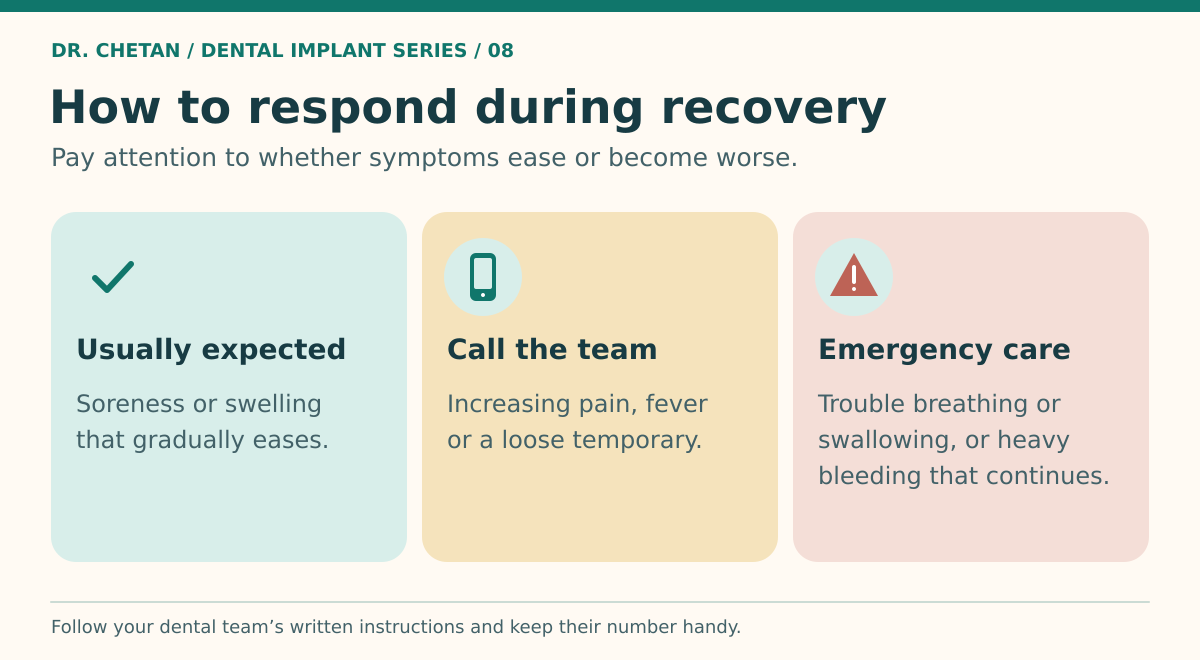
| What you notice | What to do |
|---|---|
| Mild soreness, manageable swelling or bruising that gradually improves | Follow the written instructions and keep the planned review. |
| Increasing pain or swelling, fever, pus or a persistent bad taste, an opening wound, or unexpected numbness after the anaesthetic should have worn off | Contact the dental team promptly. Explain when the symptom started and how it has changed. |
| A loose temporary tooth, healing cap or implant restoration | Avoid chewing on it and contact the team promptly. Let them check which part is moving. |
| Difficulty breathing or swallowing, severe rapidly spreading swelling, or heavy bleeding that does not stop with firm pressure | Seek emergency care immediately. |
Protect the site while you eat and clean
Wait until sensation has returned before chewing to reduce the chance of biting your cheek or lip. Start with soft foods as advised, and ask which side you can chew on. Even a fixed temporary tooth can have limits on what it can support. For example, a front provisional may be shaped to avoid heavy contact. Ask how long restrictions apply and whether the advice changes after your review.
Follow the clinic’s directions about brushing near the wound, rinsing and when you can resume cleaning the area directly. Keep the rest of the mouth clean. Vigorous rinsing immediately after surgery can disturb a fresh wound. Some teams prescribe a mouth rinse for a limited period. Use it only as instructed. If a removable temporary rubs or presses on the site, call for advice rather than adjusting it yourself.
Take pain relief and any prescribed medicine according to the instructions you received. If you have allergies or take blood thinners, or have kidney, liver or stomach problems, check which pain medicines are suitable. Avoid changing or stopping prescribed medicines without advice from the clinicians responsible for them. Smoking can interfere with healing. Ask the team for specific support if you use tobacco.
If you had a graft, sinus lift or sedation
A grafted area may need extra protection from chewing or pressure from a temporary denture. After a sinus lift, follow the specific instructions from your surgeon, including any nose-blowing precautions. Tell the team if you develop increasing swelling, fever or new sinus symptoms. The bone graft and sinus lift guide explains what the procedure changes and why it can add healing time.
If you had sedation, follow the clinic’s instructions about supervision, driving, work and activities after the visit. Set up a contact and transport plan before surgery. If you develop new symptoms and cannot reach the practice, use the local urgent dental service or seek emergency care for the warning signs above.
Why a review still matters once you feel well
The first review may include looking at the wound, checking any temporary replacement and removing stitches if needed. Later visits assess whether the implant is ready to support the planned tooth. A comfortable gum can cover a fixture that still needs more time to integrate. Follow the procedure and timeline for the order of these visits and the long-term care guide once the final tooth or denture is fitted.
Leave a Reply