
The implant surgery is one visit in a longer course of treatment. A useful timeline has three dates or windows. When can the implant be placed? What can you wear while it heals? When can the final tooth be fitted? The answers depend on whether a tooth still needs to come out, whether grafting is planned and what the implant can safely support after surgery.
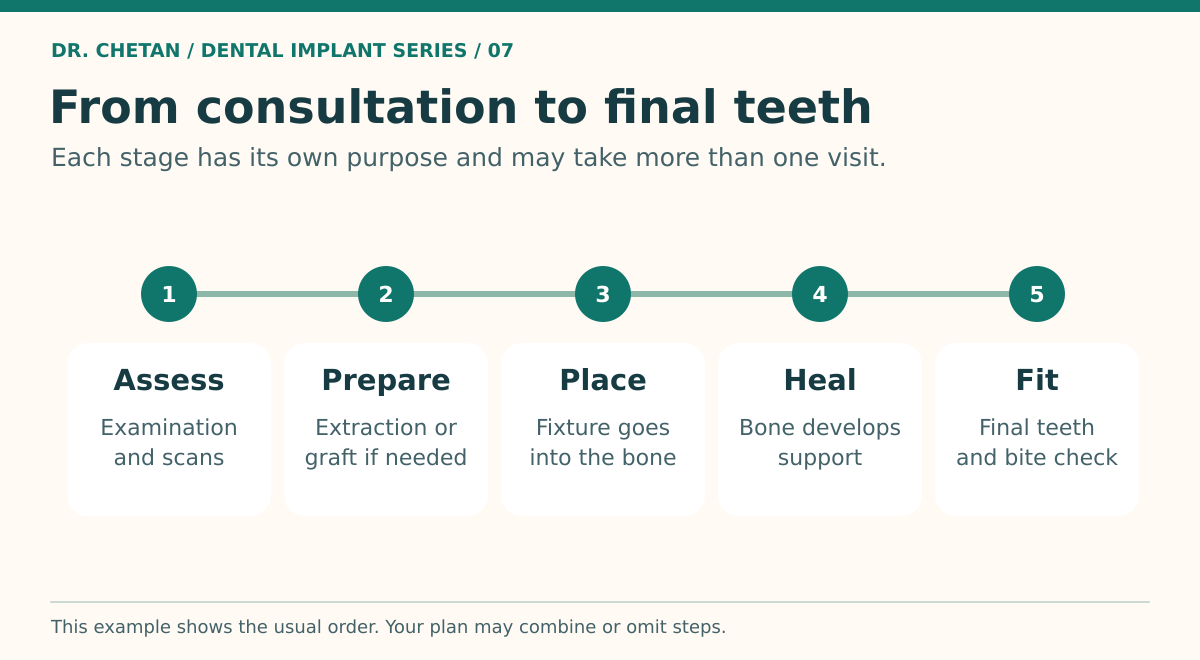
What happens at each stage?
| Stage | What the team usually does | What can change the timing |
|---|---|---|
| Assessment and planning | Examines teeth and gums, reviews your medical history, and uses X-rays or scans as needed | Gum treatment, medical advice or deciding between restorations |
| Preparing the site | Removes a tooth, treats disease or adds bone where needed | An extraction site or staged graft may need its own healing period |
| Implant placement | Places the fixture and either a healing component or a cover under the gum | Bone, stability and whether a graft needs protection |
| Healing and review | Checks the wound, the temporary replacement and later readiness for the final tooth | Healing varies between people and sites. The temporary may need adjustment. |
| Making and fitting the teeth | Takes a scan or impression, checks fit and bite, and shows you how to clean | A full arch or an appearance-sensitive front tooth may need extra trial visits |
Planning and surgery day
The team usually plans the position of the future tooth before placing the fixture. A front tooth can need additional planning for gum appearance. In the back of the mouth, the team may pay particular attention to biting forces and the distance from a nerve or sinus. Ask whether the plan includes a graft or sinus lift, and when you would know if one is needed.
Implant placement commonly uses local anaesthetic. You may notice pressure, vibration or noise. Let the team know during the procedure if you feel pain. If sedation is planned, ask about preparation, an escort and when you can drive or work. Instructions vary with the kind of sedation and where you are treated. Discuss concerns about the procedure before the day so the team can plan with you.
After placing the implant, the dentist may leave a small healing cap above the gum or close the gum over the implant. In the latter case, a later visit exposes the implant and adds the healing connector. Some patients receive a temporary tooth attached to the implant at or soon after surgery. Others wear a removable or tooth-supported temporary, or leave a less visible gap during healing. Ask for the backup plan before surgery in case the implant needs more protection than expected. See what same-day implants can mean.
How long does the whole treatment take?
Leeds Teaching Hospitals describes gums commonly healing in about one to two weeks and implant integration typically taking about two to six months. Your team will check your individual progress before moving to the next stage. Feeling better after the first week tells you about comfort and recovery. The bone still needs time to develop support around the fixture.
A case starting in a healed site with adequate bone often takes several months through to a final tooth. Where an extraction or staged graft must heal first, the overall plan can take considerably longer. For example, some staged grafts are allowed to heal for three to six months before implant placement. A provisional fitted early can shorten the time you spend with a visible gap while the biological healing and final fitting continue.
What happens at the fitting?
The dentist checks the restoration’s contact with nearby teeth, the bite and whether the shape lets you clean the gumline. A full arch may also have trial visits for the position of the teeth, lip support and speech. Tell the team if a tooth meets first, food catches in one place or you cannot pass the recommended cleaning tool. Ask when the next review is due and whom to call if the restoration feels loose.
If travel, work or a family event is driving the calendar, ask which milestones are likely and which depend on healing. Confirm when you should be available for a wound check and whether the team can provide a temporary tooth that meets your needs. Once you have a surgery date, read recovery and aftercare to prepare for the first few days.
References
- Leeds Teaching Hospitals NHS Trust. Dental implants patient information
- Guy’s and St Thomas’ NHS Foundation Trust. Having a dental implant
- International Team for Implantology. Consensus on implant placement and loading protocols
- Guy’s and St Thomas’ NHS Foundation Trust. Bone grafting for dental implants

Leave a Reply