
When a scan shows a thin area of jawbone, the treatment question is whether an implant can be placed in a position that will support the planned tooth. There may be bone in one direction but too little width or height in another. A bone graft can help rebuild selected areas. In the back of the upper jaw, one way to create more height beneath the sinus is a sinus lift.
Why a graft may be offered
Jawbone can shrink after tooth loss, particularly around a recent extraction site. Gum disease, infection or an injury can also leave a defect. The team looks at the shape of the bone, the desired implant position and the location of structures such as a nerve or the sinus. Ask your dentist to show you the area of concern on the scan and explain what the graft is meant to change.
A graft can use bone taken from another area of your own mouth, processed donor material, material derived from an animal source or a synthetic substitute. Sometimes materials are combined. A membrane may help protect the space while healing takes place. Ask what is proposed, its source, whether a second surgical site is involved and whether you have a choice based on your circumstances or preferences.
At placement or before placement?
| Plan | What happens | How it affects the calendar |
|---|---|---|
| Small graft at implant placement | The implant is stable in existing bone and a graft is added around a local defect when appropriate. | The two areas can heal during the same overall stage. |
| Staged graft | The team grafts first and reassesses the site after healing before deciding when the implant can be placed. | Adds a separate stage. Guy’s and St Thomas’ describes about three to six months for some staged grafts. |
| Graft around an extraction site | The team places graft material after a tooth is removed to help preserve the site in selected cases. | The site still needs healing and reassessment before the next step. |
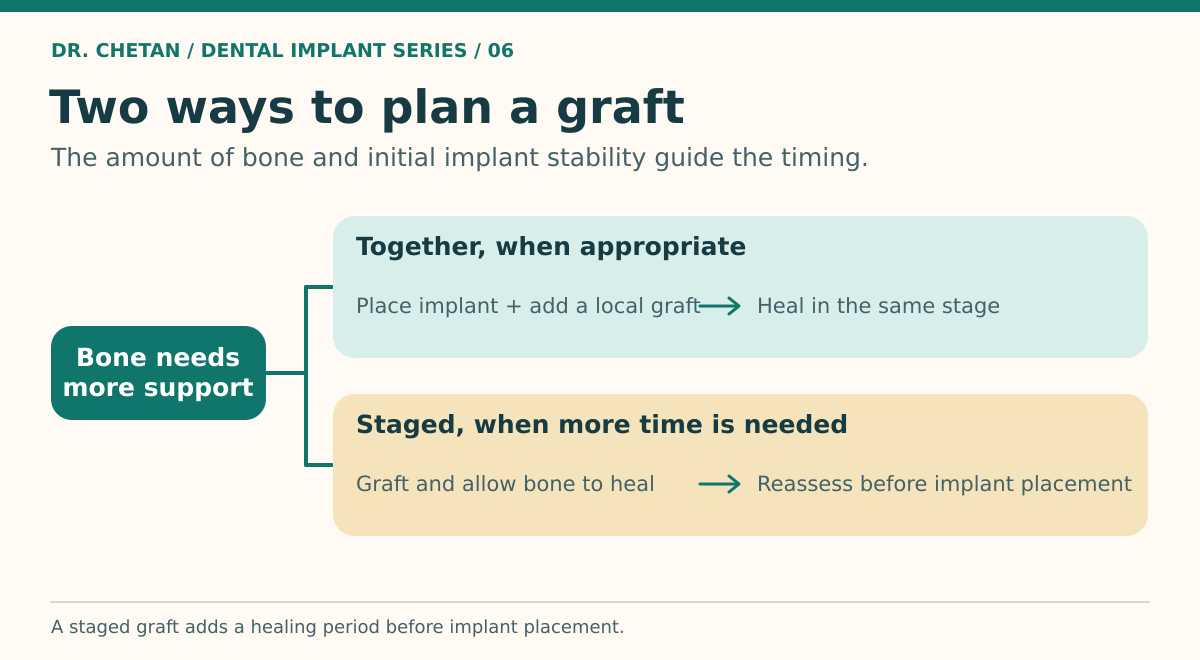
A larger graft can add several months and extra visits. The team may check healing clinically and use additional imaging if it will change the next decision. Ask what would happen if the graft did not give the expected support. Options may include further treatment or switching to a different replacement plan.
What happens in a sinus lift?
The maxillary sinus is an air-filled space above the upper back teeth. If there is too little bone between the mouth and sinus, a dentist or surgeon may gently lift the thin membrane that lines the sinus floor. This creates a space in which bone can develop, often with graft material. A smaller lift may be approached through the planned implant site. A larger lift may use a small opening through the side of the upper jaw. The approach and whether an implant can be placed at the same visit depend on the case.
A tear in the sinus membrane is a recognised complication. The team may be able to repair it, or they may need to defer treatment. Infection, sinus symptoms or inadequate healing can also affect the plan. Tell your dentist about persistent sinus problems and previous sinus surgery. If you have the procedure, follow the team’s specific instructions, including any restrictions on nose blowing, and find out whom to call if symptoms worsen. The recovery and aftercare guide explains how to recognise a change that warrants a call.
Ask about choices if you prefer to avoid grafting
A shorter implant, a different arrangement of supports or a different restoration can be considered in selected cases. A tooth-supported bridge or removable replacement may also be appropriate. Each has consequences for the remaining teeth, stability, cleaning or appearance. If you need a full arch, ask how the whole design would change with and without grafting. The full-arch options guide can help you compare those plans.
Before agreeing, ask for the graft and implant stages in writing. Check which visit involves surgery, how long the team expects you to wait between stages and what you can wear in the meantime. A temporary denture may need adjustment so it does not press on the healing site. Use the implant procedure and timeline to see how graft healing fits into the rest of treatment.

Leave a Reply