A dental implant can support a tooth for many years, but an implant fixture and the crown, bridge or denture it holds have different lifespans. The fixture can remain stable while a crown chips, a screw needs attention or a denture attachment wears. When your dentist discusses prognosis, ask about both the support in the bone and the parts you use to chew.
What does a survival rate measure?
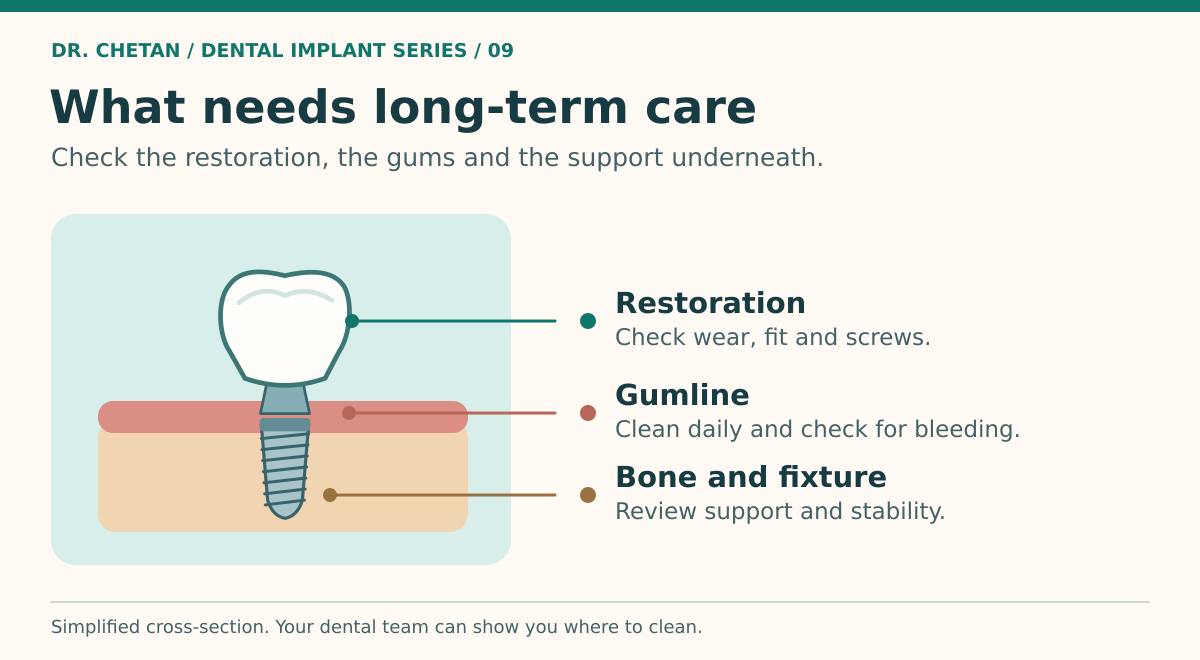
When researchers report implant survival, they usually count whether the fixture is still present at follow-up. A fixture can meet that definition even if the crown has needed repair or the area has required treatment. A 2019 systematic review found about 96% of the implants studied remained at ten years in its main estimate. A sensitivity analysis that accounted differently for missing follow-up produced a lower estimate of about 93%. These are results for groups of implants studied over time. Your own outlook also depends on factors such as the condition of the site and your ability to maintain the restoration.
| What needs to last | Examples of problems a dentist checks for |
|---|---|
| Fixture and supporting bone | Failure to integrate early or bone loss later |
| Gums around the implant | Bleeding and inflammation, sometimes with very little discomfort |
| Crown, bridge or screws | Wear, chipping, a loose connection or a changed bite |
| Removable denture and attachments | Worn inserts, reduced retention or a base that needs adjustment |
Early problems and later problems
An implant can fail to integrate during initial healing. Movement, pain or other changes can prompt the team to examine the site and check whether the fixture or just a component is affected. If the fixture has failed, it may need to be removed. The team can discuss how to manage the site, whether it may later support another implant and what other restoration is available.
Later problems can affect the tissues around a previously stable implant. Peri-implant mucositis means inflammation in the soft tissues around the implant without the additional bone loss that defines peri-implantitis. Peri-implantitis involves inflammation and progressive loss of supporting bone. Both can be present with little pain. A dentist uses an examination and, when needed, comparison with earlier X-rays to tell them apart. Bleeding when you clean, swelling, pus or new movement are reasons to arrange an assessment.
A loose crown or chipped bridge is a different kind of problem. Sometimes it can be repaired while retaining the underlying implant. Other times the restoration needs replacing. Avoid testing a loose tooth repeatedly or trying to tighten anything yourself. Bring any detached piece to the appointment.
Set up care you can keep doing
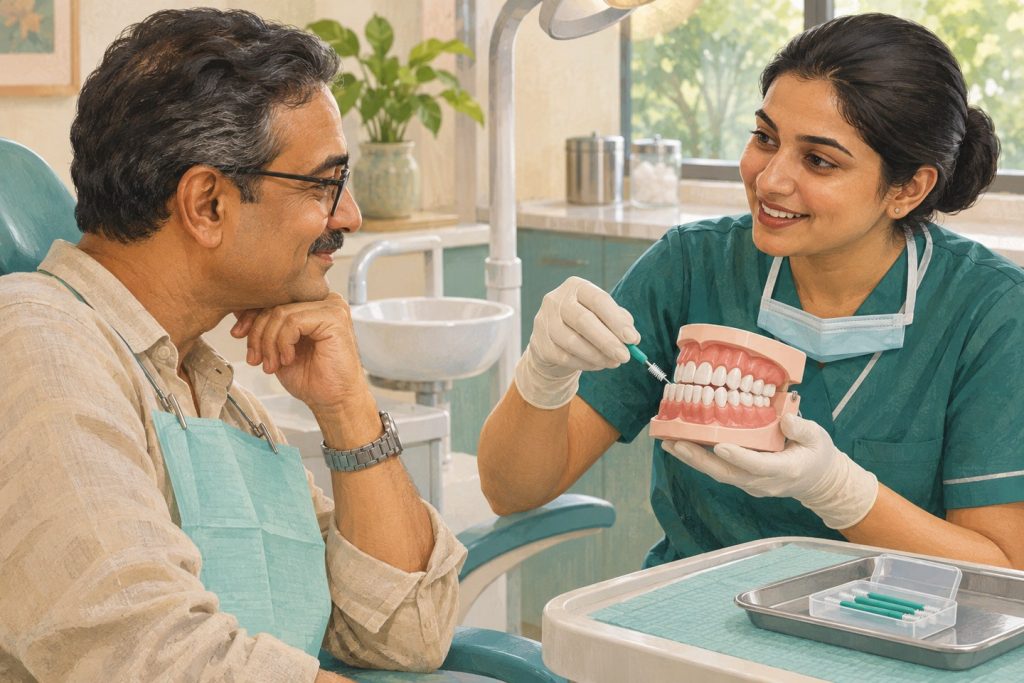
Clean around the gumline every day. Ask your dental team to show you which interdental brush, threader or other tool can reach the spaces in your own restoration. For a fixed bridge, check how you will reach underneath. If you wear a removable implant denture, ask how to clean the fitting surface and the attachments in your mouth. A cleaning method that works on a model may need adjusting when you try it at home.
At follow-up, the team can assess plaque, bleeding, the bite and the fit of the restoration. The interval should reflect your history, including gum disease and other risk factors. The clinician can decide when X-rays would help by comparing with baseline records and examination findings. Ask how often you should return, who handles repairs, and whether you can keep a record of your implant system and parts. If you move, that record can help a new dentist find compatible components.
What to ask about costs and prognosis
A warranty may cover certain parts or labour for a defined period. Ask for the details in writing, including what happens if an implant fails during healing, what counts as a maintenance visit and which repairs or replacement parts are charged separately. If you clench or grind, ask whether the team recommends a protective appliance and how they would check its fit.
When comparing options, picture the work you will do every day. An easily cleaned design and a recall plan you can keep can matter as much as the initial fitting. The guides to implant crowns and bridges and fixed full-arch teeth and overdentures explain how those cleaning and repair needs differ. If surgery was recent, start with recovery and aftercare.
References
- Howe and colleagues. Ten-year dental implant survival systematic review, 2019
- U.S. Food and Drug Administration. Dental implants, benefits and risks
- European Federation of Periodontology. Dental implants for patients
- European Federation of Periodontology. Guideline on prevention and treatment of peri-implant diseases
- Leeds Teaching Hospitals NHS Trust. Dental implants patient information

Leave a Reply