Medical Problems in Dentistry: Article 200 of 215 · Younger and older patients · Complete student guide
Medical Problems in Dentistry · Student guide
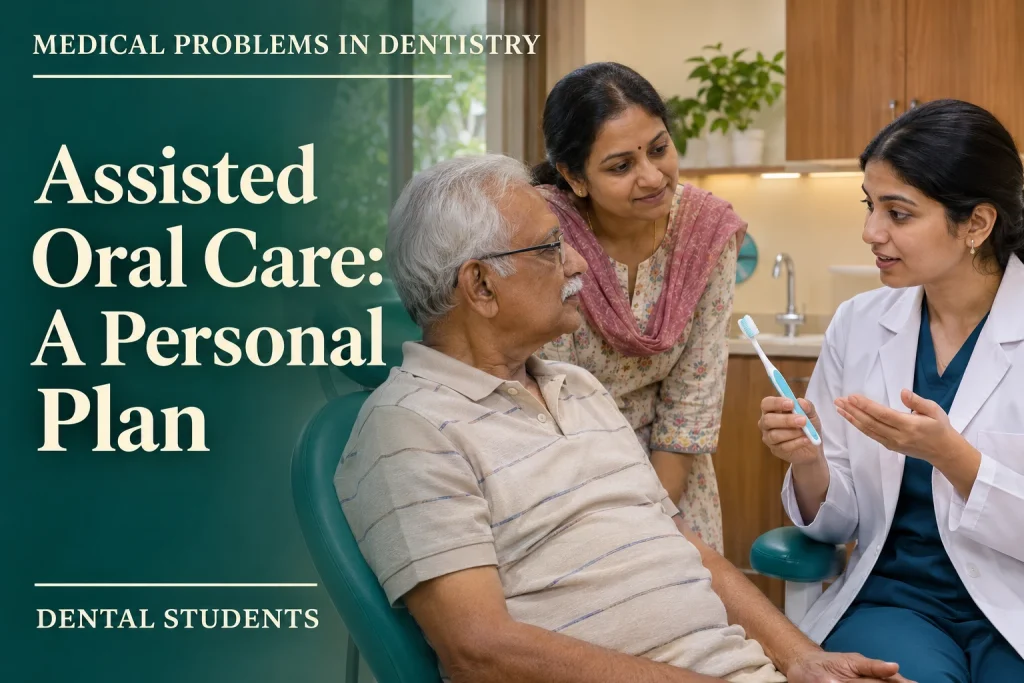
A prevention plan is useful only when someone can carry it out. Children learning to brush, adults with temporary limitations and people needing long-term support have different needs. Start with what the person can do, what matters to them and what assistance is acceptable. Carer involvement should support participation and comfort.
In this guide: Learning objectives · Start with this clinical case · Assess ability, preferences and the oral condition · Preserve independence and make support accessible · Write the daily routine clearly · A care plan needs named responsibilities · Review as needs and carers change · Viva and self-check
Learning objectives
- Identify the level of assistance needed for daily oral care.
- Write a practical plan with responsibilities, products and review.
- Recognise pain, distress and swallowing concerns that require assessment.
Start with this clinical case
Fictional teaching case. An adult with arthritis can brush some surfaces but struggles to grip the handle. Their family has taken over all brushing, which the patient dislikes. A better plan may preserve the tasks they can perform, assess an adapted grip and agree help for the remaining areas. Ask the patient before assuming that complete takeover is necessary.
Assess ability, preferences and the oral condition
Ask about vision, movement, grip, memory, fatigue, communication and the physical environment. Find out who currently helps, when care occurs and what usually goes wrong. Distinguish a lack of equipment or instruction from inability to participate. The person may need reminders, set-up, supervision, partial assistance or full assistance; these are different arrangements.
Examine for pain, caries, gum disease, denture problems, dry mouth and other findings. A new refusal or resistance may reflect discomfort rather than difficult behaviour. Do not use a prevention discussion to postpone assessment of a painful tooth, ulcer or suspected infection. Record a baseline that will allow the team to review whether the plan helps.
Preserve independence and make support accessible
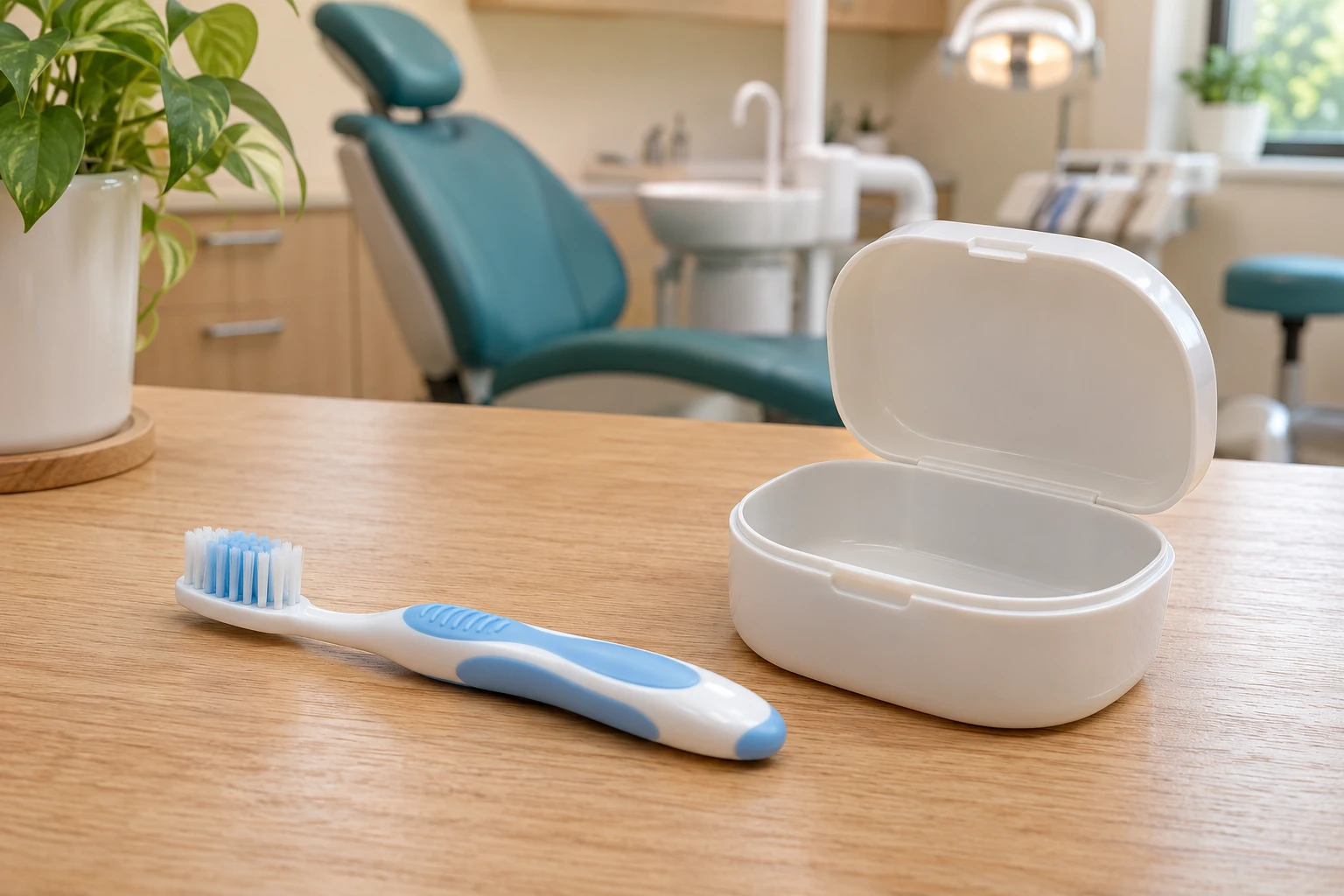
HRSA describes reminders, guidance and adapted tools as ways to support self-care. A broad handle, appropriate powered brush or suitable interdental aid may help some individuals, but a product should match the person’s function and preferences. Ask them to try an appropriate option and show how they would use it. A photograph cannot establish that a particular grip is right for everyone.[CARE]
Explain each step and obtain agreement before assistance. Use the person’s preferred communication method and allow time. For children, involve them in an age-appropriate way alongside the parent or responsible adult. AAPD guidance supports individual assessment and coordination for special health care needs; a diagnostic label alone does not determine a child’s understanding or support needs.[SHCN]
Write the daily routine clearly
NIDCR supports brushing natural teeth twice daily with fluoride toothpaste and regular interdental cleaning. The exact product, amount and method should suit the individual’s age, disease risk and ability. A prescribed high-fluoride product or rinse requires the appropriate clinician’s instructions. Do not transfer an adult product plan unchanged to a small child.[HYGIENE]
Include dentures and the tissues beneath them in the plan where relevant. Discuss cleaning, safe handling and removal overnight when appropriate to the individual’s dental advice. Identify who can carry out the task and where items will be stored. Mouthwash alone does not substitute for effective mechanical cleaning of teeth or dentures.[CARE]
If swallowing or aspiration is a concern, obtain an individual plan from the relevant dental and medical team. Do not automatically advise rinsing, drinking water, gum or loose oral items to a person who cannot use them safely. This guide is not a manual for assisted feeding, suction or managing dysphagia.
A care plan needs named responsibilities
| Finding or question | Clinical implication | Student action |
|---|---|---|
| The person can brush but cannot open the tube | Set-up assistance may be sufficient | Agree who prepares the products and preserves independence |
| A carer notices pain or bleeding | Disease or trauma may need assessment | Record the change and arrange dental review |
| Several carers provide support | Instructions may vary or be missed | Use one accessible plan and a handover method |
| Swallowing safety is uncertain | Standard rinsing advice may be unsuitable | Seek an individual professional plan |
A useful written plan identifies what happens, who helps, which products are used, what the person prefers and when to seek help. Avoid vague instructions such as “maintain hygiene” or an elaborate checklist that nobody has time or equipment to follow. Ask the person and carer to demonstrate understanding.
Review as needs and carers change
Set review according to oral risk and practical need. A change in health, medicines, dexterity, cognition, living arrangements or caregiver should prompt reconsideration. Check whether the plan actually occurs and whether it causes distress or discomfort. Adjust it with the person rather than treating a missed routine as a moral failure.
Consent and decision-making must follow applicable Indian legal and professional arrangements. Do not infer inability to decide from age, disability or the presence of a carer. If the person resists, pause and explore the reason, pain, communication and environment. Students should seek appropriate advice rather than improvising force or restraint.
In the teaching case, an adapted handle and partial assistance may better respect the patient’s preferences than complete takeover. Document the agreed division of tasks and reassess the outcome. At a later life stage, support needs may increase or decrease. The same principle applies: a workable prevention plan connects disease risk with function, choice and reliable daily support.
Viva and self-check
Is full assistance always better than partial assistance? No. Match help to the person’s abilities and wishes.
What might a new refusal indicate? Pain, fear, communication difficulties or an unsuitable routine should be explored.
Can the same rinse advice be used for every dependent patient? No. Swallowing ability and the individual plan matter.
Continue through the series
- Previous: Polypharmacy in Older Adults: Xerostomia, Falls, Bleeding and Prescribing
- Next: A Collapsed Patient in the Dental Chair: ABCDE, Calling for Help and BLS/AED
- Browse all 215 student guides by subject
More in Younger and older patients: Medically Complex Children: Dental Assessment and Paediatric Medical Liaison · Frailty and Multimorbidity: Dental Priorities and Shared Decision-Making · Polypharmacy in Older Adults: Xerostomia, Falls, Bleeding and Prescribing
Continue learning
- Informed consent in an Indian dental practice
- Structured medical history and examination
- Medical liaison and referral for complex dental patients
References and scope
Sources checked on 26 November 2026. This is an original student teaching guide. International clinical recommendations are identified by their issuing organisation. Use current local protocols, appropriate supervision and an individual clinical assessment.
- HRSA: Oral Health of Older Adults and Adults With Disabilities
- NIDCR: Oral Hygiene
- AAPD: Management of Dental Patients With Special Health Care Needs (2026)
Images are AI-generated educational illustrations of fictional people or equipment, not clinical records or diagnostic photographs.

Leave a Reply