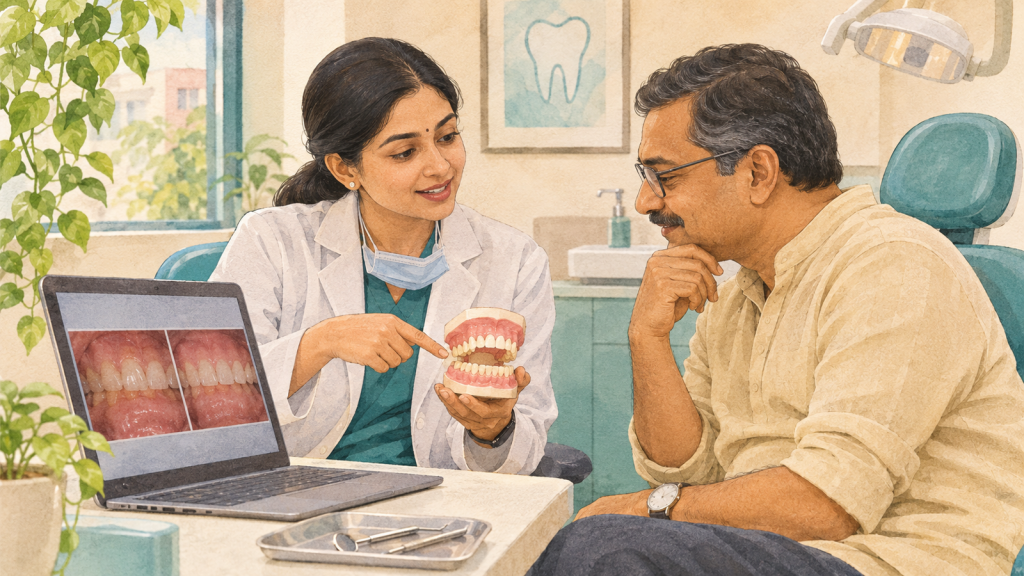
Flattened edges, shallow hollows or shortening can be signs of tooth wear. A dentist looks for the cause and whether the wear is progressing before recommending treatment. Early care often focuses on protecting the tooth surface. Restoring lost shape can be useful when wear affects comfort, chewing or appearance.
What the pattern can tell the dentist
Tooth wear can involve contact between teeth, acid softening of enamel, or repeated friction from something outside the teeth. Grinding may leave matching flat areas. Repeated exposure to acid from drinks, reflux or vomiting can leave smooth hollows or rounded surfaces. Vigorous brushing or other habits may add to wear. Several mechanisms often act together, so a flat tooth alone cannot confirm night-time grinding.
What happens at the appointment
Tell the dentist about sensitivity, chips, jaw soreness, diet, reflux or dry mouth, and any changes in medicines or habits. They examine which surfaces are affected, check the bite and record the pattern. Photographs, scans or models can help compare wear over time. X-rays may be useful if the dentist suspects decay, a fracture or another problem in addition to wear. They can refer you to a medical clinician if reflux or repeated vomiting may be contributing.
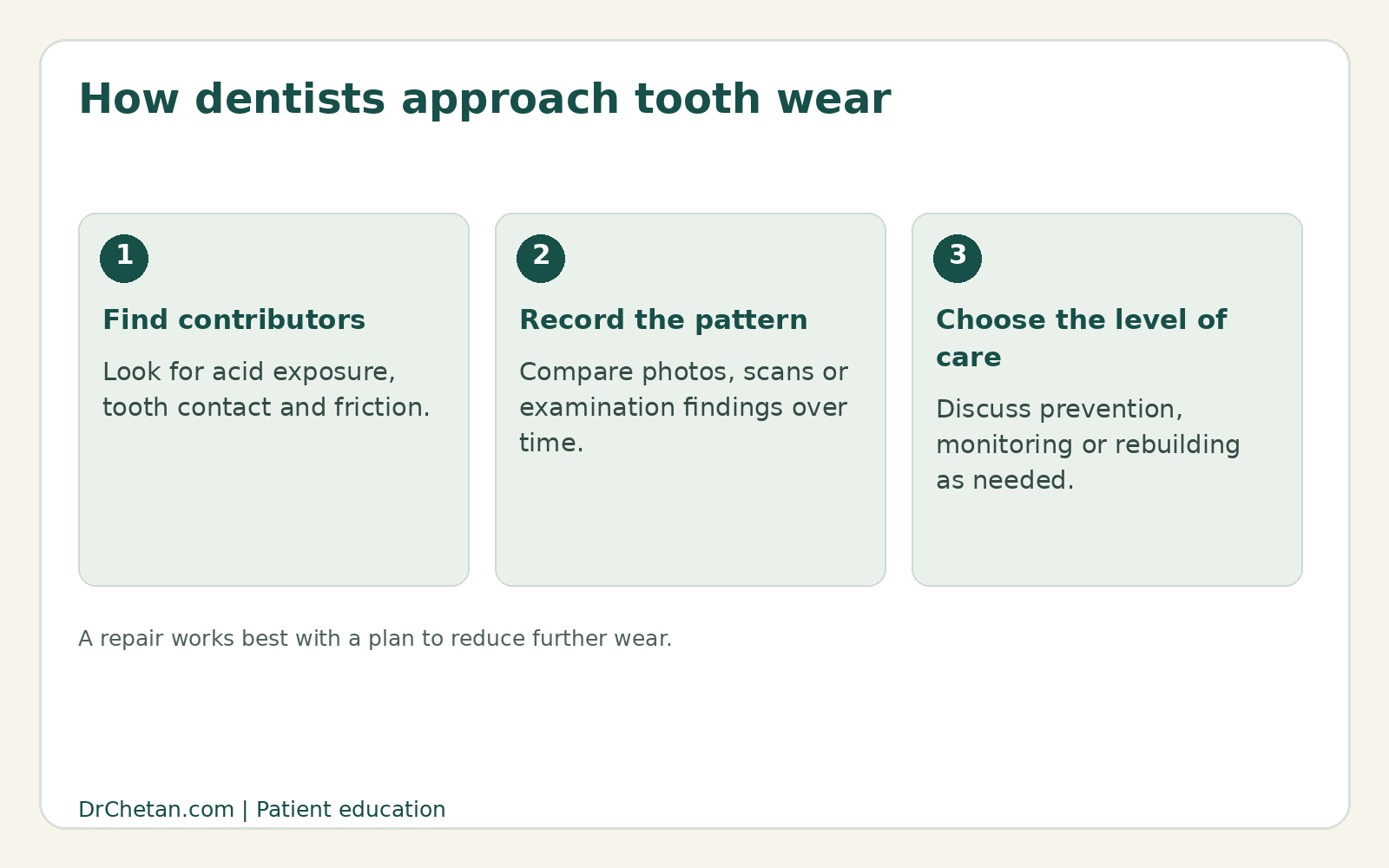
How the dentist chooses between monitoring and rebuilding
If wear is stable and causes little difficulty, the plan may be to record it and review it. Reducing how often acidic drinks contact the teeth and addressing reflux can reduce further damage. Fluoride products or desensitising toothpaste may help protect vulnerable surfaces. A professionally fitted guard may protect the teeth in some people who grind. It cannot stop acid exposure or replace lost enamel.
If wear has caused sensitivity, repeated chipping or a change in function or appearance, the dentist may consider additive bonding or other restorations. Severe or widespread wear may need careful bite planning and several visits. Ask how much tooth structure each option uses, what maintenance is likely and what will happen if you wait. Treating the cause first can help a repair last.
When to get checked sooner
Arrange an assessment if the teeth seem to be wearing quickly, are breaking, feel sensitive or no longer meet comfortably. Call promptly for severe pain on biting, a new fracture or swelling. If you are noticing frequent reflux or vomiting, tell a medical clinician as well as your dentist.
Frequently asked questions
Do worn teeth always need crowns?
No. Monitoring, prevention or additive repairs may be more suitable, depending on the rate and severity of wear.
Does a mouthguard stop grinding?
It can protect tooth surfaces in selected cases. The dentist can explain what it can achieve and whether another cause needs attention.
Can lost enamel grow back?
Minerals can be restored to some early softened surfaces, but enamel that has physically worn away does not regrow.
Related guide: Teeth grinding and what to do about it.
References and further reading
- ADA MouthHealthy: Dietary acids and your teeth
- ADA MouthHealthy: Tooth erosion and acid reflux
- ADA MouthHealthy: Teeth grinding
Sources checked 3 November 2026. General patient education. Discuss your individual care with your clinical team. Featured image is an AI-created illustration.

Leave a Reply