
A custom dental night guard is made to fit your teeth and can protect them from wear or fracture while you sleep. The dentist checks whether it suits your symptoms and then checks the fit and bite when you collect it. You may need another adjustment as you get used to wearing it.
What the dentist checks before making it
The dentist asks about jaw pain, morning headaches, recent damage and dental work. They examine the teeth, bite and jaw, and may check whether wear is progressing. Tell them about loose teeth, planned crowns or fillings and symptoms such as loud snoring or pauses in breathing.
A grinding guard differs from a sports mouthguard and from an appliance prescribed to treat sleep apnoea. A guard may protect the teeth while worn, but a separate assessment may be needed for sleep or jaw symptoms.
From scan or impression to the fitting
The dentist records the shape of your teeth with a scan or impression. They may take a bite record. They choose the arch and design based on your mouth, what the guard is intended to do and how it will be worn. A laboratory or dental practice then makes the appliance.
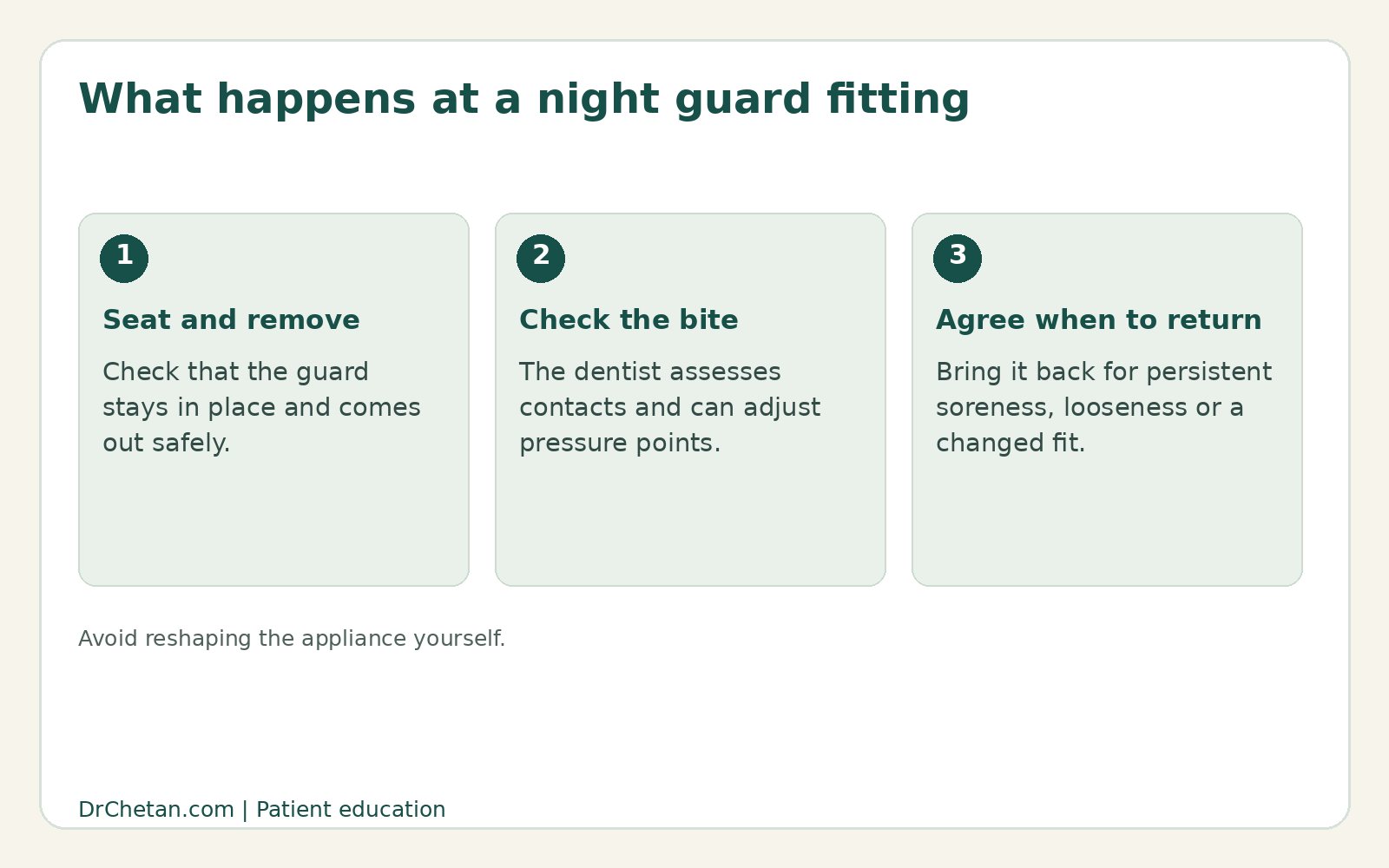
At the fitting, the dentist checks that you can seat and remove it, that it stays in place without excessive pressure, and that the teeth contact it as intended. They may adjust or polish areas that rub.
What to do if something feels wrong
Some people notice extra saliva or a new sensation at first. Call the practice if the guard is hard to remove, causes persistent soreness, feels loose, or your bite feels different after taking it out. Bring it to the visit so the dentist can see what needs adjustment. Avoid heating, cutting or reshaping it at home.
Clean and review the guard
Follow the cleaning instructions for its material. Keep it away from hot water and store it in its case as directed. Take it to dental reviews and mention any recent treatment that may have changed the fit. A cracked or distorted guard needs an assessment.
Frequently asked questions
Will a guard stop me grinding?
Its main role is to protect the teeth. Ask how the dentist will check whether it is helping.
Can I wear it after a new crown or filling?
Check the fit with the dentist, especially if it no longer seats easily.
How long will a custom guard last?
Wear varies with the material, grinding and changes in your mouth. Ask when to review it.
References and further reading
Sources checked 3 November 2026. General patient education. Discuss your individual care with your clinical team. Featured image is an AI-created illustration.

Leave a Reply