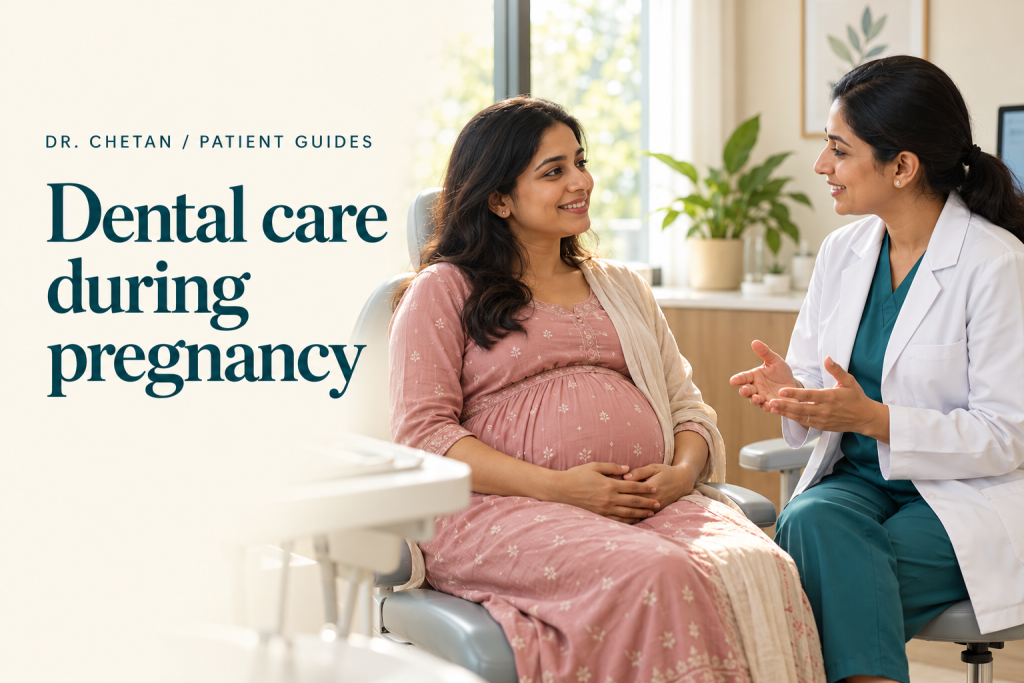
“I am pregnant. Should I cancel my dental appointment?”
Routine and necessary dental care can be provided during pregnancy. Pregnancy is a reason to tell the dental team and plan carefully, not an automatic reason to leave pain, infection or decay untreated.
This guide explains common mouth changes, practical daily care and questions to ask. Your dentist and maternity team can tailor the plan to your health and pregnancy.
Tell your dentist early
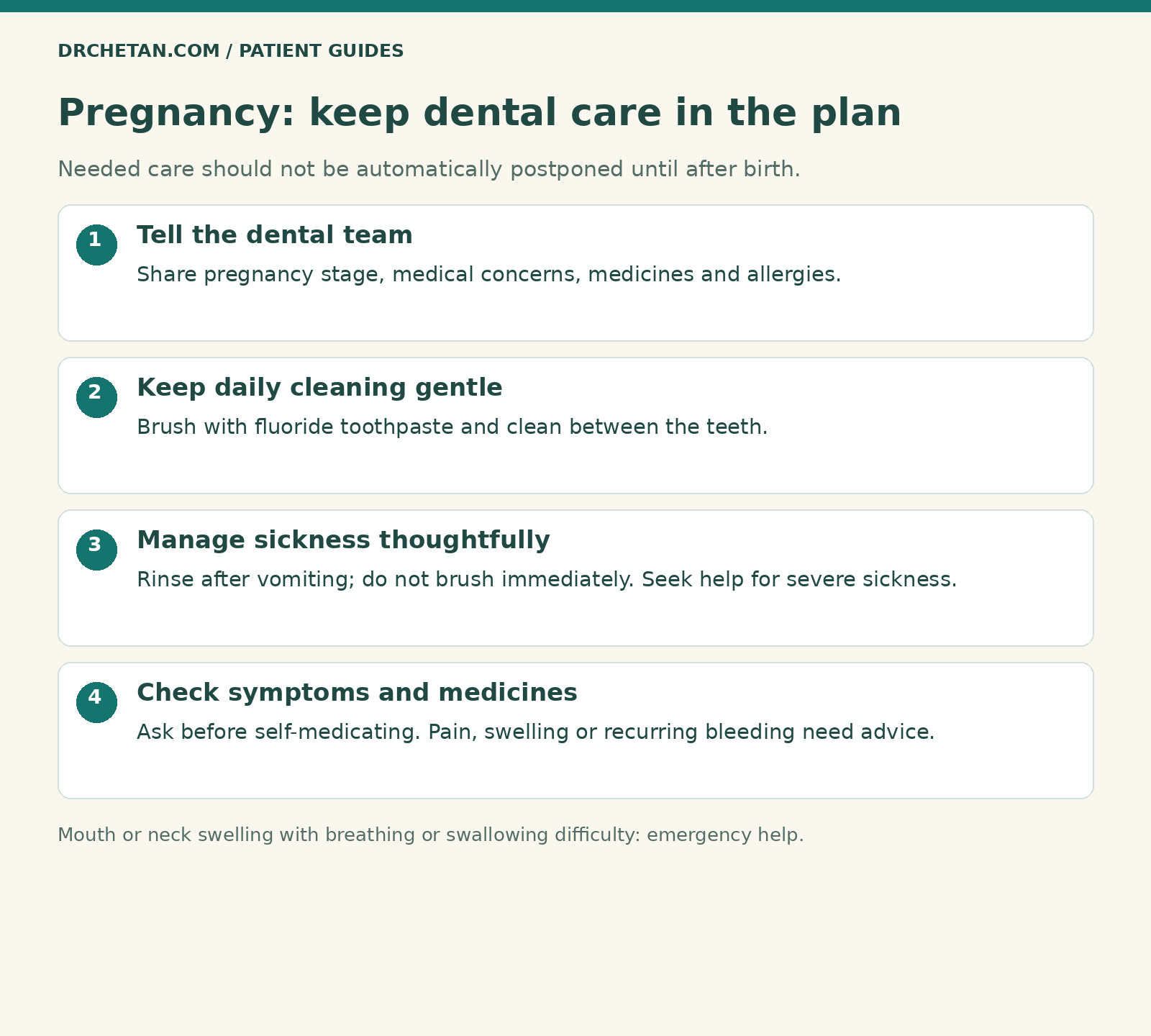
Tell the team if you are pregnant, may be pregnant, planning pregnancy or breastfeeding. Share the expected due date, relevant complications, medicines, supplements and allergies. If your pregnancy has additional medical concerns, give the contact details of the clinician coordinating your care.
For example, a person with nausea may need a shorter visit at a more comfortable time of day. Someone receiving specialist maternity care may need closer coordination about medicines or sedation. Those practical adjustments differ from a rule that dental treatment must stop.
Why gums may bleed more easily
Hormonal changes can make gums react more strongly to plaque, leading to tenderness, swelling or bleeding. This is often called pregnancy gingivitis. Keep cleaning gently and arrange an assessment rather than accepting recurring bleeding as something you must simply tolerate.
Use a soft brush and appropriate interdental cleaning. Professional cleaning and treatment may be needed when there are deposits or gum disease. A mouthwash is not a substitute for those steps.
Researchers have reported associations between periodontal disease and some adverse pregnancy outcomes. An association does not prove that gum disease causes an outcome, or that dental treatment guarantees prevention. Looking after your mouth remains valuable for your own health and comfort.
Morning sickness, reflux and tooth protection
Vomiting and reflux expose teeth to stomach acid. After vomiting, rinse with plain water and avoid brushing immediately. Local NHS advice suggests waiting about an hour before brushing to allow the acid-softened surface to recover. Ask your dental team for a routine that fits frequent episodes.
If flavour or smell triggers nausea, ask about a mild-tasting fluoride toothpaste and a smaller brush. You do not need to abandon cleaning because your usual product has become difficult to tolerate.
Get advice from your maternity team for severe vomiting, difficulty keeping fluids down or other symptoms of dehydration. Dental measures can help protect teeth, but they do not treat the pregnancy-related illness itself.
Which dental treatment can be done?
Examination, preventive care and needed restorative treatment can generally be provided throughout pregnancy. When clinically required, treatment such as a filling, root canal or extraction should not automatically be delayed until after birth; delay may make a problem more complex.
Timing can be adapted for comfort and medical circumstances. A planned elective cosmetic procedure is different from treating infection. Your dentist should explain what is needed now, what can reasonably wait and what would happen if it were postponed.
If lying back is uncomfortable, dizzy or makes you feel unwell, tell the team immediately. They can adjust positioning, take breaks and discuss a suitable appointment length. You do not need to tolerate symptoms silently to complete the visit.
Are dental X-rays and local anaesthetic allowed?
Clinically indicated dental radiographs and appropriate local anaesthesia can be used during pregnancy. The dentist selects imaging because it answers a relevant question and uses the clinic’s current radiation-protection procedures. Tell the team about pregnancy, but do not assume a needed image must be refused.
A local anaesthetic numbs an area of the mouth. Sedation and general anaesthesia involve different considerations. If a procedure may need nitrous oxide, intravenous sedation or general anaesthesia, the dental and maternity clinicians should discuss suitability and alternatives.
Medicines need an individual check
Before taking a painkiller, antibiotic, mouthwash medicine or herbal remedy, tell the pharmacist or clinician that you are pregnant and which other medicines you take. Do not use leftover prescriptions or assume that “natural” means appropriate in pregnancy.
NSAIDs such as ibuprofen should not be used from around 20 weeks of pregnancy unless specifically advised by a healthcare professional. This warning does not mean stopping prescribed low-dose aspirin used for a pregnancy indication; changes to prescribed treatment must be discussed with the prescriber.
The correct pain-relief or antibiotic plan depends on the problem, stage of pregnancy and medical history. A general article cannot select that plan for an individual. Do not let uncertainty about medicines become a reason to avoid assessment of pain or infection.
A manageable daily routine
- Brush gently twice daily with fluoride toothpaste, including before bed.
- Spit out the excess and avoid immediately rinsing it away.
- Clean between the teeth daily using an aid that fits comfortably.
- Drink water regularly and review frequent sweet drinks and snacks.
- Keep dental appointments and report recurring bleeding, pain or dryness.
Ask the maternity team about nutrition needs if nausea limits your diet. The dental aim is to make a realistic plan around those needs, not to remove necessary meals or fluids in pursuit of a perfect routine.
When to seek help
Call a dentist promptly for toothache, a broken tooth, a gum swelling or a suspected abscess. Fever, facial swelling or feeling unwell with dental symptoms needs urgent assessment. Breathing, swallowing or speaking difficulty with mouth or neck swelling needs emergency medical care.
Keep maternity and dental contact details available. Tell the service you contact that you are pregnant and describe the symptoms clearly. Do not wait for a preferred trimester when there may be an infection.
Questions patients often ask
Must I wait until the second trimester?
No blanket rule applies. Necessary care can be provided at any stage; timing and positioning can be adjusted to your circumstances.
Will a dental cleaning harm my baby?
Preventive dental care is considered safe during pregnancy. Tell the team about your health and any pregnancy complications so they can plan appropriately.
Should bleeding make me stop brushing?
Continue gentle cleaning and get recurrent bleeding assessed. Hormone-related susceptibility does not remove the importance of plaque control.
Can I postpone cosmetic whitening?
Discuss elective cosmetic treatment separately from needed care. NHS guidance does not recommend whitening during pregnancy or breastfeeding.
References and further reading
- American Dental Association: Pregnancy
- ACOG: Oral health care during pregnancy and through the lifespan
- HRSA: Oral health and pregnancy
- Oral Health Foundation: Pregnancy and oral health
- Derbyshire Family Health Service: Pregnancy and oral health
- NHS: Pregnancy symptoms you need to get help for
- FDA: Avoid NSAIDs in pregnancy at 20 weeks or later unless advised
- NHS: Dental abscess
- NHS: Teeth whitening
Sources checked 30 October 2026. This is general patient information. An examination and individual advice may be needed.

Leave a Reply