
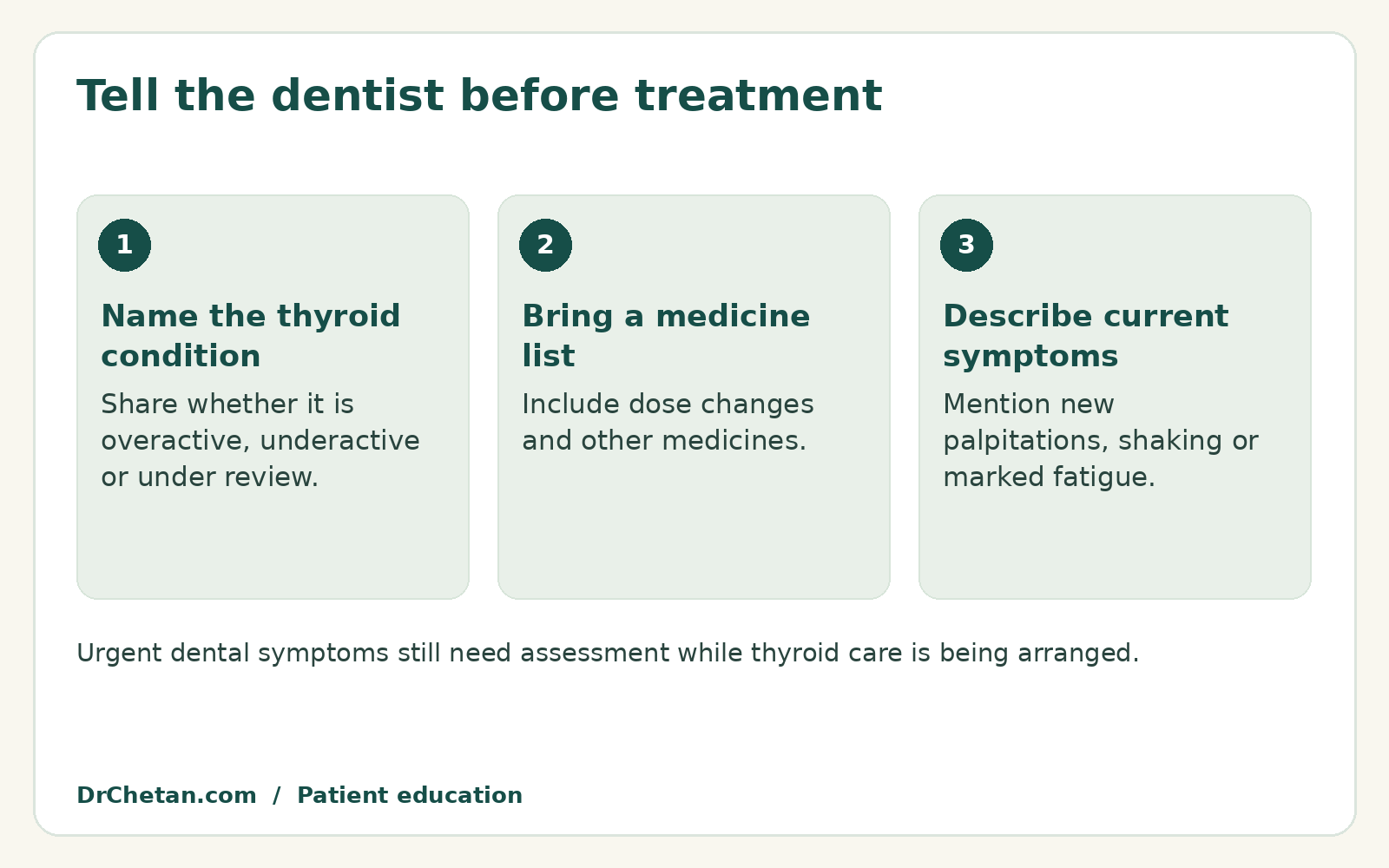
An underactive or overactive thyroid can affect how a dentist plans treatment, especially if symptoms are new or poorly controlled. Bring your diagnosis, medicine list and any recent changes. People with stable, treated thyroid disease can often receive routine dental care with an individual plan.
Share your diagnosis and current symptoms
Tell the clinic whether you have hypothyroidism, hyperthyroidism, a thyroid condition under investigation or a history of thyroid surgery or radioactive iodine. List medicines and doses, including levothyroxine, carbimazole or methimazole, propylthiouracil and any beta blocker. Include other health conditions and medicines as well.
Mention a recent dose change, new palpitations, shaking, marked fatigue or symptoms that have returned. Let the team know if your thyroid levels are still being investigated or if a clinician has told you they are out of range. Bring recent results if requested and available.
Why control matters more than the label
Untreated or poorly controlled hyperthyroidism can affect the heart rate and the body's response to stress. The dentist may defer elective work and coordinate with your medical team. If you have dental pain or infection, call promptly so the team can plan urgent treatment in an appropriate setting.
For a person with stable treated hypothyroidism, standard care can often proceed after the usual assessment. Severe or poorly controlled disease can affect how the team plans sedation and other medicines. A person’s symptoms and other medical conditions help determine the approach.
What about the numbing injection?
Some local anaesthetics contain adrenaline, also called epinephrine, to help the numbing effect last. Uncontrolled hyperthyroidism can make adrenaline-containing products unsuitable in routine office care. The dentist considers thyroid control, heart history, other medicines and the procedure before selecting an anaesthetic.
Ask the dentist what they plan to use and why. Keep taking your routine thyroid treatment as prescribed unless your medical team gives specific instructions.
When to contact your medical team promptly
If you take carbimazole, methimazole or propylthiouracil and develop fever, a severe sore throat or new mouth ulcers, seek same-day medical advice. These symptoms can signal a rare but serious fall in infection-fighting white blood cells. For carbimazole or propylthiouracil, patient safety guidance advises taking no further doses until urgent medical assessment and a blood count. Follow your own medicine’s safety instructions and tell the medical team exactly what you take. This urgent warning is separate from routine advice to continue stable thyroid treatment for a dental appointment.
Severe breathlessness, chest pain, confusion or a very fast heartbeat with fever requires emergency assessment. Dental facial swelling that affects breathing or swallowing also requires emergency medical care.
Frequently asked questions
Will the dentist need a new thyroid test?
Many people with stable treatment will not need a new test for routine care. Recent symptoms, treatment changes or planned invasive care may lead the dentist to request updated information.
Is a thyroid problem a reason to avoid all dental work?
Stable thyroid disease can often be managed during ordinary dental care. Uncontrolled symptoms or complex treatment may require coordination.
Should I mention thyroid surgery years ago?
Yes. Tell the team if you take replacement medicine or have ongoing monitoring or complications.
References and further reading
- American Thyroid Association: Hyperthyroidism
- College of Dental Hygienists of Ontario: Hyperthyroidism in dental care
- NHS: Side effects of carbimazole
Featured image is an AI-created editorial illustration.

Leave a Reply