
Persistent dry mouth can make speaking, chewing or swallowing difficult and can raise the risk of tooth decay. A dentist can look for damage, review possible causes and decide whether testing or medical referral would help. Tell them if the dryness is constant, began after a medicine change or comes with dry eyes.
What the dentist will ask
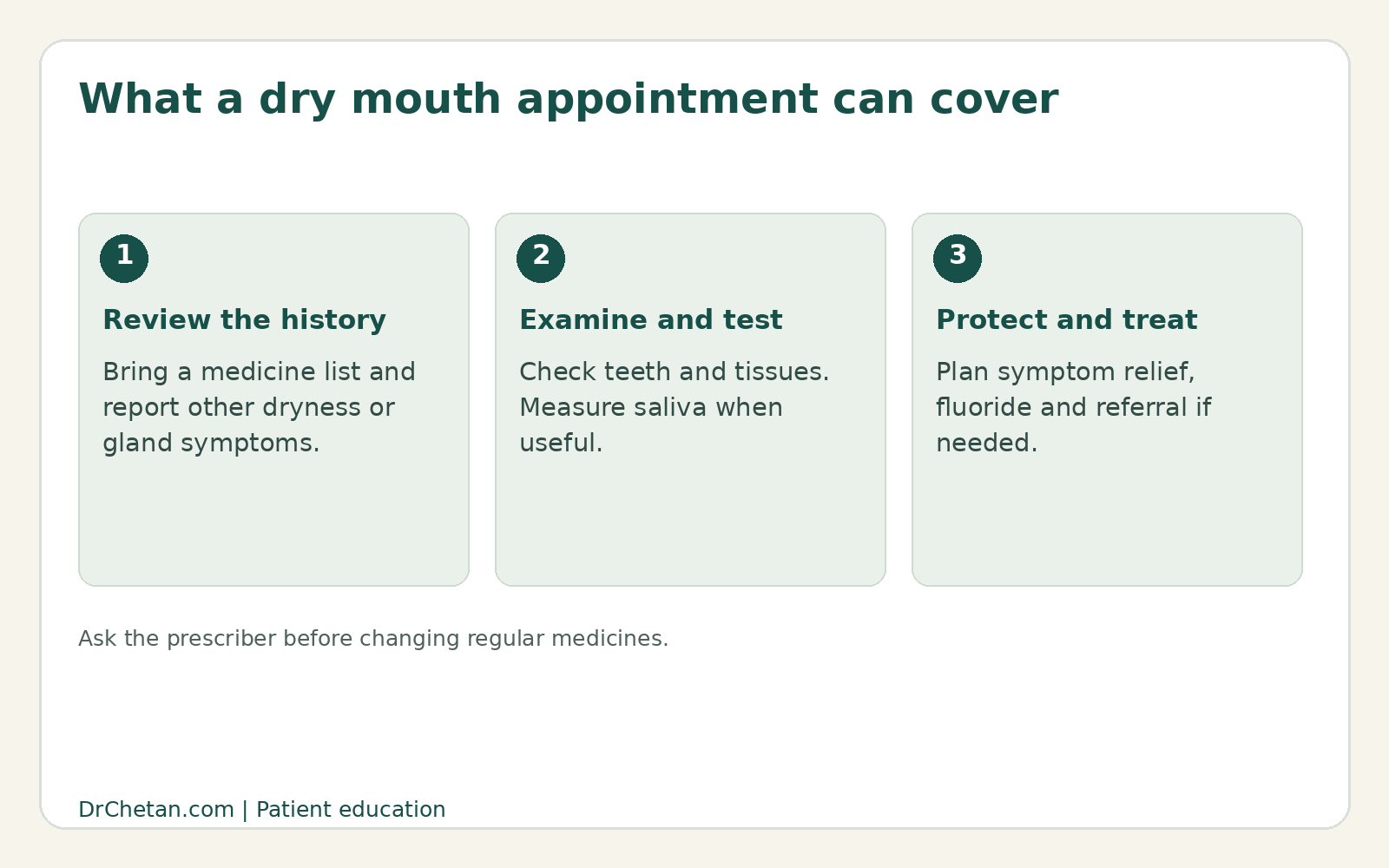
Describe when dryness began, whether it is worse at night or during meals, and whether you wake for water. Bring a list of prescriptions, over-the-counter medicines and supplements. Mention dry eyes, new difficulty swallowing, swelling near a salivary gland, diabetes, autoimmune conditions and past head and neck radiotherapy. Many medicines can contribute. The dentist can contact the prescriber about options if a medicine is suspected. Keep taking it as prescribed until the prescriber advises otherwise.
What the examination and tests may show
The dentist looks for saliva pooling, dry or sore tissues, cracks at the corners of the mouth, infection and decay along the gumline or on exposed roots. They may assess the salivary glands and measure how much saliva you produce at rest or while chewing a standard stimulus. A person can feel dry even if measured flow is within the expected range, so test results are considered with symptoms and examination. Blood tests, gland imaging or specialist referral may be appropriate if a condition such as Sjögren’s disease or a gland blockage is suspected.
How treatment is tailored
The first goals are comfort and tooth protection. Sip water if you can safely swallow and have no fluid restriction. A saliva substitute or gel may help. Sugar-free gum or lozenges may stimulate saliva if you can use them safely. Avoid relying on frequent sugary or acidic sweets for relief. The dentist may recommend additional fluoride, professional prevention and closer reviews based on decay risk.
Some people with a specific cause may be considered for prescription medicines that stimulate saliva. The benefit and side effects depend on the underlying condition and other medicines. If there is fungal infection, a sore denture or a blocked gland, it needs its own assessment and treatment.
When to get help sooner
Tell the dentist or doctor if dryness persists, you have new trouble swallowing or you find it hard to eat or drink enough. Seek prompt assessment for painful gland swelling, fever, pus or severe mouth pain. Trouble breathing or inability to swallow saliva needs emergency assessment.
Frequently asked questions
Will drinking more water cure it?
Water can ease symptoms. The cause may still need evaluation, especially if symptoms persist or you are on a fluid restriction.
Does a saliva test diagnose Sjögren’s disease?
A saliva test can be part of a work-up. The medical team considers other symptoms and tests before making a diagnosis.
Can a dentist help if the medicine cannot be changed?
Yes. They can suggest symptom relief, fluoride and a review schedule to reduce dental complications.
References and further reading
Sources checked 3 November 2026. General patient education. Discuss your individual care with your clinical team. Featured image is an AI-created illustration.

Leave a Reply