
Sjögren disease can reduce the amount of saliva your glands make. A mouth that stays dry can affect eating, speech and sleep, and the teeth may decay more quickly. A dental plan can help protect the teeth while your medical team investigates or manages the underlying condition.
What to tell the dental team
Mention whether you have a diagnosis or are being assessed, how long the dryness has lasted, and whether you also have dry eyes or repeated swelling near the jaw. Bring a medicines list. Dry eyes and mouth can occur for other reasons, and a dentist may suggest a medical assessment when the pattern warrants it.
Tell the dentist if you have started needing a drink to eat dry foods or if your dentures have begun to rub. These details help tailor a plan you can use day to day.
Prevent cavities before they hurt
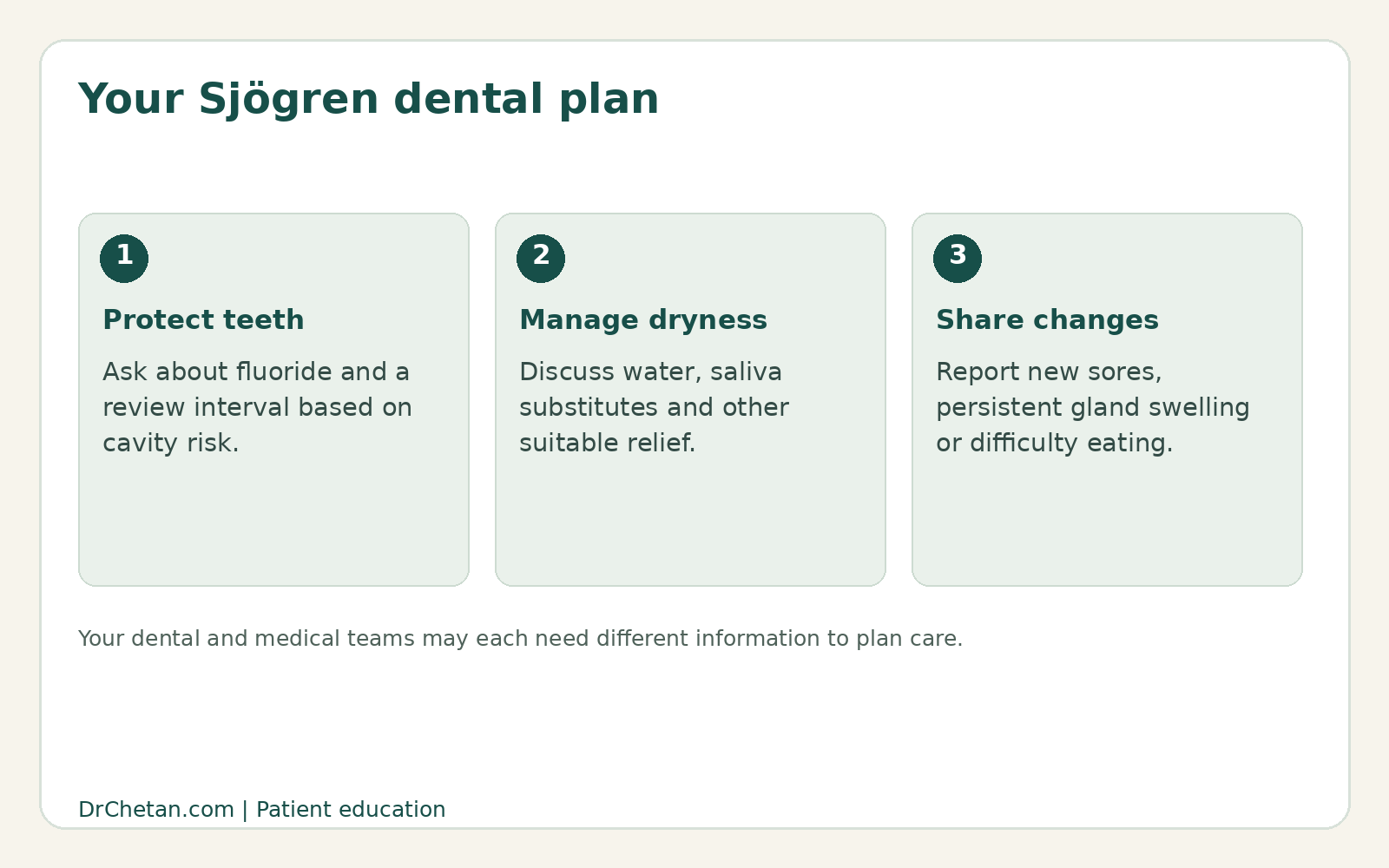
Ask your dentist to check areas near the gumline and exposed roots, and discuss whether your risk warrants prescription-strength fluoride toothpaste, fluoride varnish or shorter review intervals. Use prescribed fluoride products as directed. Ordinary fluoride toothpaste and daily cleaning between teeth remain important.
Try to keep sugary or acidic snacks and drinks to fewer occasions. Choosing sweet or acidic lozenges throughout the day for comfort can expose teeth repeatedly. Ask about products that relieve dryness without adding that exposure.
Find comfort measures that fit your needs
Small sips of water or saliva substitutes may help. Sugar-free gum may stimulate remaining saliva for people who can chew and swallow safely. If relief is limited, ask the treating clinician whether a prescription saliva-stimulating medicine is suitable for you. Such medicines are not appropriate for everyone.
Persistent burning, white patches or red areas may have causes that include infection or denture irritation. Ask the dentist to examine these instead of treating them on appearance alone.
Agree who will follow up
The dentist can track new decay and oral symptoms. Your medical team can review gland symptoms and treatment. Call promptly about persistent or one-sided gland swelling, new pain, fever or difficulty eating. Seek emergency help for trouble breathing or swallowing with rapidly spreading mouth or facial swelling.
Frequently asked questions
Can a dentist diagnose Sjögren disease from dry mouth alone?
No. The medical team may consider symptoms, tests and other causes of dryness.
Will a saliva substitute protect my teeth on its own?
It can improve comfort. Fluoride and regular dental care address cavity risk separately.
Can I keep taking my usual medicines?
Continue prescribed medicines unless your prescriber advises a change. Ask them to review anything that may contribute to dryness.
References and further reading
Sources checked 3 November 2026. General patient education. Discuss your individual care with your clinical team. Featured image is an AI-created illustration.

Leave a Reply