
When gums recede, part of the root can become exposed. Plaque can collect there and cause decay, particularly when saliva is reduced or brushing is difficult. A dentist can check whether a change at the gumline is active decay and choose care based on the site, symptoms and what can be cleaned.
Why roots need extra attention
A root surface lacks the hard enamel that covers the crown. It can be vulnerable to decay, especially if a person has dry mouth, frequently sips sweet drinks, or struggles to clean around the gumline or a denture clasp. Root decay can start quietly.
Colour alone cannot identify a root cavity. A dark patch may be stained or inactive, while a change that is harder to see may be active. The dentist assesses the surface, surrounding gums and other teeth, and may use an X-ray if it would help.
Protect the exposed surfaces
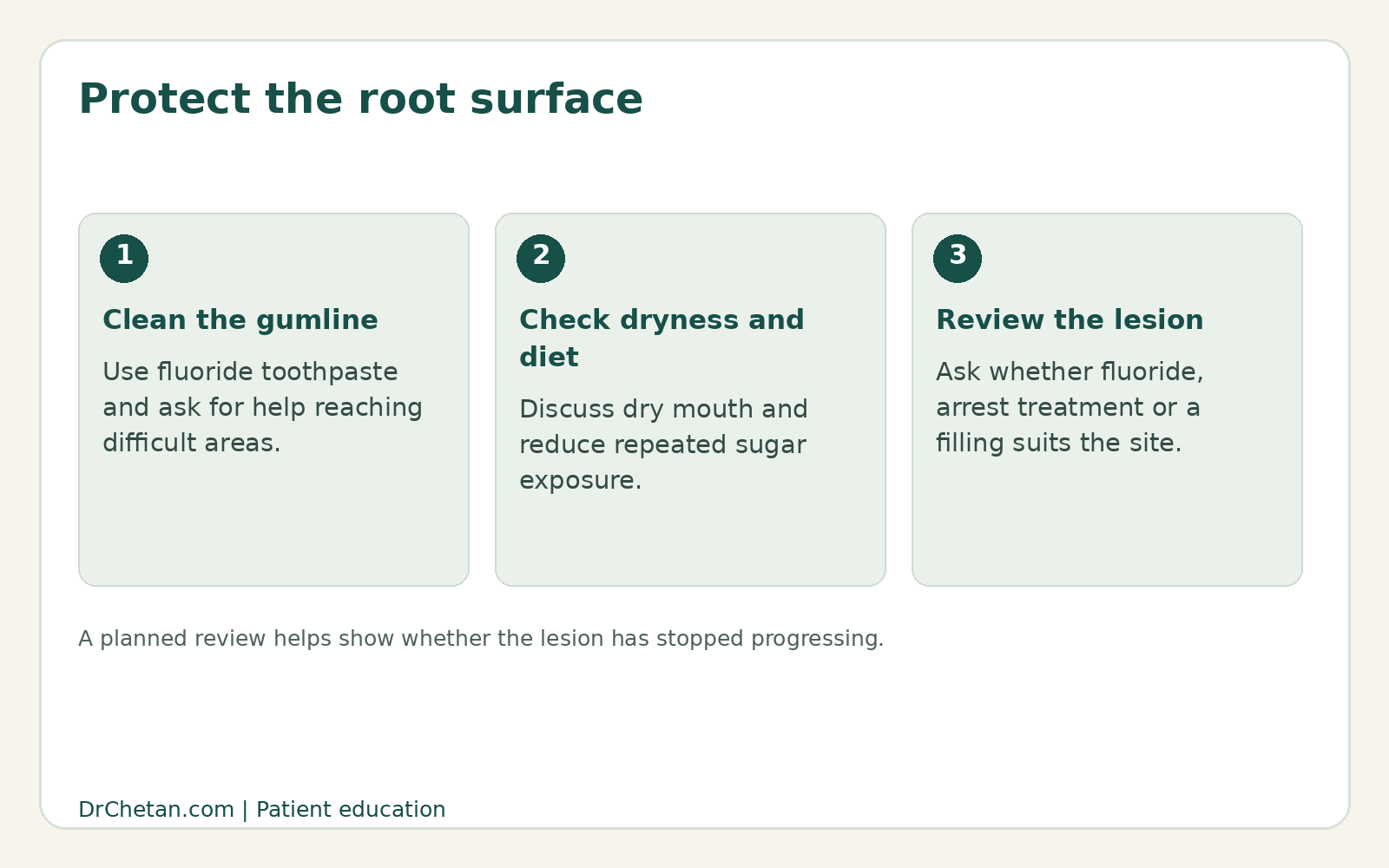
Use a soft brush and fluoride toothpaste twice daily. Ask the dentist to demonstrate how to reach the gumline and clean between teeth. A larger handle, electric brush or help from a caregiver may be useful if grip or movement is limited.
Tell the dentist about persistent dry mouth and your medicines. Your dentist may suggest a higher-fluoride toothpaste, fluoride varnish or closer follow-up based on risk. Ask your prescriber before changing any medicine. Aim to keep sugary snacks and drinks to fewer occasions.
How the dentist chooses treatment
An early or accessible lesion may be monitored with a plan to stop it progressing. In selected cases a clinician may use silver diamine fluoride to help arrest active decay. It usually darkens the treated decay and may require reapplication. Ask about appearance and the follow-up plan.
A filling can help where the area needs to be restored or food keeps collecting. The dentist considers whether it is possible to access and keep the area dry, how much tooth remains and whether a deeper problem needs care. A filling still needs daily cleaning and reviews.
When to book a visit
Book for a new gumline change, recurring sensitivity or food getting trapped. Seek prompt dental advice for worsening pain, pus or swelling. Bring your denture and medicines list if relevant.
Frequently asked questions
Does exposed root always mean decay?
No. Recession exposes the root. The dentist checks whether decay or another problem has developed.
Is a dark spot proof that the lesion is active?
No. Appearance is one finding. Surface characteristics and change over time also matter.
Can I avoid drilling?
Sometimes. Ask whether the lesion can be arrested and followed, or whether restoring its shape is necessary.
References and further reading
- American Dental Association: ageing and dental health
- American Dental Association: nonrestorative caries treatment guideline
Sources checked 3 November 2026. General patient education. Discuss your individual care with your clinical team. Featured image is an AI-created illustration.

Leave a Reply