
Gutkha commonly contains tobacco and areca nut. Supari is areca nut, and paan recipes vary. Some contain tobacco, areca nut or both. Tobacco and areca nut can each raise the risk of oral cancer. Switching to a tobacco-free product that still contains areca nut leaves an important risk in place.
Check what you are chewing
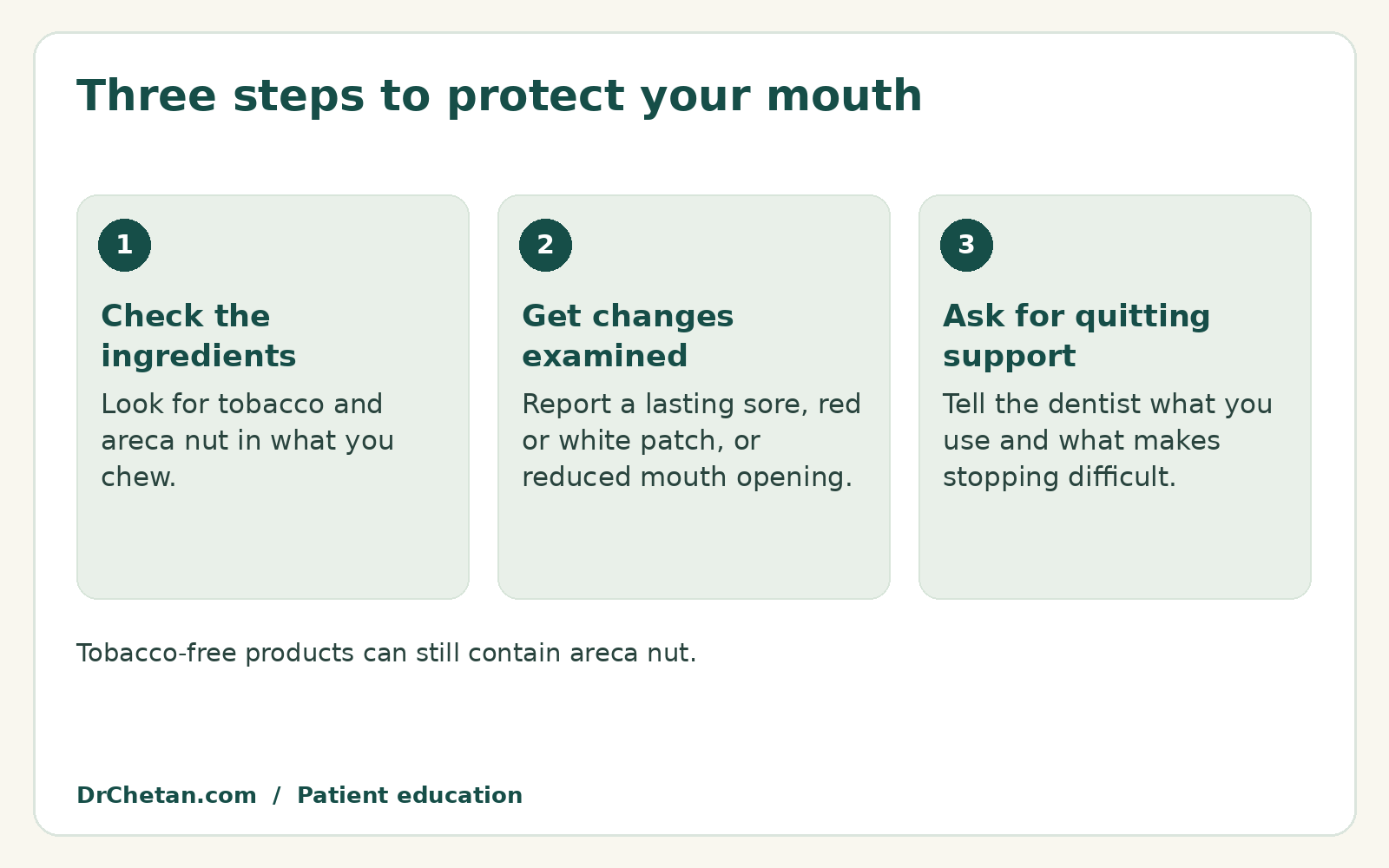
Labels such as plain, sweet or herbal do not always make the ingredients clear. Ask whether the product contains areca nut or tobacco, including when it is prepared by someone else. Tell the dentist what you use and how often. They can explain what changes to look for and arrange further assessment when needed.
What changes can happen in the mouth
Areca nut is linked to oral submucous fibrosis, in which tissues can become stiff and mouth opening can gradually decrease. A burning feeling with spicy food can be another symptom. These changes need an examination, even if they seem mild at first.
White or red patches, an ulcer that does not heal, a lump, or unexplained bleeding can have different causes. A dentist can assess these changes and refer for further tests when appropriate. An examination matters even if a patch or sore is painless.
When to arrange a check
Arrange a dental or medical visit if mouth opening is gradually becoming limited, a patch persists, or a sore has not healed after about three weeks. Seek care sooner if a change is growing or eating, speaking or swallowing is becoming difficult. Get emergency help for severe breathing difficulty.
Get support to quit
Tell the dentist which products you use and what makes it difficult to stop. Ask about support for tobacco dependence if tobacco is involved, and discuss the routine, triggers and social situations that make areca nut hard to give up. India's National Tobacco Control Programme lists a toll-free quitline at 1800-11-2356 for tobacco cessation support.
Frequently asked questions
Is plain supari safer because it has no tobacco?
Areca nut itself raises oral cancer risk. Ask for support to stop using it.
Does every white patch mean cancer?
No. Persistent patches need assessment so the cause can be investigated.
Can I wait until a mouth change hurts?
Book a check for a persistent or worsening change even when it is painless.
References and further reading
- IARC: oral cancer prevention handbook
- Government of India: National Tobacco Quitline Services
- NHS: symptoms of mouth cancer
Featured image is an AI-created editorial illustration.

Leave a Reply