A burning feeling in your tongue, lips or elsewhere in your mouth can have several causes. Some are visible on examination, such as a sore or infection. Others, including burning mouth syndrome, can occur when the mouth looks normal. A dentist or doctor can help identify which explanation fits. [1]
What to notice before the visit
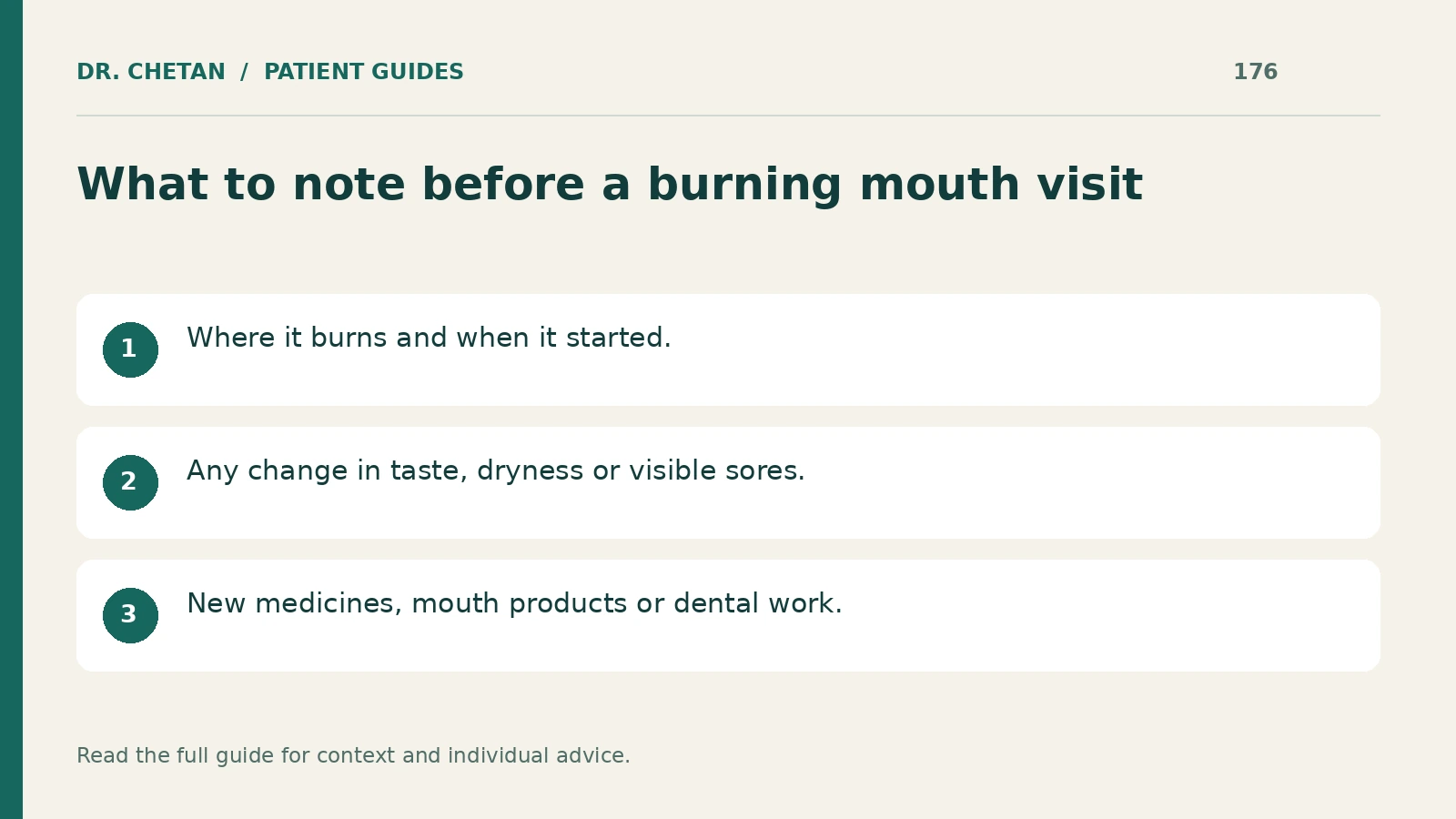
Write down where it burns, when it started and whether it comes and goes or builds during the day. Note any dry feeling, change in taste or change while eating and drinking. Mention a new toothpaste, mouthwash, denture or medicine, along with recent dental work or illness.
A hot-food burn may have an obvious start. A daily sensation over weeks or months can be harder to explain. Photos of a patch or sore can help if its appearance changes. A photo cannot replace an examination, particularly when there is a persistent patch, ulcer or lump.
Why an examination comes first
The dentist checks your tongue, cheeks, gums, palate and teeth. They may look for irritation from a sharp tooth or denture, signs of dry mouth, infection such as thrush, or an ulcer. Medicines, blood sugar problems, nutritional deficiencies and reflux can also be relevant. Depending on the history and examination, the clinician may suggest a blood test, saliva assessment, swab, referral or another targeted investigation. You may not need all of these. [1]
If a cause is identified, care targets that cause. This could mean adjusting a rubbing denture, treating a confirmed infection, or working with the prescribing clinician on a medicine that contributes to dryness. Avoid stopping a prescribed medicine on your own.
What is primary burning mouth syndrome?
Primary burning mouth syndrome involves persistent burning with no identifiable local or medical cause after assessment. Altered taste or a dry feeling may accompany it. Nerve pathways involved in pain and taste may play a role. A normal-looking mouth does not make the symptom any less real. [1]
Treatment can take time and may involve a dentist with an interest in oral medicine, your GP or a pain specialist. Ask what has been ruled out, what symptom relief is appropriate and when to follow up. Approaches vary with the individual and can include strategies for symptom control, prescribed treatment or support with the impact on daily life.
What you can do while waiting
Try plain water in small sips if that feels comfortable. Avoid products that make the burning worse, such as strong mouthwash, tobacco or very hot or spicy foods. Keep brushing gently with fluoride toothpaste. Skip repeated scraping, peroxide rinses and leftover antifungals. These can irritate the mouth or delay finding the cause.
Book a dental or medical appointment if symptoms persist, recur or interfere with eating or sleep. Seek a prompt assessment for a red or white patch, lump, unexplained bleeding or an ulcer that lasts more than three weeks. Sudden tongue or throat swelling or breathing difficulty needs emergency medical help. [2]
Frequently asked questions
Can I have burning mouth syndrome if I can see an ulcer?
An ulcer needs its own assessment. Primary burning mouth syndrome is considered when an examination and appropriate tests do not identify another explanation. [1]
Can menopause or stress explain the burning?
Both can be relevant to the history, but either can occur alongside another cause. Tell the clinician what has changed and let the examination guide the next step.
References and further reading
Sources checked 3 November 2026. This guide provides general information. Your dental or medical team can advise on your individual needs.

Leave a Reply