
A dry mouth can make eating or speaking harder and raise the risk of tooth decay. If you have diabetes, persistent dryness, a sore mouth or new white patches are reasons to talk to your dentist or doctor. A dental examination can help separate a saliva problem, an infection and irritation from a denture or another source.
Look at the pattern of dryness
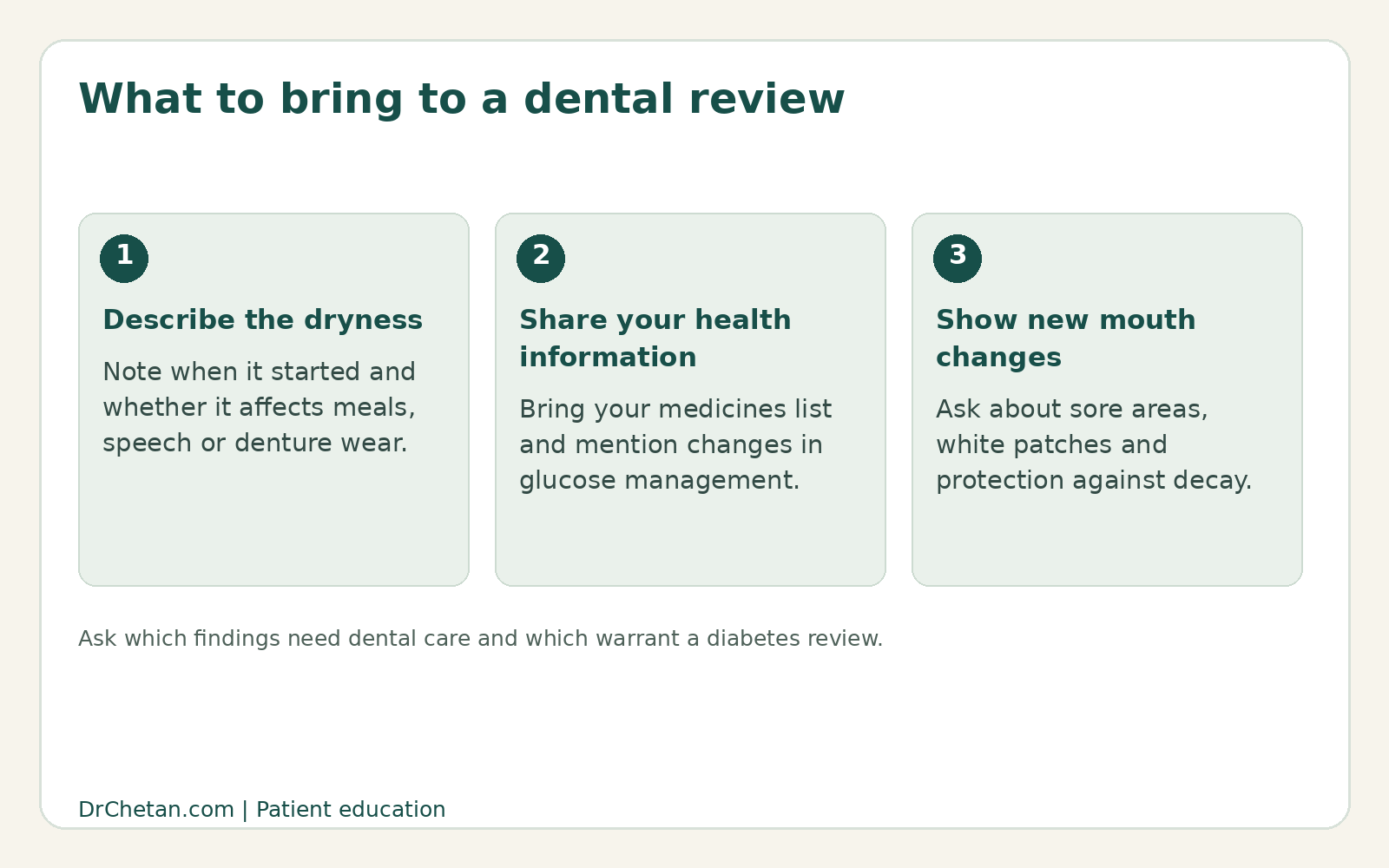
Tell the team whether the dryness is constant, began after a medicine change or comes with unusual thirst. Diabetes, medicines and other conditions can contribute. Bring a current medicines list and share any recent changes in glucose readings or diabetes treatment. Ask your diabetes team about a pattern of unusual thirst or readings outside your usual range.
Saliva protects the teeth and lining of the mouth. When there is less, you may notice sticky saliva, difficulty with dry food or dentures that rub. The dentist can check for decay, especially around exposed roots, and plan preventive care.
Know what a mouth infection can look like
Oral thrush is a yeast infection. It can cause soreness, burning, white patches or redness, including under a denture. Patches can have other causes, and the appearance alone does not establish a diagnosis. Bring your denture to the visit if you wear one and tell the dentist about recent antibiotics, inhalers or repeated episodes.
If the clinician diagnoses thrush, they can advise on antifungal treatment when appropriate and on addressing factors that make it return. Tooth pain, pus or facial swelling can point to a different problem that needs assessment of the source.
Protect your mouth while you get help
Brush twice daily with fluoride toothpaste and ask about extra fluoride if you are getting cavities. Choose water or a saliva substitute if appropriate for your health plan, and avoid frequent sugary drinks or sweets for relief. Clean removable dentures as advised and ask whether to remove them at night. Keep prescribed medicines on their usual schedule unless your prescriber advises a change.
When to call sooner
Arrange a check for recurring soreness or new patches. Seek urgent dental advice for increasing pain, facial swelling or fever with dental symptoms. Get emergency help if mouth or facial swelling makes breathing or swallowing difficult.
Frequently asked questions
Is dry mouth proof my diabetes is poorly controlled?
No. The symptom has several possible causes. Discuss the pattern with your diabetes and dental teams.
Can I scrape off white patches?
Avoid scraping. Let a clinician assess patches that persist or come with pain.
Does saliva gel treat thrush?
It may relieve dryness. An infection needs its own assessment and treatment when indicated.
References and further reading
Sources checked 3 November 2026. General patient education. Discuss your individual care with your clinical team. Featured image is an AI-created illustration.

Leave a Reply