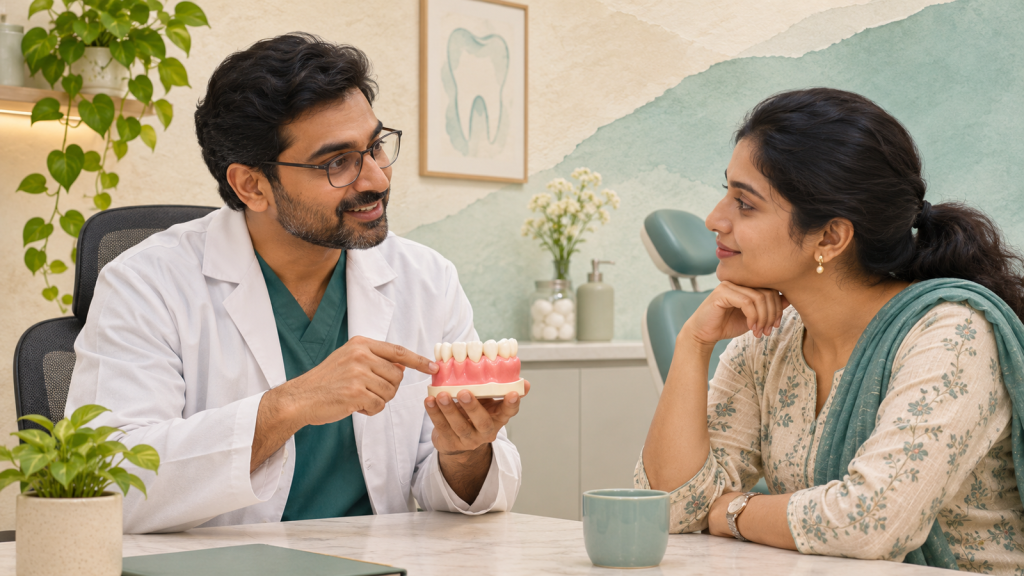
A gum graft adds tissue to a site with gum recession or thin gum tissue. It may help cover an exposed root, improve comfort or increase tissue thickness. A periodontist first checks why the gum has receded and what result is realistic for that tooth.
Who might benefit?
Tell the dentist if the area is sensitive, changing or difficult to clean. The examination checks the depth and width of recession, gum inflammation, tooth position and supporting tissues between teeth. The team may also look for root decay, a worn notch or a problem with a restoration. Stable recession without symptoms may be monitored. A graft can be considered if recession is progressing, tissue is particularly thin, or function, sensitivity or appearance is a concern.
What happens before the procedure?
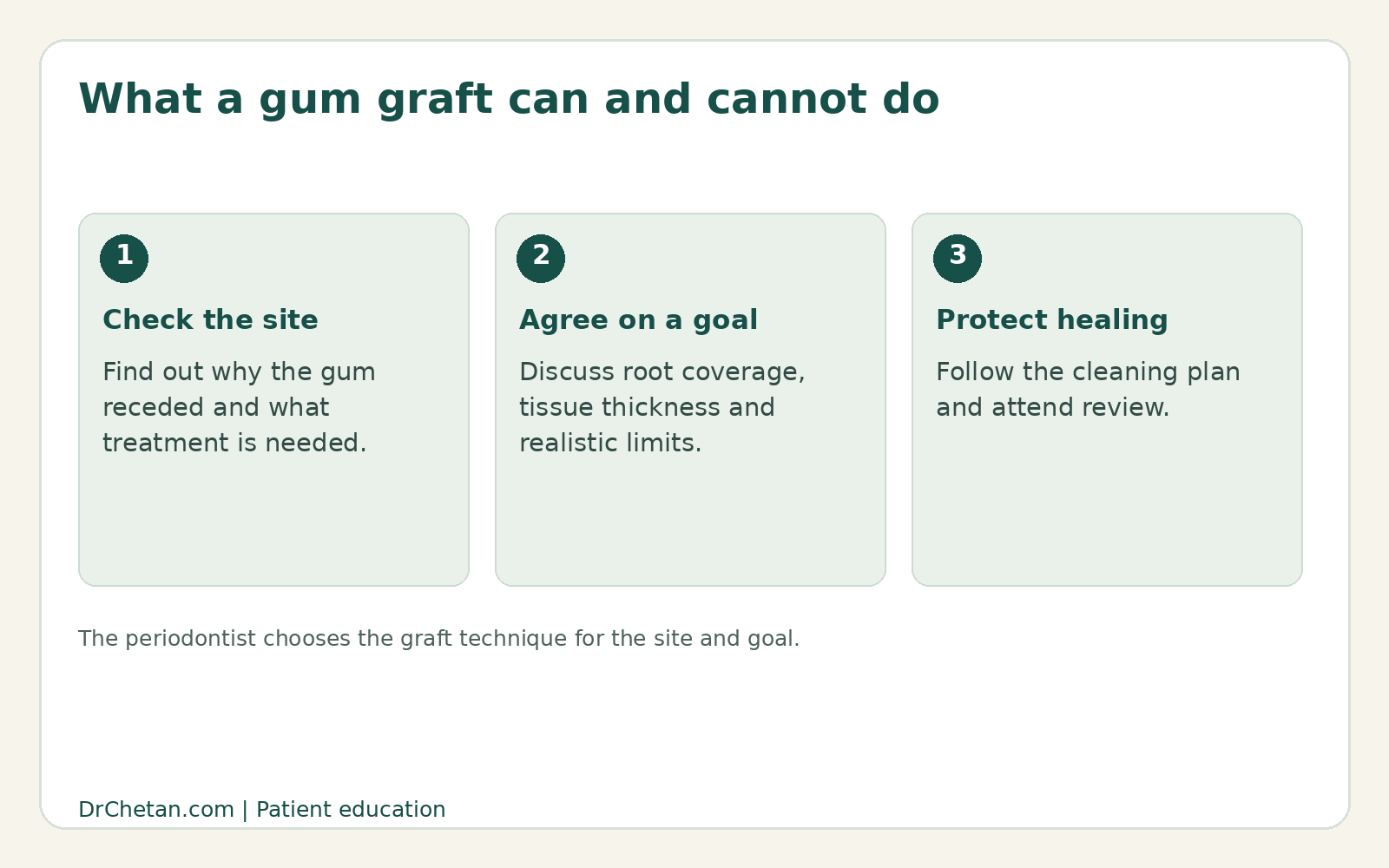
The dentist may first treat inflammation and show you how to clean gently at the site. Smoking and other health factors can affect healing. Ask whether a graft is intended to cover the root, increase tissue thickness or achieve both. Loss of supporting tissue between teeth or the position of the tooth can limit the amount of coverage, even when healing goes well.
How does the graft work?
The periodontist usually numbs the site with local anaesthetic. Depending on the technique, they may take connective tissue or a thin layer of gum tissue from the palate, or use a substitute when suitable. The graft may be secured with stitches under repositioned gum or placed where extra tissue is needed. Ask about soreness at the palate and treatment site, whether a protective dressing is used and how many visits are expected.
What is recovery like?
Follow the team’s instructions on food, cleaning and whether to avoid brushing the grafted site until review. Avoid pulling the lip to inspect the graft, which can disturb the stitches. Expect a follow-up to check the site and remove stitches if needed. Contact the clinic for worsening pain, swelling, fever, pus or bleeding that does not settle. Get emergency help if swelling affects breathing or swallowing.
Frequently asked questions
Does a graft always cover the whole root?
No. The site, supporting tissue and treatment goal determine what is likely.
Can sensitive toothpaste replace a graft?
It can help some exposed roots feel less sensitive. It does not add gum tissue or correct progressing recession.
Will I need time off?
Ask the treating clinic. Discomfort and activity advice vary with the size of the procedure, your work and whether tissue is taken from the palate.
References and further reading
- American Academy of Periodontology: Periodontal surgical procedures
- American Academy of Periodontology: Periodontal cosmetic procedures
Sources checked 3 November 2026. General patient education. Discuss your individual care with your clinical team. Featured image is an AI-created illustration.

Leave a Reply