
Pain around the upper back teeth can come from a tooth or from the nearby maxillary sinus. Sometimes a tooth infection contributes to a sinus problem. The location of pain alone does not tell you where it started, so persistent or recurring pain deserves an examination.
What the pattern can suggest
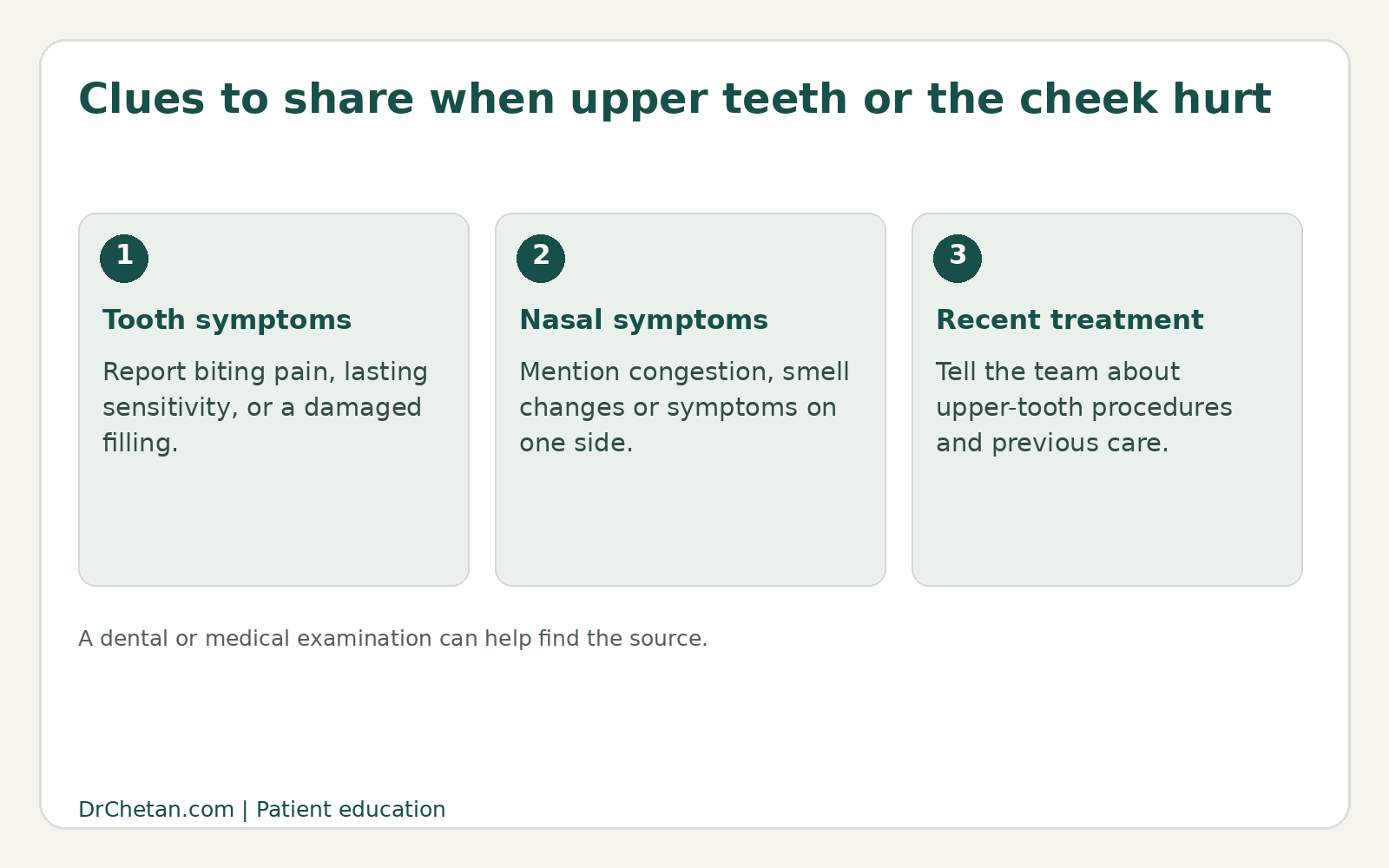
A dental problem may be more likely if you can point to one tooth, it hurts when you bite, or cold or heat triggers lingering pain. A damaged filling, a cavity, swelling near the tooth or a bad taste also gives the dentist clues. Some dental infections cause little tooth pain. Sinus symptoms can include a blocked or runny nose, facial pressure, reduced smell and aching across several upper teeth, especially after a cold. There is overlap, and pain when bending forward does not establish the cause.
How a tooth can affect the sinus
The roots of some upper back teeth sit close to the floor of the maxillary sinus. Infection around a root, or in some cases a complication after dental work, can contribute to sinus inflammation. Tell the dentist or medical clinician about persistent symptoms on one side, a foul smell or taste and recent upper-tooth treatment. Treating the nose symptoms alone may leave a dental source untreated if one is present.
What happens at the appointment
The dentist may examine the gums and restorations, tap the teeth, check bite tenderness and test how the teeth respond to cold or another stimulus. An X-ray can help look for dental problems. The dentist may recommend additional imaging or coordinate with an ear, nose and throat clinician when symptoms or the examination suggest a sinus problem. Share when the symptoms began, whether you had a recent cold and which treatment has already been tried.
Who should you contact?
Start with a dentist if pain is linked to a particular tooth, biting, a broken restoration or gum swelling. Contact a medical clinician if nasal symptoms dominate, particularly if they are persistent or keep returning on one side. If the first assessment does not explain persistent symptoms, ask whether the other specialty should be involved. Seek urgent assessment for worsening swelling, fever or severe pain. Get emergency medical help for swelling around the eye with vision changes, severe illness, or difficulty breathing or swallowing.
Frequently asked questions
Can a sinus problem make several teeth hurt?
Yes. Several upper teeth can ache with sinus symptoms. An examination can also check for a dental cause.
If my tooth stopped hurting, can I ignore one-sided congestion?
Persistent one-sided symptoms still deserve assessment, especially after dental work or with a foul smell or taste.
Do I need antibiotics to tell the difference?
No. The examination helps determine the cause. Antibiotics are only used when a clinician decides they are indicated.
References and further reading
- American Association of Endodontists: Maxillary sinusitis of endodontic origin
- ENT Health: Sinus disease and disorders
- NHS: Toothache
Sources checked 3 November 2026. General patient education. Discuss your individual care with your clinical team. Featured image is an AI-created illustration.

Leave a Reply