
A tooth-coloured composite filling can repair a cavity, small break or worn area when there is enough sound tooth to support it. At the appointment, the dentist checks the tooth, discusses the options and shapes the filling so you can bite and clean comfortably.
Before the filling goes in
Tell the dentist whether the tooth hurts by itself, on biting or with cold or heat. An examination and, when useful, an X-ray help show how much tooth is damaged and whether the pulp inside may be affected. An early change without a hole can sometimes be managed without a filling. A deep cavity or a badly weakened tooth may need different care. Ask why composite suits this site, what the alternatives are and whether a second visit might be needed.
Preparing and keeping the tooth dry
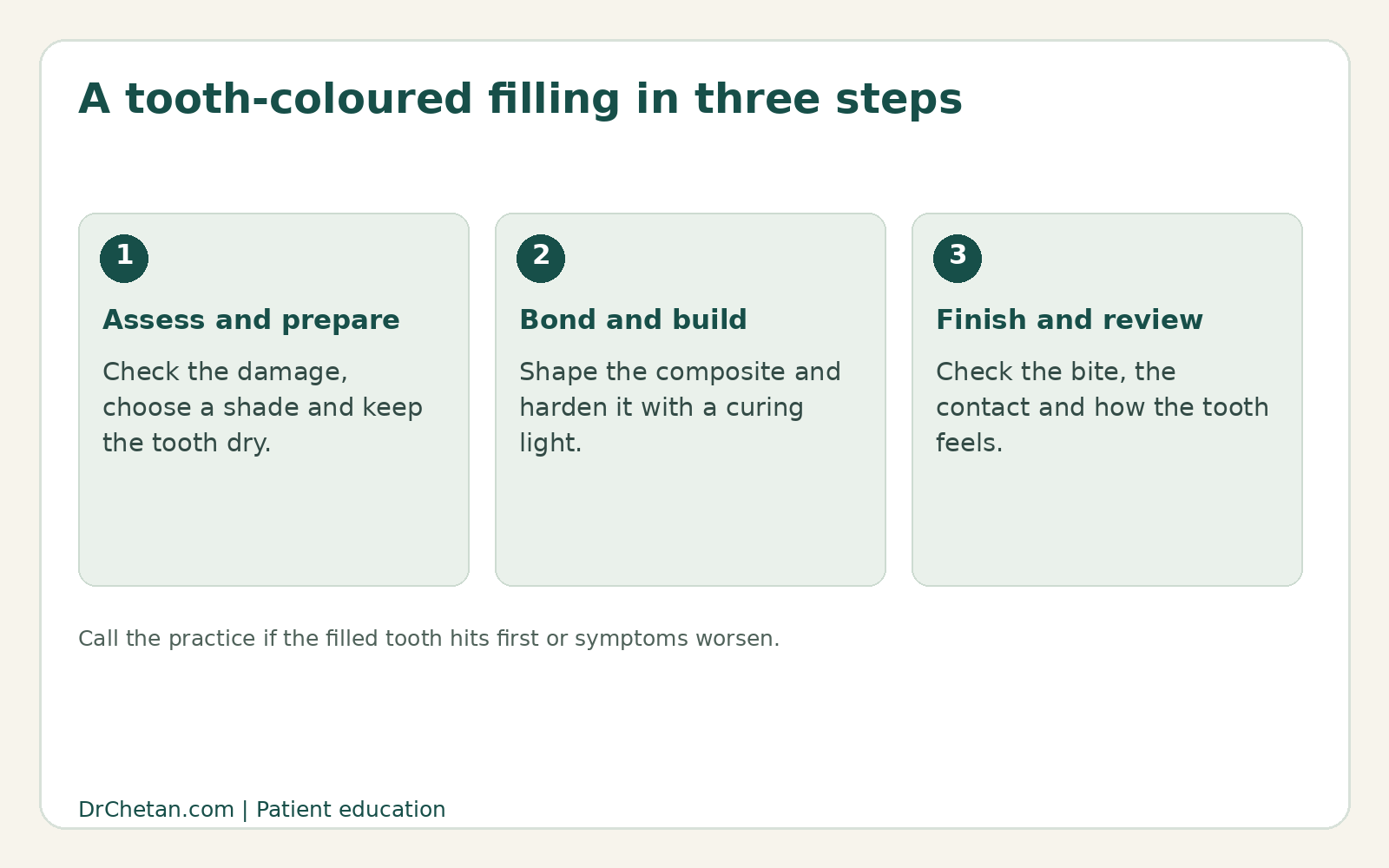
The dentist usually chooses a shade, numbs the area when needed and keeps saliva away with equipment such as a rubber dam, cotton rolls or suction. They prepare the damaged area and apply a bonding system. For deeper decay near the pulp, the dentist may choose a conservative removal approach to reduce the chance of exposing it. Ask what was found and whether the tooth needs a review.
Placing, shaping and checking the bite
The dentist shapes the composite in the prepared area and hardens it with a curing light. If the filling is between teeth, a small band and wedge can help shape the side of the tooth and form a contact. They finish and polish the surface, check that the teeth meet evenly and check whether you can clean around the filling. Tell them if the tooth feels as though it hits first.
After the appointment
Wait until the numbness wears off before chewing so you do not bite your cheek, lip or tongue. Follow the dentist’s instructions if another material or temporary filling was used. Mild sensitivity can occur, especially after a deep filling. Call if the bite feels high, pain worsens or lingers, or the filling breaks. Seek urgent dental care for swelling, fever or severe uncontrolled pain.
Frequently asked questions
Does the blue light numb the tooth?
The light hardens the composite. Local anaesthetic, if used, provides numbness.
Is composite suitable for every back tooth?
The dentist considers the size of the repair, bite forces, moisture control and remaining tooth structure.
Why is floss catching after my filling?
Tell the practice. The dentist can check the contact and the edge of the filling and adjust it if needed.
References and further reading
- ADA MouthHealthy: Tooth-coloured fillings
- ADA MouthHealthy: Dental filling options
- ADA: Restorative treatments for caries lesions
Sources checked 3 November 2026. General patient education. Discuss your individual care with your clinical team. Featured image is an AI-created illustration.

Leave a Reply