
Once the first teeth come through, frequent exposure to milk, formula or sweet drinks can contribute to tooth decay, especially when a child falls asleep with a bottle. A feeding plan should still meet the child’s age and nutritional needs. Start with brushing and ask the child’s healthcare team before changing feeds that are medically or nutritionally needed.
Why the bedtime bottle matters
Plaque bacteria use sugars from drinks and food to make acids. If a child sips repeatedly, the teeth spend more time exposed to those acids. Saliva flow is also lower during sleep. A bottle kept in bed or offered repeatedly for soothing gives teeth fewer breaks between exposures. Plain milk and formula contain natural sugars, while adding sugar or offering juice can increase exposure further.
You may hear this pattern called baby bottle tooth decay. Dentists use the broader term early childhood caries because cavities in young children can develop through several interacting factors. Feeding frequency, fluoride exposure, brushing and individual risk all matter.
Make bedtime a separate step from feeding
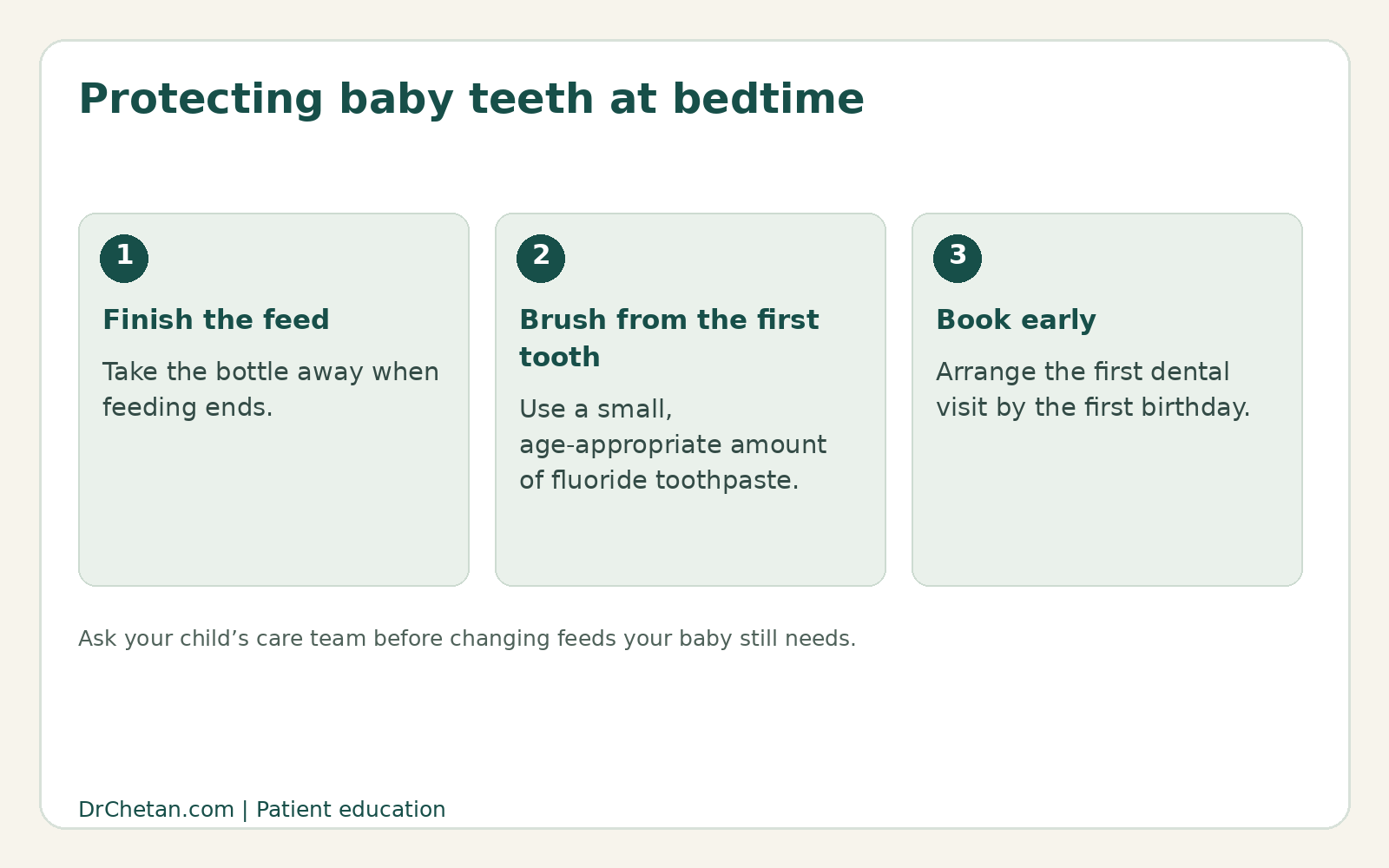
Where practical, give the last feed before the bedtime brushing and take the bottle away once feeding is finished. Keep juice and sweet drinks out of the bottle. Ask the paediatrician when and how to move toward a cup and whether changes to overnight feeds make sense for your child. Keep formula prepared as directed and follow advice for infants who still need feeds overnight.
From the first tooth, have an adult brush twice daily with fluoride toothpaste. Use a rice-grain-sized smear under age three and a pea-sized amount from ages three to six. Let the dentist tailor advice if your child has a swallowing difficulty or unusual fluoride exposure. Arrange a first dental visit by age one, or within six months of the first tooth coming through, whichever comes first.
What to look for near the gumline
Chalky patches near the gumline, especially on the upper front teeth, can be an early clue. Brown spots, holes, pain with eating or a tooth that breaks need an examination. Colour alone cannot tell you whether a mark is decay, a stain or an enamel change. A dentist can check it under good light and discuss fluoride varnish, monitoring or treatment according to the findings.
When to make the call
Book promptly if you see a new patch or hole. Seek urgent dental advice for tooth pain with fever or swelling. Swelling that makes it hard for the child to breathe or swallow needs emergency medical care.
Frequently asked questions
Can plain milk contribute to decay?
Yes, particularly when teeth are exposed frequently or the child sleeps with a bottle. Milk can still be part of an age-appropriate diet.
Should I stop breastfeeding?
Talk with your child’s paediatrician and dentist about age, feeding needs and cavity risk. They can help with a plan that supports both feeding and oral health.
Can early marks improve?
An early lesion with an intact surface can sometimes be arrested with fluoride and changes to the daily routine. The dentist can check whether the surface is intact and whether it needs other care.
References and further reading
Sources checked 3 November 2026. General patient education. Discuss your individual care with your clinical team. Featured image is an AI-created illustration.

Leave a Reply